
About Douglas Alexander Graham
Lived 1893 – 1971 (aged 78). Douglas Alexander Graham was a British military officer.
Major-General Douglas Alexander Henry Graham, (26 March 1893 – 28 September 1971) was a senior British Army officer who fought with distinction in both world wars. He is most notable during the Second World War for commanding the 153rd Brigade of the 51st (Highland) Division in North Africa from 1942 to 1943, later being the General Officer Commanding (GOC) of the 56th (London) Infantry Division during the Salerno landings in Italy in September 1943 and the 50th (Northumbrian) Infantry Division during the Normandy landings in France in June 1944.
Early life and First World War Douglas Graham was born in Brechin, Angus, Scotland, the youngest of three children, on 26 March 1893. He was the son of Mungo MacDougal Graham and Margaret Lyall Murray Graham, and after attending The Glasgow Academy and the University of Glasgow, he was commissioned as a second lieutenant into the 3rd Lowland Brigade, Royal Field Artillery, Territorial Force (TF), on 26 September 1911, but he resigned his commission on 25 September 1912. After attending the Royal Military College, Sandhurst, he was granted a commission in the Regular Army, again with the rank of second lieutenant, on 17 September 1913, into the Cameronians (Scottish Rifles), and was posted to the 1st Battalion of his regiment.
The outbreak of the First World War in August 1914 saw Graham serving as a platoon commander in 'D' Company of the 1st Battalion, Cameronians (Scottish Rifles), commanded by Lieutenant Colonel Philip Robertson, which soon became part of the 19th Brigade, when it was sent to the Western Front as part of the British Expeditionary Force (BEF). Thus Graham's battalion were amongst the first British troops to arrive in France. After participating in the retreat from Mons, on 22 October 1914, during the early stages of the First Battle of Ypres, Graham was involved in an action that would lead to Rifleman Henry May, in Graham's platoon, the award of the Victoria Cross (VC). Whilst in the La Boutillerie area of France, Lieutenant Graham was wounded in the leg. Rifleman May, ignoring orders from Graham to leave him, dragged him, under heavy fire, 300 yards to safety. After May arranged for a rescue party for his platoon commander, and after recovering from his wounds, Graham, promoted on 3 November 1914 to lieutenant, was promoted again to captain on 18 June 1916, returned to France and was appointed as a brigade major with the 182nd Brigade, part of the 61st (2nd South Midland) Division, a Territorial Force (TF) formation, on 30 April 1917, remaining with the brigade during all of its major battles of the war until 7 June 1919. He was awarded the Military Cross (MC) in the 1918 New Year Honours. He finished the war having also been mentioned in despatches and awarded the French Croix de guerre. and returned to regimental duty on 11 January 1920.
From 30 October 1921 he was seconded to the Indian Army as an assistant military secretary with Northern Command, India. He returned to the United Kingdom and attended the Staff College, Camberley from 1924 to 1925 where, among his many fellow students there were Noel Irwin, Daril Watson, Ivor Thomas, Clifford Malden, Cyril Durnford, Michael Creagh, Thomas Riddell-Webster, James Harter, Sydney Rigby Wason, Langley Browning, Frederick Hyland, Otto Lund, Rufus Laurie, Gerald Fitzgerald, Arthur Barstow, John Reeve, Vyvyan Pope, Robert Studdert, Noel Napier-Clavering, Reade Godwin-Austen, Gerald Brunskill, Archibald Nye, George Lammie, Noel Beresford-Peirse, Gerald Gartlan, Geoffrey Raikes, Humfrey Gale, Guy Robinson and Lionel Finch, along with John Northcott of the Australian Army and Ernest Sansom and Maurice Pope of the Canadian Army. All of these men would, like Graham, become general officers in the future.
He was promoted to major on 16 December 1930, From 1 May 1932 to 30 April 1935 he was Officer Commanding (OC) the Cameronians regimental depot at Hamilton, South Lanarkshire. and, shortly after the birth of his second son, John Murray Graham, on 7 June, Unlike in the First World War, there was no immediate action and the first few months of the "Phoney War" (as this period of time was to become known) were, for the BEF, spent building defensive positions, such as trenches and pillboxes, in expectation of a repeat of the trench warfare of 1914–1918. In August 1940 Graham's brigade changed its designation to the 153rd Infantry Brigade when the 9th Division was reformed as the 51st (Highland) Infantry Division after the original 51st Division was lost in June 1940 during the latter stages of the Battle of France. Departing the United Kingdom three days later, on 13 August Graham's brigade arrived in Egypt, where the British Eighth Army, which the 51st Division was to form part of once fully trained and used to desert conditions, had just suffered a major reverse. The division was assigned initially to Lieutenant General Brian Horrocks's XIII Corps, before transferring to Lieutenant General Sir Oliver Leese's XXX Corps, which was to play a leading role in the forthcoming offensive.
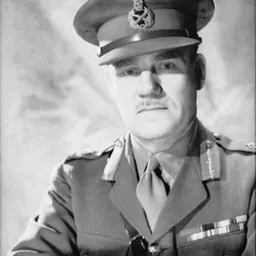
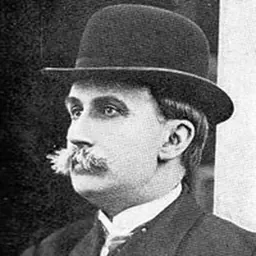
A head and shoulder portrait of Major General Douglas Graham in uniform.
Following Alamein the brigade had a rest for a few weeks, absorbing replacements after suffering heavy losses, with the division as a whole having sustained some 2,800 casualties, and then, with the rest of the Eighth Army pursuing the retreating Axis forces, seeing light action at El Agheila, followed by Buerat. The Battle of Wadi Akarit followed soon afterwards, but Graham's brigade was held in reserve and unused, although it later spearheaded the Eighth Army's advance to Enfidaville, reaching near there on 23 April. Soon afterwards the division, selected by Montgomery (now a full general) for participation in the Allied invasion of Sicily, was withdrawn from the front lines into reserve. after the division's former GOC, Major General Eric Miles, was severely wounded. The division, with only the 167th and 169th Infantry Brigades and supporting divisional troops under command, had only recently arrived in Tunisia, after travelling some 3,200 miles from Iraq, and was assigned to X Corps, with Brigadier Lewis Lyne's 169th Brigade suffering heavy casualties in an attack on two hills, Points 141 and 130, on 28 April. On the night of 10 May the 167th Brigade was ordered to attack the Italian defenders on the hills north of Takrouna, which, although supported by artillery, failed, due to a combination of tenacious enemy resistance and very heavy shell and mortar fire, the defenders inflicting nearly 400 casualties upon the inexperienced brigade.
The 56th Division, supported by Sherman tanks of the Royal Scots Greys (with a squadron attached to each of the division's three brigades), came ashore at Salerno on 9 September 1943, facing light resistance, at least initially.
The 56th Division's task was to capture, in addition to Montecorvino airfield, the road between Bellini and Battipaglia, where it was to link up with Major General Fred L. Walker's US 36th Division to the division's right. However, a huge gap seven-mile gap had emerged between Graham's division and Major General Ernest J. Dawley's US VI Corps (of which the US 36th Division formed part), with the River Sele flowing through. He became a temporary major general on 14 May 1944. His Italian service also led to him being appointed a Companion of the Order of the Bath (CB) on 24 August 1944. Command of the 56th Division passed temporarily to Brigadier Lyne, the 169th Brigade commander, before Major General Gerald Templer arrived in Italy and became GOC on 15 October. was judged to be sufficiently recovered from his injuries to be given command of the 50th (Northumbrian) Infantry Division, a highly experienced first-line TA formation which had served with distinction in North Africa and Sicily, in place of Major General Sidney Kirkman, who was being given command of XIII Corps on the Italian front. and later was made an Officer of the Legion of Honour. Graham's rank of major general was made substantive on 6 October 1944 (with seniority from 1 February). Landing in Normandy in the early hours of 6 June 1944, the division initially met light resistance on the beaches, and, by the end of D-Day, had penetrated inland as far as Bayeux, the division's main objective, which was occupied the following day. After heavy fighting at Amaye-sur-Suelles, the division then captured Villers-Bocage, earning praise from the new XXX Corps commander, Lieutenant General Horrocks (who described Graham in his autobiography as "an old war horse never far from the scene of battle"), Returning to England in December, the division became a reserve training formation, keeping its three infantry brigades but losing most of its supporting artillery and engineer units, and was given the role of training soldiers who had completed their basic training before being sent to an overseas unit.
In August 1945, with the war in Europe now over, the 50th Division HQ ceased to exist and, upon moving to Norway, was redesignated HQ British Land Forces Norway, with Graham as its GOC. For his services to Norway, he was made a Commander of the Royal Norwegian Order of St. Olav.
Postwar and later life The grave of Major General Douglas Graham, Glasgow Necropolis. Graham retired from the army on 6 February 1947. Between 22 August 1954 and 26 March 1958 he was the Colonel of the Cameronians (Scottish Rifles). He also served as Deputy Lieutenant of the County of Ross and Cromarty from 11 June 1956 until his resignation on 15 March 1960.
He died on 28 September 1971, a few weeks after the early death of his second son, John Murray Graham. He is buried in the John Murray plot at the top of Glasgow Necropolis.
"Highly respected by his colleagues and subordinates for his positive disposition − in "Gertie" Tuker's words "He seemed in all battles to share with Freyberg of the New Zealanders a cheerful spirit of optimism, so estimable a virtue in a battle commander" − he was a most competent soldier", possessing "firm religious convictions" and "indomitable courage".
Don’t just read it —
keep it.
Full-length biographies made to live with: read them, listen on the way to work, watch them tonight.
- E-book
- Audio
- Video
Instant download · yours to keep · every purchase keeps this site free
Important facts
People in Douglas Alexander Graham's life
Named in this biography and alive at the same time






Related people
Same field, nearest in time

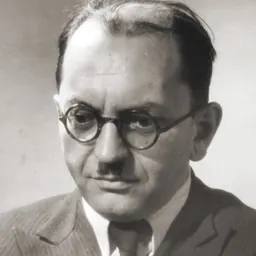
Contemporaries
People whose lives overlapped Douglas Alexander Graham's
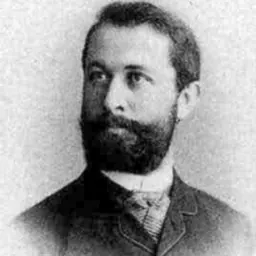
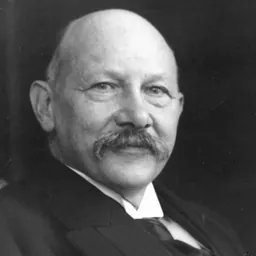
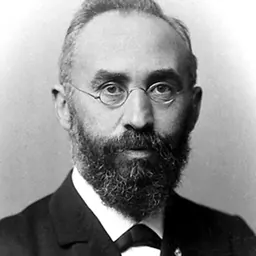

Frequently asked questions
Who was Douglas Alexander Graham?
Major General, army officer (1893–1971)
When was Douglas Alexander Graham born?
Douglas Alexander Graham was born on 26 March 1893 in Brechin.
When did Douglas Alexander Graham die?
Douglas Alexander Graham died on 28 September 1971 in Brechin.
What was Douglas Alexander Graham's occupation?
Douglas Alexander Graham was a military officer.
What nationality was Douglas Alexander Graham?
Douglas Alexander Graham was British.
Sources & further reading
· Wikipedia: Douglas Alexander Graham
· DBpedia: Douglas Graham (British Army officer)
Cite this page
APA: Biography.guide. (2026). Douglas Alexander Graham. https://biography.guide/douglas-alexander-graham/
MLA: "Douglas Alexander Graham." Biography.guide, https://biography.guide/douglas-alexander-graham/.
Chicago: "Douglas Alexander Graham." Biography.guide. https://biography.guide/douglas-alexander-graham/.
Data last updated: 2026-09-20 · Spot an error? Report a correction.
Page generated 2026-09-27 05:23 UTC