
Doina Cornea
Romanian academic and activist
About Doina Cornea
Lived 1929 – 2018 (aged 88). Doina Cornea was a Romanian university teacher, human rights defender, writer, translator, dissident and social activist, known for Socialist Republic of Romania.
Doina Cornea (; 30 May 1929 – 3 May 2018) was a Romanian human rights activist and French language professor. She was a dissident during the communist rule of Nicolae Ceaușescu.
She was co-founder of the Democratic Anti-totalitarian Forum of Romania (Forumul Democrat Antitotalitar din România), as the first attempt to unify the democratic opposition to the post-communist government. After graduation, she taught French at a secondary school in Zalău, where she married a local lawyer. She returned to Cluj in 1958, where she worked as an assistant professor at the Babeș-Bolyai University.
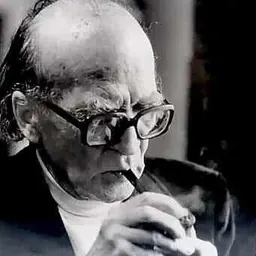
Dissidence under communism In 1980 she published her first samizdat book, Încercarea Labirintului ("The Test of the Labyrinth") by Mircea Eliade translated by her from French; then four other samizdat translations followed.
At the end of her letter, she apologized for not revealing her name, but she signed the letter to show that it was authentic. Due to a misunderstanding, Radio Free Europe read the letter in full, including the name. On September 15, 1983, she was fired from the university because of her political activity, the official reason being that she gave her students to read the diary of Mircea Eliade.
During the Brașov rebellion, on 18 November 1987, together with her son, Leontin Iuhaș, she spread in Cluj-Napoca 160 manifestos of solidarity with the workers who rebelled against the communist government.
House arrest She wrote a further letter, which was smuggled outside the country by Josy Dubié, broadcast by RFE on August 23, 1988 (Romania's national day).
She argued for freedom of expression, freedom of the press, freedom of assembly and freedom of travel; on the economic side, her letter (which may have been drafted by other collaborators) argued for closing down loss-making factories, re-tooling factories for being able to compete with foreign companies, hiring foreign managers and recreation of private land ownership, as well as the stopping of the Systematization programme.
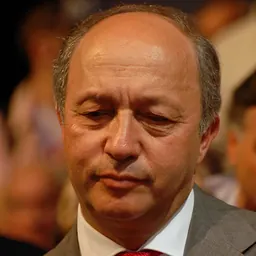
Subsequently, she was put on house arrest by the Securitate. Personal interventions by foreign politicians were made to the Romanian government, including the ones by Laurent Fabius, President of the French National Assembly, Valéry Giscard d'Estaing, former President of France, and Leo Tindemans, the Belgian Foreign Minister.
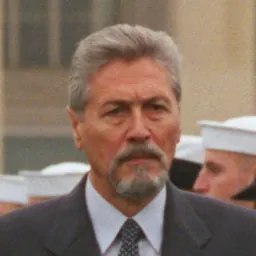
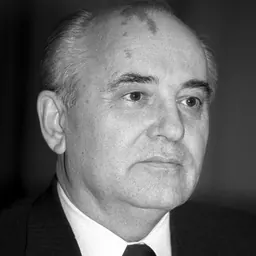
In 1989, Cornea received an invitation from Danielle Mitterrand (wife of French President François Mitterrand) to attend the bicentennial celebration of the French Revolution, but again, she was denied the exit visa. Another invitation to the Council of Europe failed to reach her as it was handed to the Romanian ambassador in Paris. Immediately after release, she began taking part in the street demonstrations in Cluj-Napoca. She quit this body on 23 January 1990 after it decided to run as a party in the 1990 elections. She considered it to be dependent upon Soviet leader Mikhail Gorbachev and still dominated by people with communist pasts. This organization later transformed into the Romanian Democratic Convention (Convenția Democrată Română, CDR), which brought Emil Constantinescu to power. She was buried with military honors at the city's Hajongard Cemetery. She had two children, Ariadna Combes and Leontin Iuhas. Romanian Republic: Former Chancellor Grand Cross of the Order of the Star of Romania
Foreign honours Commander of the Legion of Honour
Awards Honorary Degree of the Free University of Brussels The Professor Thorolf Rafto Memorial Prize
Don’t just read it —
keep it.
Full-length biographies made to live with: read them, listen on the way to work, watch them tonight.
- E-book
- Audio
- Video
Instant download · yours to keep · every purchase keeps this site free
Important facts
People in Doina Cornea's life
Named in this biography and alive at the same time




Related people
Same field, nearest in time


Contemporaries
People whose lives overlapped Doina Cornea's


Frequently asked questions
Who was Doina Cornea?
Romanian academic and activist (1929–2018)
When was Doina Cornea born?
Doina Cornea was born on 30 May 1929 in Brașov.
When did Doina Cornea die?
Doina Cornea died on 4 May 2018 in Cluj-Napoca.
What was Doina Cornea's occupation?
Doina Cornea was a university teacher, human rights defender, writer, translator, dissident and social activist.
What was Doina Cornea known for?
Doina Cornea was known for Socialist Republic of Romania.
What nationality was Doina Cornea?
Doina Cornea was Romanian.
Sources & further reading
Cite this page
APA: Biography.guide. (2026). Doina Cornea. https://biography.guide/doina-cornea/
MLA: "Doina Cornea." Biography.guide, https://biography.guide/doina-cornea/.
Chicago: "Doina Cornea." Biography.guide. https://biography.guide/doina-cornea/.
Data last updated: 2026-09-20 · Spot an error? Report a correction.
Page generated 2026-09-27 05:31 UTC