
About Dimitrie Gusti
Lived 1880 – 1955 (aged 75). Dimitrie Gusti was a Romanian historian, philosopher, sociologist, university teacher and writer.
Dimitrie Gusti (; 13 February 1880 – 30 October 1955) was a Romanian sociologist, ethnologist, historian, and voluntarist philosopher; a professor at the University of Iași and the University of Bucharest, he served as Romania's Minister of Education in 1932–1933. Gusti was elected a member of the Romanian Academy in 1919, and was its president between 1944 and 1946. He was the main contributor to the creation of a new Romanian school of sociology.
He was a prominent member of the Peasants' Party, and later of the National Peasants' Party into which the former had merged.
Biography Born in Iași, he began studying Letters at the University of Iași before moving on to the Universität unter den Linden in Berlin and the University of Leipzig, where he studied and completed a doctorate in Philosophy (1904). In 1905, he began the study of Sociology, Law, and Political economy at the Universität unter den Linden.
Gusti was appointed to the Department of Ancient History, Ethics, and Sociology of the University of Iași in 1910, and was one of the main contributors to the creation of a new Romanian school of sociology. He moved to Bucharest in 1920, and began work as a professor at the University of Bucharest, in the Department of Sociology, Ethics, Politics, and Aesthetics of the latter's Faculty of Letters and Philosophy. His lectures became a center of interest inside the academic community, and he attracted students with diverse backgrounds and political convictions, such as the far right Mircea Vulcănescu, the communist Miron Constantinescu, the Austromarxist Henri H. Stahl, and the left-wing artist Lena Constante.
Creator of the Bucharest School of Sociology and several Institutes, he also led, between 1925 and 1948, the intense research of Romanian villages and the publishing of its results as detailed monographs, a work in which he was notably assisted by Gheorghe Vlădescu-Răcoasa and Stahl. In 1936, together with Stahl and Victor Ion Popa, Gusti created the Village Museum in Bucharest, which now bears his name.
From 9 June 1932 to 13 November 1933 he was Minister of Public Instruction, Religious Affairs and the Arts in the cabinets of Alexandru Vaida-Voevod and Iuliu Maniu. He left the National Peasants' Party after 1938, disagreeing with its decision to oppose the authoritarian regime of King Carol II, and collaborated with the newly created National Renaissance Front. Consequently, he was threatened by the rise of the fascist Iron Guard (with the late 1940 establishment of the National Legionary State); following the Legionary Rebellion and the Guard's defeat, he sent a congratulatory telegram to Conducător Ion Antonescu.
After the end of World War II, Gusti was approached by the new Communist government with offers of collaboration. He was invited to attend official ceremonies inside the Soviet Union, and was a member of the .
He died in Bucharest in 1955, and was buried at Eternitatea Cemetery in Iași.
Theory Gusti defined his view on society as dependent on a set of principles: Society is composed of "social units", as groups of humans linked by a voluntary organizing activity and interconnected spiritually. The essence of life is "social will". "Social will" is expressed in economics and spirituality, both of which are regulated by law and politics. "Social will" is conditioned by factors which are included in four fundamental and parallel categories: cosmical, biological, psychological, and historical. The changes engineered by the factors are known as "social processes". The premises of development one can observe in present society, and thus can predict with some accuracy, are known as "social trends".
A creator of the sociological monographic method (as still used by his Bucharest School), Gusti favored and theorised first-hand intensive observation of social units and phenomena, as well as interdisciplinarity, with the research work being carried out through intensive collaboration within the field of social sciences, but also with doctors, agronomists, schoolteachers, etc.
Main works
Egoismus und Altruismus, 1904 Die soziologischen Betrehungen in der neuen Ethik, 1908 Cosmologia elenă, 1929 Sociologia militans, vol. 1, 1935; vols. 2–3, 1946 Enciclopedia României, vols. I–IV, Bucharest, 1938, 1943 Cunoaștere și acțiune în serviciul națiunii, 2 vols., 1939 Problema sociologiei, 1940 La science de la réalité sociale, 1941
Don’t just read it —
keep it.
Full-length biographies made to live with: read them, listen on the way to work, watch them tonight.
- E-book
- Audio
- Video
Instant download · yours to keep · every purchase keeps this site free
Important facts
People in Dimitrie Gusti's life
Named in this biography and alive at the same time
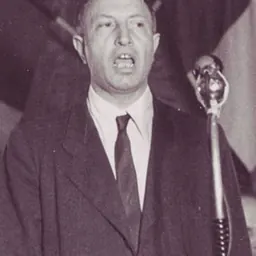
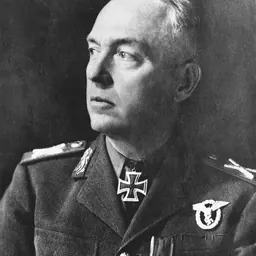




Related people
Same field, nearest in time
Contemporaries
People whose lives overlapped Dimitrie Gusti's




Frequently asked questions
Who was Dimitrie Gusti?
Romanian academic
When was Dimitrie Gusti born?
Dimitrie Gusti was born on 13 February 1880 in Iași.
When did Dimitrie Gusti die?
Dimitrie Gusti died on 30 October 1955 in Bucharest.
What was Dimitrie Gusti's occupation?
Dimitrie Gusti was a historian, philosopher, sociologist, university teacher and writer.
What nationality was Dimitrie Gusti?
Dimitrie Gusti was Romanian.
Sources & further reading
Cite this page
APA: Biography.guide. (2026). Dimitrie Gusti. https://biography.guide/dimitrie-gusti/
MLA: "Dimitrie Gusti." Biography.guide, https://biography.guide/dimitrie-gusti/.
Chicago: "Dimitrie Gusti." Biography.guide. https://biography.guide/dimitrie-gusti/.
Data last updated: 2026-09-25 · Spot an error? Report a correction.
Page generated 2026-09-27 05:08 UTC