
About Mircea Vulcănescu
Lived 1904 – 1952 (aged 48). Mircea Vulcănescu was a Romanian philologist, philosopher, economist, politician, war criminal and writer.
Mircea Aurel Vulcănescu (3 March 1904 – 28 October 1952) was a Romanian philosopher, economist, ethics teacher, sociologist, and politician. Undersecretary at the Ministry of Finance from 1941 to 1944 in the Nazi-aligned government of Ion Antonescu, he was arrested in 1946 and convicted as a war criminal.
Biography He was born in Bucharest on March 3, 1904, the second child of Mihail Vulcănescu, a financial controller with the Ministry of Finance, and Maria, the descendant of a family of landowners from the Olt area. After the German Army occupied Bucharest in World War I, the family took refuge in 1917 in Zvoriștea, a village in northern Moldavia. Mircea Vulcănescu attended gymnasium in Iași and Tecuci, and went to high school in Galați before returning to Bucharest at the end of the war. He completed his secondary education at Gheorghe Lazăr High School and Mihai Viteazul High School, defending his baccalaureate in 1921. He was then more attracted to sociology, due to his field experiences (monograph campaigns) under the coordination of Gusti, who became one of his most admired mentors, alongside Nae Ionescu. Vulcănescu was also Gusti's assistant at the Faculty of Sociology in Bucharest. He then went to Paris, where he pursued doctoral research at the Faculty of Law of the University of Paris; in November 1928, he earned a degree in economics and political science,
From June 1935 to September 1937, Vulcănescu was director of the Customs Service, while in 1940 he was director of the Public Debt Department. From January 27, 1941 to August 23, 1944, he was undersecretary at the Ministry of Finance, in the Ion Antonescu government. During the war, he was one of Romania's best negotiators with Nazi Germany, managing to obtain for the National Bank of Romania eight wagons of gold (confiscated by the Soviet Union after 1944), and the endowment of the Romanian 4th Army with new military equipment. According to Radio France Internationale, "he participated in dozens of councils of ministers in which aspects related to preparation and decision-making as practical as possible for the extermination of the Jewish and Roma population were discussed."
After the coup d'état of August 1944 he returned to his job as director of the Public Debt Department. Vulcănescu was convicted for "permitting the entry of the German army on the country's territory" and for "declaring or continuing the war against the Union of Soviet Socialist Republics and the United Nations". He was not convicted (and, in the Court of Appeal trial not even accused) for the acts punished by law 312/1945 that fell within the scope of unjust anti-Jewish (or racial) laws or actions.
Nicolae Mărgineanu, an academic at the King Ferdinand I University of Cluj and a post-mortem member of the Romanian Academy, claimed that the accusations that were brought against Vulcănescu were false and that he was a victim of the Communist regime, as part of a larger scheme of the authorities whose aim was to slowly kill off Romanian intellectuals, especially those who opposed the regime. The political character of his conviction was confirmed by the Bucharest Tribunal in 2017. Suffering from tuberculosis and denied medical care, he died on October 28, 1952.
Family He was married twice. His first wife was Anina Rădulescu-Pogoneanu, whom he married in the fall of 1925; the two had a daughter, Elena-Maria-Viorica (Vivi), in the summer of 1927. Mariuca was imprisoned from 1952 to 1954 by the Communist authorities because she was Vulcănescu's daughter.
According to Zigu Ornea, Vulcănescu considered himself a sympathizer of the Iron Guard. Other scholars considered him to be "a supporter of discrimination based on ethnicity", who, according to the director of the Elie Wiesel National Institute for Studying the Holocaust in Romania, "supported spiritually and morally the antisemitism of the government."
Despite these claims, in one of his works, Vulcănescu reportedly considered the Iron Guard as a terrorist movement controlled by Nazi Germany. For these reasons, he refused to join the government led by the Legionary Movement in 1940. According to journalist Andrew Higgins writing for The New York Times, he "is remembered now not as an agent of the Holocaust but as a leading intellectual from the 1930s, a period when many prominent Romanian thinkers embraced extreme nationalism suffused with religious faith."
The Mircea Vulcănescu Technological High School bore his name until April 5, 2023, when it got changed to The Economic High School, no. 1; founded in 1992, the school is located in Sector 4 of Bucharest. An attempt was made in 2017 by the Council of Sector 4 to rename the school after Traian Popovici, but the proposal was eventually rejected. In 2009, a bust of Vulcănescu designed by sculptor was unveiled in Sector 2's Saint Stephen Plaza. In December 2022, a proposal to demolish the bust was put before the Council of Sector 2; the proposal was opposed by academicians Răzvan Theodorescu and and was ultimately turned down by the council.
Streets in Aiud and in Bucharest's Sector 1 are also named after him. In 2017, the Elie Wiesel Institute requested that the name of the Mircea Vulcănescu Street in Sector 1 be changed; after a public appeal by several dozen Romanian intellectuals and consultation with the Romanian Academy, the request was denied by the Bucharest prefecture. The request (addressed to then-Mayor of Bucharest Nicușor Dan) was renewed in March 2025; the Bucharest Court of Appeals denied the request in July 2026.
Main works Teoria și sociologia vieții economice. Prolegomene la studiul morfologiei economice a unui sat (The Theory and Sociology of Economic Life. Prolegomena to the Study of Morphological Economy of a Village) (1932) În ceasul al 11-lea (The Eleventh Hour) (1932) Cele două Românii (The Two Romanias) (1932) Gospodăria țărănească și cooperația (1933) (with Traian Herseni), D. Gusti și școala sociologică de la București (Dimitrie Gusti the professor), București, Institutul Social Român, 1937 Războiul pentru întregirea neamului (The War for Reuniting Kin) (1938) Înfățișarea socială a două județe (The Social Appearance of Two Counties) (1938) Dimensiunea românească a existenței (The Romanian Dimension of Existence) (1943)
Posthumous works
Don’t just read it —
keep it.
Full-length biographies made to live with: read them, listen on the way to work, watch them tonight.
- E-book
- Audio
- Video
Instant download · yours to keep · every purchase keeps this site free
Important facts
People in Mircea Vulcănescu's life
Named in this biography and alive at the same time



Related people
Same field, nearest in time




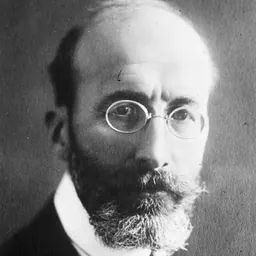
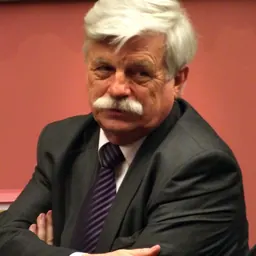
Contemporaries
People whose lives overlapped Mircea Vulcănescu's

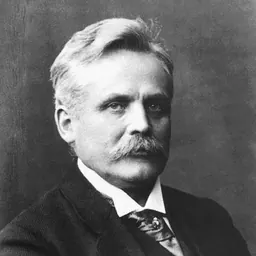



Frequently asked questions
Who was Mircea Vulcănescu?
Romanian philosopher
When was Mircea Vulcănescu born?
Mircea Vulcănescu was born on 3 March 1904 in Bucharest.
When did Mircea Vulcănescu die?
Mircea Vulcănescu died on 28 October 1952 in Aiud.
What was Mircea Vulcănescu's occupation?
Mircea Vulcănescu was a philologist, philosopher, economist, politician, war criminal and writer.
What nationality was Mircea Vulcănescu?
Mircea Vulcănescu was Romanian.
Sources & further reading
· Wikipedia: Mircea Vulcănescu
Cite this page
APA: Biography.guide. (2026). Mircea Vulcănescu. https://biography.guide/mircea-vulcanescu/
MLA: "Mircea Vulcănescu." Biography.guide, https://biography.guide/mircea-vulcanescu/.
Chicago: "Mircea Vulcănescu." Biography.guide. https://biography.guide/mircea-vulcanescu/.
Data last updated: 2026-09-20 · Spot an error? Report a correction.
Page generated 2026-09-27 05:18 UTC