
About Dennis W. Sciama
Lived 1926 – 1999 (aged 73). Dennis W. Sciama was a British physicist, astrophysicist, astronomer and university teacher, known for Big Bang theory, Black holes and Cosmology.
known_for = Rees–Sciama effect awards = footnotes = spouse = children = 2
Dennis William Siahou Sciama, (; 18 November 1926 – 18 December 1999) was an English physicist who, through his own work and that of his students, played a major role in developing British physics after the Second World War. He was the PhD supervisor to many famous physicists and astrophysicists, including John D. Barrow, David Deutsch, George F. R. Ellis, Stephen Hawking, Adrian Melott and Martin Rees, among others; he is considered one of the fathers of modern cosmology.
Education and early life Sciama was born in Manchester, England, the son of Nelly Ades and Abraham Sciama. He was of Syrian-Jewish ancestry — his father born in Manchester and his mother born in Egypt, but both traced their roots back to Aleppo, Syria.
Sciama earned his PhD in 1953 at the University of Cambridge supervised by Paul Dirac,
During the 1990s, he divided his time between Trieste (with a residence in nearby Venice) and his main residence at Oxford, where he was a visiting professor until the end of his life.
Sciama made connections among some topics in astronomy and astrophysics. He wrote on radio astronomy, X-ray astronomy, quasars, the anisotropies of the cosmic microwave radiation, the interstellar and intergalactic medium, astroparticle physics and the nature of dark matter. Most significant was his work in general relativity, with and without quantum theory, and black holes. He helped revitalize the classical relativistic extension to general relativity known as Einstein-Cartan gravity.
Early in his career, he supported Fred Hoyle's steady state cosmology, and interacted with Hoyle, Hermann Bondi, and Thomas Gold. When evidence against the steady state theory, e.g., the cosmic microwave radiation, mounted in the 1960s, Sciama abandoned it and worked on the Big Bang cosmology; he was perhaps the only prominent Steady-State supporter to switch sides (Hoyle continued to work on modifications of steady-state for the rest of his life, while Bondi and Gold moved away from cosmology during the 1960s).
During his last years, Sciama became interested in the issue of dark matter in galaxies. Among other aspects, he pursued a theory of dark matter that consists of a heavy neutrino, certainly disfavored in his realization, but still possible in a more complicated scenario.
Doctoral students Several leading astrophysicists and cosmologists of the modern era completed their doctorates under Sciama's supervision, notably:
George Ellis (1964) David Deutsch (1978) Rees, and Carter), has proved of lasting influence.
Publications
Short (104 pages) and clearly written non-mathematical book on the physical and conceptual foundations of General Relativity. It can be read with profit by physics students before immersing themselves in more technical studies of General Relativity.
Awards and honours Sciama was elected a Fellow of the Royal Society (FRS) in 1983. In 2009, the Institute of Cosmology and Gravitation at the University of Portsmouth elected to name their new building, and their supercomputer in 2011, in his honour.
Sciama has been portrayed in a number of biographical projects about his most famous student, Stephen Hawking. In the 2004 BBC TV movie Hawking, Sciama was played by John Sessions. In the 2014 film The Theory of Everything, Sciama was played by David Thewlis; physicist Adrian Melott strongly criticized the portrayal of Sciama in the film.
Personal life Sciama was of Jewish-Syrian descent and an avowed atheist. In 1959, Sciama married Lidia Dina, a social anthropologist, who survived him, along with their two daughters.
Don’t just read it —
keep it.
Full-length biographies made to live with: read them, listen on the way to work, watch them tonight.
- E-book
- Audio
- Video
Instant download · yours to keep · every purchase keeps this site free
Important facts
People in Dennis W. Sciama's life
Named in this biography and alive at the same time




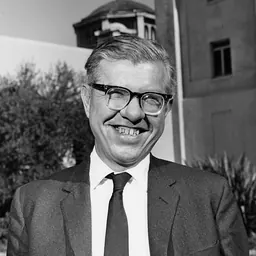


Related people
Same field, nearest in time


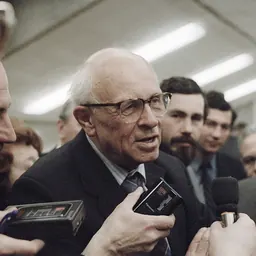

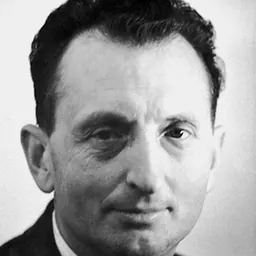
Contemporaries
People whose lives overlapped Dennis W. Sciama's


Frequently asked questions
Who was Dennis W. Sciama?
British physicist (1926–1999)
When was Dennis W. Sciama born?
Dennis W. Sciama was born on 18 November 1926 in Manchester.
When did Dennis W. Sciama die?
Dennis W. Sciama died on 18 December 1999 in Oxford.
What was Dennis W. Sciama's occupation?
Dennis W. Sciama was a physicist, astrophysicist, astronomer and university teacher.
What was Dennis W. Sciama known for?
Dennis W. Sciama was known for Big Bang theory, Black holes, Cosmology, Darkmatter, Gravitational waves and Quasars.
What nationality was Dennis W. Sciama?
Dennis W. Sciama was British.
Sources & further reading
Cite this page
APA: Biography.guide. (2026). Dennis W. Sciama. https://biography.guide/dennis-w-sciama/
MLA: "Dennis W. Sciama." Biography.guide, https://biography.guide/dennis-w-sciama/.
Chicago: "Dennis W. Sciama." Biography.guide. https://biography.guide/dennis-w-sciama/.
Data last updated: 2026-09-20 · Spot an error? Report a correction.
Page generated 2026-09-27 05:31 UTC