
About Martin Rees
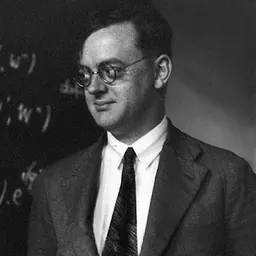
Born 1942. Martin Rees is a British physicist, astronomer, politician, university teacher, astrophysicist and cosmologist.
module2 =
Martin John Rees, Baron Rees of Ludlow, (born 23 June 1942) is a British cosmologist and astrophysicist. He was the fifteenth Astronomer Royal from 1995 to 2025, Master of Trinity College, Cambridge, from 2004 to 2012, and President of the Royal Society from 2005 to 2010. He has received various physics awards including the Wolf Prize in Physics in 2024 for fundamental contributions to high-energy astrophysics, galaxies and structure formation, and cosmology.
Early life and education Rees was born on 23 June 1942 in York, England. After a peripatetic life during the war, his parents, both teachers, settled with Rees, an only child, in a rural part of Shropshire near the border with Wales. There, his parents founded Bedstone College, a boarding school based on progressive educational concepts. He was educated at Bedstone College, then from the age of 13 at Shrewsbury School. Rees's post-graduate work in astrophysics in the mid-1960s coincided with an explosion of new discoveries, with breakthroughs ranging from confirmation of the Big Bang, the discovery of neutron stars and black holes, and a host of other revelations. King's College, Clare Hall, Robinson College and Jesus College, Cambridge. In 2003 he was elected foreign member of the Finnish Society of Sciences and Letters.
Rees is a member of the Board of the Institute for Advanced Study in Princeton, and the Oxford Martin School. He co-founded the Centre for the Study of Existential Risk and serves on the Scientific Advisory Board for the Future of Life Institute. He has formerly been a Trustee of the British Museum, the Science Museum, the Gates Cambridge Trust and the Institute for Public Policy Research (IPPR).
His doctoral students have included Roger Blandford, Priyamvada Natarajan, He is an author of books on astronomy and science intended for the lay public and gives many public lectures and broadcasts. In 2010 he was invited to deliver the Reith Lectures for the BBC, now published as From Here to Infinity: Scientific Horizons.
Rees has made contributions to the origin of cosmic microwave background radiation, as well as to galaxy clustering and formation. His studies of the distribution of quasars challenged the now-rejected steady state theory. He was one of the first to propose that enormous black holes power quasars, and that superluminal astronomical observations can be explained as an optical illusion caused by an object moving partly in the direction of the observer.
Since the 1990s, Rees has worked on gamma-ray bursts, especially in collaboration with Péter Mészáros, and on how the "cosmic dark ages" ended when the first stars formed. Since the 1970s he has been interested in anthropic reasoning, and the possibility that our visible universe is part of a vaster "multiverse".
Public engagement In addition to expansion of his scientific interests, Rees has written and spoken extensively about the problems and challenges of the 21st century, and interfaces between science, ethics, and politics.
In his books Our Final Hour and On the Future, Rees warns that humanity faces significant existential risks in the 21st century due to technological advancements, particularly in bioengineering and artificial intelligence. He estimated a 50% chance of human extinction during the 21st century, but remains optimistic that if the risks are successfully managed, technology could drastically improve standards of living.
In 2007, he delivered the Gifford Lectures on 21st Century Science: Cosmic Perspective and Terrestrial Challenges at the University of St Andrews. He made two TED talks on existential risks.
Rees thinks the search for extraterrestrial intelligence is worthwhile and has chaired the advisory board for the "Breakthrough Listen" project, a programme of SETI investigations funded by the Russian/US investor Yuri Milner.
In August 2014, Rees was one of 200 public figures who were signatories to a letter to The Guardian expressing their hope that Scotland would vote to remain part of the United Kingdom in September's referendum on that issue.
To mark the 300th anniversary of the Board of Longitude in 2014, he instigated a programme of new challenge prizes of £5-10m under the name "Longitude Prize 2014" for which he chairs the advisory board. The themes of the first two prizes are the reduction of inappropriate antibiotic use, and enhancing the safety and independence of dementia sufferers. The Longitude Prize on Dementia was announced in 2022.
In 2015, he was co-author of the report that launched the Global Apollo Programme, which calls for developed nations to commit to spending 0.02% of their GDP for 10 years, to fund coordinated research to make carbon-free baseload electricity less costly than electricity from coal by the year 2025.
In his general writings and in the House of Lords, his focus has been on the uses and abuses of advanced technology and on issues such as assisted dying, preservation of dark skies, and reforms to broaden the post-16 and undergraduate curricula in the UK. He is also a current member of the House of Lords Science and Technology Committee.
Selected bibliography Cosmic Coincidences: Dark Matter, Mankind, and Anthropic Cosmology (co-author John Gribbin), 1989, Bantam; New Perspectives in Astrophysical Cosmology, 1995; Gravity's Fatal Attraction: Black Holes in the Universe, 1995; , 2nd edition 2009, Before the Beginning – Our Universe and Others, 1997; Just Six Numbers: The Deep Forces That Shape the Universe, 1999; (see for a list of the six numbers) Our Cosmic Habitat, 2001; Our Final Hour: A Scientist's Warning: How Terror, Error, and Environmental Disaster Threaten Humankind's Future In This Century—On Earth and Beyond (UK title: Our Final Century: Will the Human Race Survive the Twenty-first Century?), 2003; What We Still Don't Know yet to be published. From Here to Infinity: Scientific Horizons, 2011; On the Future: Prospects for Humanity, October 2018, Princeton University Press; (Online version is titled "How astronomers revolutionized our view of the cosmos".) The End of Astronauts (co-author Donald Goldsmith), 2022, Harvard University Press If Science is to Save us, 2022, Polity Press Rees, M.,"Cosmology and High Energy Astrophysics: A 50 year Perspective on Personality, Progress, and Prospects", Annual Review of Astronomy and Astrophysics, vol. 60:1–30, 2022.
Honours and awards He has been president of the Royal Astronomical Society (1992–94) and the British Science Association (1995–96), and was a Member of Council of the Royal Institution of Great Britain until 2010. Rees has received honorary degrees from a number of universities including Bath, Hull, Sussex, Uppsala, Toronto, Durham, Oxford, Cambridge, Harvard, Yale, Melbourne and Sydney. He belongs to several foreign academies, including the US National Academy of Sciences, the Russian Academy of Sciences, the Pontifical Academy of Sciences, the Royal Netherlands Academy of Arts and Sciences, the Science Academy of Turkey and the Japan Academy. He became president of the Royal Society on 1 December 2005 and continued until the end of the Society's 350th Anniversary Celebrations in 2010. In 2011, he was awarded the Templeton Prize. In 2005, Rees was elevated to a life peerage, sitting as a crossbencher in the House of Lords as Baron Rees of Ludlow, of Ludlow in the County of Shropshire. In 2005, he was awarded the Crafoord Prize. Other awards and honours include:
1975 – Elected to the American Academy of Arts and Sciences 1982 – Elected to the National Academy of Sciences 1984 – Heineman Prize 1987 – Gold Medal of the Royal Astronomical Society 1989 – Balzan Prize for High Energy Astrophysics 1992 – Knight Bachelor 1993 – Bruce Medal 1993 – Elected to the American Philosophical Society 1995 – Honorary doctorate from the Faculty of Science and Technology at Uppsala University, Sweden 1999 – Golden Plate Award of the American Academy of Achievement 2000 – Bruno Rossi Prize 2001 – Gruber Prize in Cosmology 2003 – Albert Einstein World Award of Science 2004 – Henry Norris Russell Lectureship of the American Astronomical Society 2004 – Lifeboat Foundation's Guardian Award 2004 – Royal Society's Michael Faraday Prize for science communication 2005 – Life Peerage 2005 – Crafoord Prize, with James Gunn and James Peebles 2007 – Order of Merit – in the personal gift of The Queen 2007 – Caird Medal of the National Maritime Museum 2007 – Honorary Fellow 2012 – Institute of Physics Isaac Newton Medal 2012 – Manchester Literary and Philosophical Society Dalton Medal 2013 – Dirac Medal ICTP 2016 – Honorary Doctorate, Harvard University (awarded in Cambridge, Massachusetts, US on 26 May 2016) 2017 – Lilienfeld Prize 2020 – Fritz Zwicky Prize for Astrophysics and Cosmology 2020 – Elected a Legacy Fellow of the American Astronomical Society. 2023 – Copley Medal 2024 – Wolf Prize in Physics
The Asteroid 4587 Rees and the Sir Martin Rees Academic Scholarship at Shrewsbury International School are named in his honour.
In June 2022, to celebrate his 80th birthday, Rees was the subject of the BBC programme The Sky at Night, in conversation with Professor Chris Lintott.
Personal life Rees married the anthropologist Caroline Humphrey in 1986. Rees is a lifelong supporter of the Labour Party, but has no party affiliation when sitting in the House of Lords.
Don’t just read it —
keep it.
Full-length biographies made to live with: read them, listen on the way to work, watch them tonight.
- E-book
- Audio
- Video
Instant download · yours to keep · every purchase keeps this site free
Important facts
more
Lord Martin Rees, Professor Martin John Rees, Sir Martin Rees, Rees M. J.Family & relationships
People in Martin Rees's life
Named in this biography and alive at the same time



Related people
Same field, nearest in time


Contemporaries
People whose lives overlapped Martin Rees's
Frequently asked questions
Who is Martin Rees?
British cosmologist and astrophysicist (1942-)
When was Martin Rees born?
Martin Rees was born on 23 June 1942 in York.
What is Martin Rees's occupation?
Martin Rees is a physicist, astronomer, politician, university teacher, astrophysicist and cosmologist.
What nationality is Martin Rees?
Martin Rees is British.
Sources & further reading
Cite this page
APA: Biography.guide. (2026). Martin Rees. https://biography.guide/martin-rees/
MLA: "Martin Rees." Biography.guide, https://biography.guide/martin-rees/.
Chicago: "Martin Rees." Biography.guide. https://biography.guide/martin-rees/.
Data last updated: 2026-09-20 · Spot an error? Report a correction.
Page generated 2026-09-27 05:21 UTC