
About Bruno Rossi
Lived 1905 – 1993 (aged 88). Bruno Rossi was an Italian and American astronomer, astrophysicist, physicist, university teacher and nuclear physicist.
Bruno Benedetto Rossi ( , ; 13 April 1905 – 21 November 1993) was an Italian-American experimental physicist. He made major contributions to particle physics and the study of cosmic rays. A 1927 graduate of the University of Bologna, he became interested in cosmic rays. To study them, he invented an improved electronic coincidence circuit, and travelled to Eritrea to conduct experiments that showed that cosmic ray intensity from the West was significantly larger than that from the East.
Forced to emigrate in October 1938 due to the Italian racial laws, Rossi moved to Denmark, where he worked with Niels Bohr. He then moved to Britain, where he worked with Patrick Blackett at the University of Manchester. Finally, he went to the United States, where he worked with Enrico Fermi at the University of Chicago, and later at Cornell University. Rossi stayed in the United States and became an American citizen.
During World War II, Rossi worked on radar at the MIT Radiation Laboratory, and he played a pivotal role in the Manhattan Project, heading the group at the Los Alamos Laboratory that carried out the RaLa Experiments. After the war, he was recruited by Jerrold Zacharias at MIT, where Rossi continued his pre-war research into cosmic rays.
In the 1960s, he pioneered X-ray astronomy and space plasma physics. His instrumentation on Explorer 10 detected the magnetopause, and he initiated the rocket experiments that discovered Scorpius X-1, the first extra-solar source of X-rays.
Italy Rossi was born to a Jewish family in Venice, Italy. He was the eldest of three sons of Rino Rossi and Lina Minerbi. His father was an electrical engineer who participated in the electrification of Venice. Rossi was tutored at home until the age of fourteen, after which he attended the Ginnasio and the Liceo in Venice. Rossi began an important phase of his career. He summarised this period in a memoir: "The Decay of 'Mesotrons' (1939–1943): Experimental Particle Physics in the Age of Innocence", which he presented in a symposium at Fermilab in 1980. Elected to the United States National Academy of Sciences (1950) Elected to the American Philosophical Society (1959)
Legacy Rossi X-ray Timing Explorer, a NASA satellite X-ray observatory launched in 1995.
Don’t just read it —
keep it.
Full-length biographies made to live with: read them, listen on the way to work, watch them tonight.
- E-book
- Audio
- Video
Instant download · yours to keep · every purchase keeps this site free
Important facts
People in Bruno Rossi's life
Named in this biography and alive at the same time




Related people
Same field, nearest in time
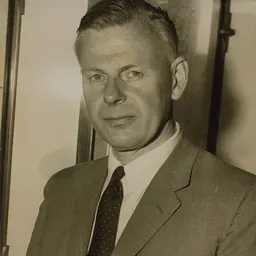
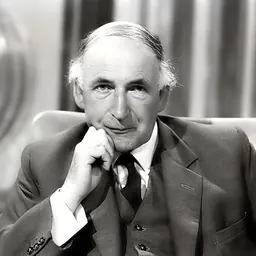



Contemporaries
People whose lives overlapped Bruno Rossi's
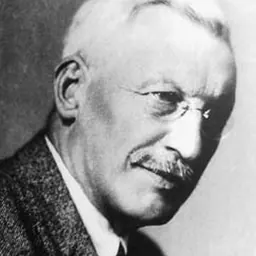

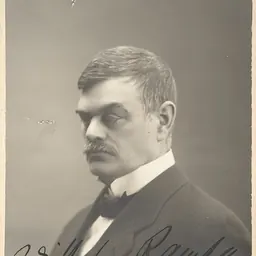

Frequently asked questions
Who was Bruno Rossi?
Italian experimental physicist (1905–1993)
When was Bruno Rossi born?
Bruno Rossi was born on 13 April 1905 in Venice.
When did Bruno Rossi die?
Bruno Rossi died on 21 November 1993 in Cambridge.
What was Bruno Rossi's occupation?
Bruno Rossi was an astronomer, astrophysicist, physicist, university teacher and nuclear physicist.
What nationality was Bruno Rossi?
Bruno Rossi was Italian and American.
Sources & further reading
Cite this page
APA: Biography.guide. (2026). Bruno Rossi. https://biography.guide/bruno-rossi/
MLA: "Bruno Rossi." Biography.guide, https://biography.guide/bruno-rossi/.
Chicago: "Bruno Rossi." Biography.guide. https://biography.guide/bruno-rossi/.
Data last updated: 2026-09-26 · Spot an error? Report a correction.
Page generated 2026-09-27 05:16 UTC