
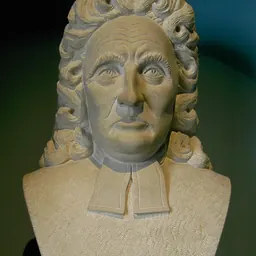
Daniel Waterland
English theologian
About Daniel Waterland
Lived 1683 – 1740 (aged 57). Daniel Waterland was an anglican theologian.
Daniel Waterland (14 Feb 1683 – 23 December 1740) was an English theologian. He became Master of Magdalene College, Cambridge in 1714, Chancellor of the Diocese of York in 1722, and Archdeacon of Middlesex in 1730. Daniel Waterland, engraving by John Faber the Younger after Richard Phillips. Waterland opposed the latitudinarians of his time. He was an acute controversialist on behalf of the orthodox doctrine of the Trinity, on which he wrote several treatises. He was also the author of a History of the Athanasian Creed (1724).
Early life The second son of Henry Waterland, rector of Walesby and Flixborough, Lincolnshire, by his second wife, he was born at Walesby on 14 Feb 1683. He was educated at the Lincoln Grammar School.
Cambridge academic Waterland was conscientious, and devoted to tutorial work and university business. He was examiner in arts in 1710 and in the philosophical schools in 1711. In February 1713 he was appointed by the visitor, Lord Suffolk and Bindon, to the mastership of his college, vacant by the death of Gabriel Quadring, and presented to the rectory of Ellingham, Norfolk. At the public commencement in 1714 he held a disputation with Thomas Sherlock on the question of Arian subscription. On 14 November 1715 he succeeded Sherlock as vice-chancellor of the university. In 1716 he preached the sermon on occasion of the university's public thanksgiving (7 June) for the suppression of the Jacobite Rising of 1715, and on 22 October presented to the Prince of Wales at Hampton Court an address of congratulation. A second edition was issued in 1728. Reprints appeared at London in 1850, and at Oxford, edited by John Richard King, in 1870; Waterland's argument was discussed by Joseph Rawson Lumby, History of the Creeds, 3rd ed. 1887.
Waterland's other works, besides sermons and charges, included:
The Case of Arian Subscription Considered, Cambridge, 1721; A Supplement to the Case of Arian Subscription Considered, London, 1722; reply to Arthur Ashley Sykes. The Scriptures and the Arians compared in their accounts of God the Father and God the Son, London, 1722. A Second Vindication of Christ's Divinity, London, 1723. A Further Vindication of Christ's Divinity, London, 1724. Remarks upon Dr. Clarke's Exposition of the Church Catechism, London, 1730; to Sykes and Thomas Emlyn. The Nature, Obligation, and Efficacy of the Christian Sacraments Considered, London, 1730; and its 'Supplement' published the same year. Advice to a Young Student, London, 1730; 3rd ed. Cambridge, 1760; London, 1761. Regeneration Stated and Explained, London, 1740, 1780. A Summary View of the Doctrine of Justification. An Inquiry concerning the Antiquity of the Practice of Infant Communion.
These two last tracts first appeared posthumously with Waterland's Sermons, ed. Joseph Clarke, London, 1742, 2 vols.; 2nd ed. 1776.
A collected edition of Waterland's works, with a review of his life and writings by William Van Mildert, appeared at Oxford in 1823, 10 vols. The last volume is mainly letters; there are also Fourteen Letters to Zachary Pearce, ed. Edward Churton, Oxford, 1868, and Five Letters to William Staunton, appended to the latter's Reason and Revelation Stated, London, 1722. Four letters to John Anstis the elder are in Stowe MS. 749, ff. 273–49.
Modern Treatment
The Rt. Rev. Ray R. Sutton of Dallas, Texas completed a doctoral thesis under Dr. Alister McGrath entitled The Sacramental Theology of Daniel Waterland, completed in 1998 and awarded by Coventry University. Waterland is covered extensively in the book Reformation Without End: Religion, Politics and the Past in Post-revolutionary England ' by Robert G. Ingram (Manchester University Press, 2018). For his thought on "fundamental articles", see chapter six of Stephen Pickard's doctoral thesis at Durham, and the first major study in the Cambridge University doctoral thesis of Simeon Williams.
Don’t just read it —
keep it.
Full-length biographies made to live with: read them, listen on the way to work, watch them tonight.
- E-book
- Audio
- Video
Instant download · yours to keep · every purchase keeps this site free
Important facts
People in Daniel Waterland's life
Named in this biography and alive at the same time
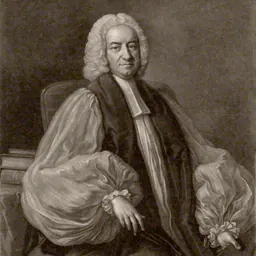

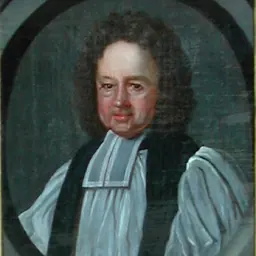
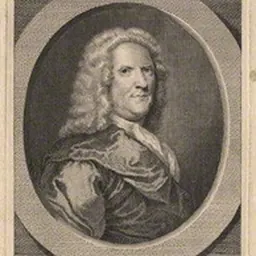


Related people
Same field, nearest in time



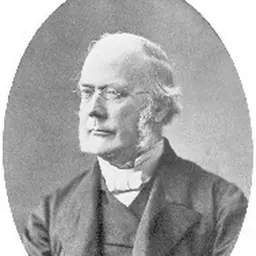

Contemporaries
People whose lives overlapped Daniel Waterland's

Frequently asked questions
Who was Daniel Waterland?
English theologian (1683-1740)
When was Daniel Waterland born?
Daniel Waterland was born on 14 February 1683 in Lincolnshire.
When did Daniel Waterland die?
Daniel Waterland died on 23 December 1740.
What was Daniel Waterland's occupation?
Daniel Waterland was an anglican theologian.
Sources & further reading
Cite this page
APA: Biography.guide. (2026). Daniel Waterland. https://biography.guide/daniel-waterland/
MLA: "Daniel Waterland." Biography.guide, https://biography.guide/daniel-waterland/.
Chicago: "Daniel Waterland." Biography.guide. https://biography.guide/daniel-waterland/.
Data last updated: 2026-09-25 · Spot an error? Report a correction.
Page generated 2026-09-27 05:12 UTC