
Thomas Sherlock
Bishop of Bangor; Bishop of Salisbury; Bishop of London
About Thomas Sherlock
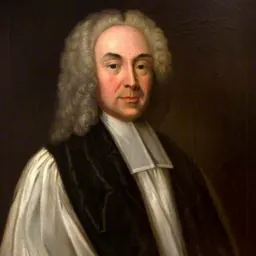
Lived 1678 – 1761 (aged 82–83). Thomas Sherlock was a British and English anglican priest, theologian, church historian, bishop, writer and academic.
Thomas Sherlock (167818 July 1761) was a British divine who served as a Church of England bishop for 33 years. He is also noted in church history as an important contributor to Christian apologetics.
Life Born in London, he was the son of the Very Reverend William Sherlock, Dean of St Paul's. He was educated at Eton College and St Catharine's College, Cambridge. In 1704 he succeeded his father as Master of the Temple, where he was very popular.
Sherlock died in July 1761, and is buried in the churchyard of All Saints Church, Fulham, Middlesex. Much of his ancestral and earned wealth passed to the Gooch baronets who took Sherlock for many generations thereafter in tribute; his picture hanging in Benacre Hall, their purchased home in the period of his death.
Career In 1714 he became master of his old college at Cambridge and later the university's vice-chancellor, whose privileges he defended against Richard Bentley. In 1715, he was appointed Dean of Chichester.
He took a prominent part in the Bangorian controversy against Benjamin Hoadly. Sherlock became Bishop of Bangor in 1728. He was translated to Salisbury in 1734 (where he was admitted as ex officio Chancellor of the Order of the Garter on 20 February 1738); and in 1748 he was raised to London, where he was sworn of the Privy Council. He held the see of London until his death.
Sherlock was a capable administrator and cultivated friendly relations with Dissenters. In Parliament he gave good service to his old schoolfellow, Robert Walpole, Prime Minister of Great Britain. Apologetics The Deist Controversy was a debate from the late 17th century to the mid 18th century. The deists believed that there was a god worthy of worship who had created the world, denied special divine action beyond creation, consequently they believed that Christianity was a false religion. Sherlock as well as may other scholars argued against deist theology. The apologetics movement that Sherlock was part of provided an intellectual defense of the Christian religion.
Sherlock's argument for the evidences of the resurrection of Jesus Christ has continued to interest later Christian apologists such as William Lane Craig and John Warwick Montgomery. His place in the history of apologetics has been classified by Ross Clifford as belonging to the legal or juridical school of Christian apologetics.
Writings
He published against Anthony Collins's deistic Grounds of the Christian Religion a volume of sermons entitled The Use and Intent of Prophecy in the Several Ages of the World (1725); and in reply to Thomas Woolston's Discourses on the Miracles he wrote a volume entitled The Tryal of the Witnesses of the Resurrection of Jesus (1729), which soon ran through fourteen editions. His Pastoral Letter (1750) on the late earthquakes had a circulation of many thousands, and four or five volumes of Sermons which he published in his later years (1754–1758) were also at one time highly esteemed. Jane Austen, wrote to her niece Anna in 1814, "I am very fond of Sherlock's Sermons, prefer them to almost any."
A collected edition of his works, with a memoir, in five volumes, by Thomas Smart Hughes, appeared in 1830.
Sherlock's Tryal of the Witnesses is generally understood by scholars such as Edward Carpenter, Colin Brown and William Lane Craig, to be a work that the Scottish philosopher David Hume had probably read, and to which Hume offered a counter viewpoint in his empiricist arguments against the possibility of miracles.
Sherlock also wrote a respected work entitled A Discourse Concerning the Divine Providence, in which he argues that the Sovereignty and Providence of God are unimpeachable.
Don’t just read it —
keep it.
Full-length biographies made to live with: read them, listen on the way to work, watch them tonight.
- E-book
- Audio
- Video
Instant download · yours to keep · every purchase keeps this site free
Important facts
Family & relationships
People in Thomas Sherlock's life
Named in this biography and alive at the same time

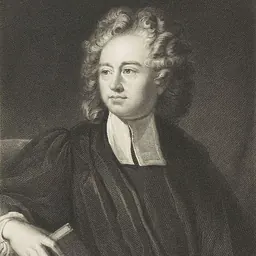


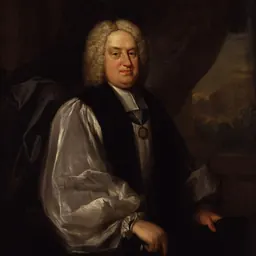


Related people
Same field, nearest in time
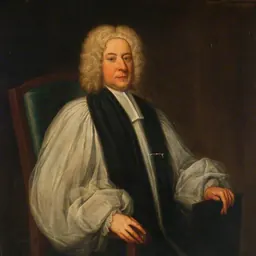
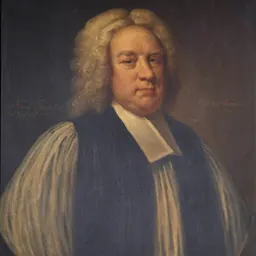
Contemporaries
People whose lives overlapped Thomas Sherlock's


Frequently asked questions
Who was Thomas Sherlock?
Bishop of Bangor; Bishop of Salisbury; Bishop of London
When was Thomas Sherlock born?
Thomas Sherlock was born in 1678 in London.
When did Thomas Sherlock die?
Thomas Sherlock died on 18 July 1761 in London.
What was Thomas Sherlock's occupation?
Thomas Sherlock was an anglican priest, theologian, church historian, bishop, writer and academic.
What nationality was Thomas Sherlock?
Thomas Sherlock was British and English.
Sources & further reading
Cite this page
APA: Biography.guide. (2026). Thomas Sherlock. https://biography.guide/thomas-sherlock/
MLA: "Thomas Sherlock." Biography.guide, https://biography.guide/thomas-sherlock/.
Chicago: "Thomas Sherlock." Biography.guide. https://biography.guide/thomas-sherlock/.
Data last updated: 2026-09-26 · Spot an error? Report a correction.
Page generated 2026-09-27 05:15 UTC