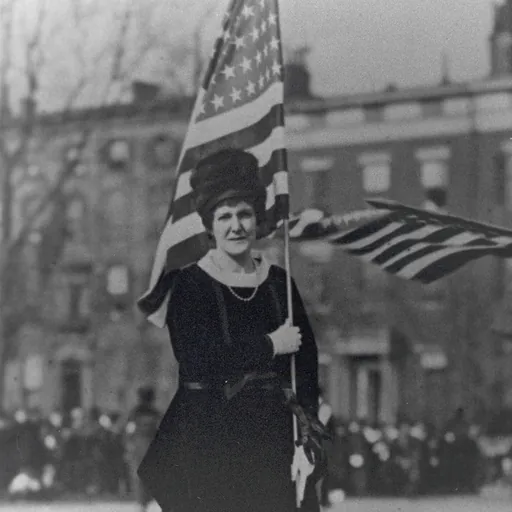
Cornelia Bryce Pinchot
American political and social activist, advocate of women's rights
About Cornelia Bryce Pinchot
Lived 1881 – 1960 (aged 79). Cornelia Bryce Pinchot was an American activist, politician and suffragist.
Cornelia Elizabeth Bryce Pinchot (August 20, 1881 – September 9, 1960), also known as “Leila Pinchot,” was a 20th-century American conservationist, Progressive politician, and women's rights activist. She was the wife of Gifford Pinchot (1865–1946), the renowned conservationist and two-time Governor of the Commonwealth of Pennsylvania, and was also a close friend of U.S. President Theodore Roosevelt. She was the maternal great-granddaughter of Peter Cooper, founder of Cooper Union, and daughter of U.S. Congressman and Envoy Lloyd Stephens Bryce (1851–1917). She played a key role in the improvement of Grey Towers, the Pinchot family estate in Milford, Pennsylvania, which was donated to the U.S. Forest Service in 1963 and then designated as a National Historic Landmark in 1966
A founding member of the Committee of 100 and major donor to the education and legal defense funds of the National Association for the Advancement of Colored People (NAACP) during the organization's first years of operation, she has been described by historians at the Pennsylvania Historical and Museum Commission as “one of the most politically active first ladies in the history of Pennsylvania.”
Formative years Born into a wealthy, Victorian-era family in Newport, Rhode Island, in 1881, Cornelia Bryce was a daughter of Lloyd Stephens Bryce (1851–1917) and Edith (Cooper) Bryce (1854–1916), and a great-granddaughter of Peter Cooper, founder of Cooper Union, a science and engineering college in New York City which made its educational offerings available free of charge to every student admitted. Her siblings were Edith Clare Bryce Cram (1880–1960), who later founded a pacifist organization during World War II, and Peter Cooper Bryce (1889–1964), an officer with the U.S. Cavalry who served stateside during World War I.
Among family and friends, Cornelia Bryce was referred to as “Leila.” Educated in private schools and via family trips to Europe, she was reportedly an energetic, independent, and striking woman who “dressed in flamboyant clothes and dyed her hair red.” Her close friend Teddy Roosevelt would grow to admire and later extol her incisive understanding of politics.
In 1911, her father was appointed envoy extraordinary and minister plenipotentiary to the Netherlands, a post he held for two years. The following year, she became an outspoken Progressive.
Cornelia Bryce Pinchot, left, with Mrs. J. Gordon Douglas, Mrs. Cornelius Tangeman, and Mrs. Katherine McCook Knox, women's suffrage parade, New York City, 1917. According to historians at the Grey Towers National Historic Site, Cornelia Bryce's own political career was sparked by the women's suffrage movement—"a cause she supported vigorously.” In addition, she became an early financial supporter of the National Association for the Advancement of Colored People (NAACP), donating $120,000 to its education and defense fund, “spoke out for birth control, women's rights and educational reform and blasted sweat shops and those who abused child labor in the work place,” and became a member of her “local school board, supported prohibition and was one of the first prominent women to take a ride in an airplane.” She also “encouraged women to take an active part in politics and career.” but her happiness was dampened when her mother-in-law died several days later. Shortly thereafter, her husband and his brother, Amos, inherited their family's estate—Grey Towers—and she and her husband began their tradition of spending summers there.
Cornelia Pinchot and family at Grey Towers, Milford, Pennsylvania, c. 1921. In 1915, Cornelia Pinchot gave birth to her only child—Gifford Bryce Pinchot (1915–1989)—on December 22 in New York City. Raised at Grey Towers, her son would go on to graduate from Yale University (1938) and the Columbia University School of Medicine (1942), and serve in the U.S. Navy Medical Corps during World War II before joining the faculty at Yale and then Johns Hopkins University (1958), where he later became a full professor.
Her parents subsequently died within a year of one another—on April 29, 1916, and April 2, 1917, respectively. After its ratification, she became active in the newly created League of Women Voters. He took office during the early part of the Great Depression when the state's unemployment rate was at 11.8 percent—a rate that would climb to 40.2 percent as the nationwide and worldwide financial and social crises deepened, and as the heavily conservative state legislature opposed his efforts to create an unemployment compensation system and other programs to mitigate the depression's impact on residents statewide. Despite this resistance, he instituted a pension program for blind Pennsylvanians, approved regulations to punish banks and corporations for misconduct, established the first environmental protection agency in America and a sanitary water board, launched a transportation initiative that upgraded 20,000 miles of rural roads, reduced utility rates, and repealed voting rights restrictions requiring Pennsylvanians to provide proof of residence by presenting copies of their tax receipts before voting.
And she continued to be active in politics in her own right. An advocate for the reform of labor laws, improved educational opportunities for women, and the unionization of tradesmen, she ran for a seat in the U.S. Congress, but lost that Congressional election in 1926 and two others within a ten-year period (in 1928 and 1932).
“Dressed in red,” in 1933, “she joined the picket lines of teen-age boys and girls who … walked out of (Pennsylvania) textile plants because they [earned] as little as 57 cents a week”:
In 1934, she attempted to succeed her husband as governor, but was unsuccessful in her bid for higher office. After the Pinchot family returned home, Cornelia Pinchot gave free lectures at schools and movie theaters in conjunction with screenings of a documentary about the expedition that had been filmed by photographer Howard H. Cleaves.
World War II and later life Shortly after the United States entered World War II, Cornelia Pinchot began volunteering for the Office of Civilian Defense in Washington, D.C., and was appointed as the coordinator of the District of Columbia's food and housing services. His remains were returned to Pennsylvania for burial at the family's mausoleum at the Milford Cemetery, not far from Grey Towers. Three years later, she was one of the speakers who addressed the audience assembled on June 15, 1949, for the renaming of the Columbia National Forest to the Gifford Pinchot National Forest.
Grey Towers, front facade, 2011. Post-war, she traveled across Europe to study the difficulties European leaders were having in feeding and providing services for the large number of children and adults made homeless by the war.
Don’t just read it —
keep it.
Full-length biographies made to live with: read them, listen on the way to work, watch them tonight.
- E-book
- Audio
- Video
Instant download · yours to keep · every purchase keeps this site free
Important facts
Family & relationships
People in Cornelia Bryce Pinchot's life
Named in this biography and alive at the same time
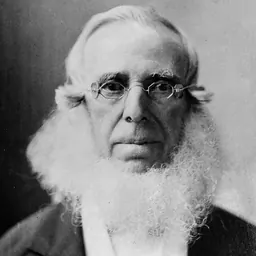
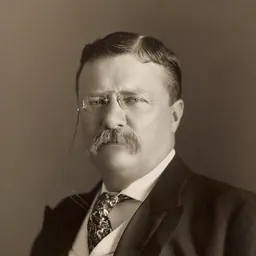

Related people
Same field, nearest in time



Contemporaries
People whose lives overlapped Cornelia Bryce Pinchot's


Frequently asked questions
Who was Cornelia Bryce Pinchot?
American political and social activist, advocate of women's rights
When was Cornelia Bryce Pinchot born?
Cornelia Bryce Pinchot was born on 20 August 1881 in Newport, Rhode Island.
When did Cornelia Bryce Pinchot die?
Cornelia Bryce Pinchot died on 9 September 1960 in Washington, D.C..
What was Cornelia Bryce Pinchot's occupation?
Cornelia Bryce Pinchot was an activist, politician and suffragist.
What nationality was Cornelia Bryce Pinchot?
Cornelia Bryce Pinchot was American.
Sources & further reading
· Wikipedia: Cornelia Bryce Pinchot
· DBpedia: Cornelia Bryce Pinchot
Cite this page
APA: Biography.guide. (2026). Cornelia Bryce Pinchot. https://biography.guide/cornelia-bryce-pinchot/
MLA: "Cornelia Bryce Pinchot." Biography.guide, https://biography.guide/cornelia-bryce-pinchot/.
Chicago: "Cornelia Bryce Pinchot." Biography.guide. https://biography.guide/cornelia-bryce-pinchot/.
Data last updated: 2026-09-22 · Spot an error? Report a correction.
Portrait: Wikimedia Commons · author & licence
Page generated 2026-09-27 05:02 UTC