
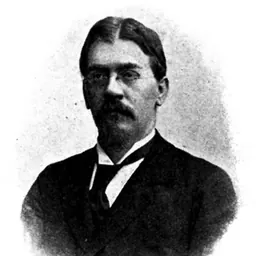
Cooper Harold Langford
American philosopher and mathematical logician
About Cooper Harold Langford
Lived 1895 – 1964 (aged 69). Cooper Harold Langford was an American philosopher, mathematician and university teacher.
Cooper Harold Langford (25 August 1895 – 28 August 1964) was an American analytic philosopher and mathematical logician who co-authored the book Symbolic Logic with C. I. Lewis. He is also known for introducing the Langford–Moore paradox.
Biography After spending his freshman year at the University of Arkansas, Langford transferred in 1915 to Clark University, where he received his A.B. degree in 1920. His college education was interrupted by World War I in 1917 when he joined the U.S. army and spent 20 months overseas. After receiving his A.B. degree, Langford enrolled in 1920 as a graduate student at Harvard University, where he earned his Ph.D. in psychology under Edwin Boring in 1924. With the aid of a Sheldon Traveling Fellowship, he studied logic and philosophy at Cambridge University during 1924–1925. Upon his return to the U.S., Langford became an instructor at Harvard from 1925 to 1927. After spending two academic years, 1927–1929, as an assistant professor at the University of Washington, he became in the autumn of 1929 an associate professor with tenure in the philosophy department at the University of Michigan. Langford became a full professor at the University of Michigan in 1933, remaining there for the rest of his career. In the academic year 1935–1936, he was a Guggenheim fellow, dividing his time between Vienna and Cambridge, England.
Langford is famous as co-author of the 1932 book Symbolic Logic and the system of modal logic S5. His doctoral students include Arthur Burks.
In the philosophy of language, Langford is known for the Langford substitution test. The test distinguishes used from merely mentioned expressions in a given sentence by translating the sentence into a different language (see Langford 1937). If the very same expression reoccurs in the translation, it was mentioned rather than used in the original sentence. If the expression does not reoccur and is replaced by some other (usually synonymous) expression, then it was used in the original sentence. This test is used by a famous argument from Alonzo Church concerning Rudolf Carnap's treatment of belief attributions and other analyses of beliefs as relations to sentences (see Church 1950).
Langford was married twice. His son Cooper H. Langford was a chemist.
Selected works
Don’t just read it —
keep it.
Full-length biographies made to live with: read them, listen on the way to work, watch them tonight.
- E-book
- Audio
- Video
Instant download · yours to keep · every purchase keeps this site free
Important facts
People in Cooper Harold Langford's life
Named in this biography and alive at the same time



Related people
Same field, nearest in time
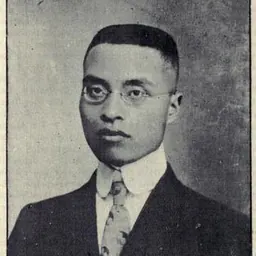

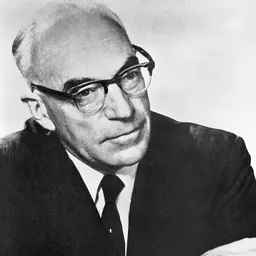
Contemporaries
People whose lives overlapped Cooper Harold Langford's
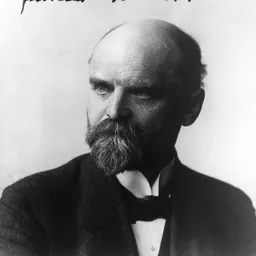
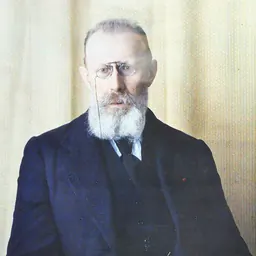

Frequently asked questions
Who was Cooper Harold Langford?
American philosopher and mathematical logician (1895-1964)
When was Cooper Harold Langford born?
Cooper Harold Langford was born on 25 August 1895 in Logan County.
When did Cooper Harold Langford die?
Cooper Harold Langford died on 28 August 1964.
What was Cooper Harold Langford's occupation?
Cooper Harold Langford was a philosopher, mathematician and university teacher.
What nationality was Cooper Harold Langford?
Cooper Harold Langford was American.
Sources & further reading
· Wikipedia: Cooper Harold Langford
· DBpedia: Cooper Harold Langford
Cite this page
APA: Biography.guide. (2026). Cooper Harold Langford. https://biography.guide/cooper-harold-langford/
MLA: "Cooper Harold Langford." Biography.guide, https://biography.guide/cooper-harold-langford/.
Chicago: "Cooper Harold Langford." Biography.guide. https://biography.guide/cooper-harold-langford/.
Data last updated: 2026-09-20 · Spot an error? Report a correction.
Page generated 2026-09-27 05:17 UTC