
Conyers Middleton
English 18th-century clergyman and writer
About Conyers Middleton
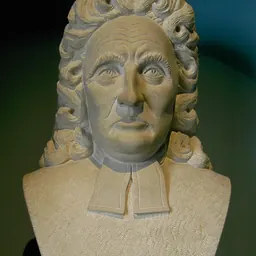
Lived 1683 – 1750 (aged 66). Conyers Middleton was a British writer, librarian and university teacher.
Conyers Middleton (27 December 1683 – 28 July 1750) was an English clergyman. Though mired in controversy and disputes, he was also considered one of the best stylists in English of his time.
Early life Middleton was born at Richmond, North Yorkshire, in 1683. His mother, Barbara Place (died 1700), was the second wife of William Middleton (c.1646–1714), the rector of Hinderwell. Conyers Middleton had two brothers and a half-brother. He graduated with a BA in 1703. He was elected a fellow of the college in 1705 and took his MA in 1706
The matter was then pursued in a pamphlet war and Bentley brought an action against the publisher of the anonymous On the Present State of Trinity College (1719), which was the work of Middleton with John Colbatch. Middleton claimed (9 February 1720) the pamphlet as his own; Bentley continued to prosecute the bookseller, until Middleton made a declaration of his authorship before witnesses. Bentley then laid an information against him in the King's Bench, based on a passage in the pamphlet about the impossibility of obtaining redress in "any proper court of justice in the kingdom". The proceedings were slow, and meanwhile Middleton took advantage of Bentley's proposals for an edition of the New Testament to attack him in a sharp pamphlet. Bentley replied, using terms of gross abuse directed mainly against Colbatch, to whom he chose to attribute the authorship. Bentley's reply was condemned by the Cambridge heads of houses. Colbatch brought an action against him, and Middleton wrote a longer and more temperate rejoinder (possibly helped by Charles Ashton). declared that his books ought to be burnt and he should be banished from the university, unless he made a recantation. Middleton made an explanation in a final pamphlet, but for some time remained silent on theological topics. His relationship with Edward Harley, 2nd Earl of Oxford, was damaged.
On the other hand, Alexander Pope thought he and Nathaniel Hooke were the only prose writers of the day who deserved to be cited as authorities on the language. Samuel Parr, while exposing Middleton's plagiarisms, praised his style. An edition of his works, containing several posthumous tracts, but not including the Life of Cicero, appeared in four volumes in 1752, and in five volumes in 1755.
Early works The pamphlets from the struggle with Bentley were: Middleton retaliated through the legal system, and Challoner in 1738 left for Douai. Thomas Seward wrote further on the subject in a 1746 "sequel" to Middleton and Henry Mower (i.e. More).
Controversy with the medical profession In 1726, prompted by the Harveian Oration by Richard Mead, with an appendix by Edmund Chishull, Middleton offended the medical profession with a dissertation contending that the healing art among the ancients was exercised only by slaves or freedmen. He was answered by John Ward, Joseph Letherland, and others, to whom Middleton replied. Middleton let the matter drop after meeting Mead socially; but two related works, an Appendix seu Definitiones, pars secunda and a letter from Middleton to another opponent, Charles La Motte, were later published in 1761 by William Heberden the elder.
Classical scholarship Engraving from Middleton's Germana quaedam antiquitatis eruditae monumenta (1745), showing a 1724 medal of Middleton by Giovanni Pozzo. His Life of Cicero (1741) was largely told in the words of the writings of Cicero. Middleton's reputation was enhanced by this work; but, as was later pointed out, he drew largely from a rare book by William Bellenden, De tribus luminibus Romanorum. The work was undertaken at the request of John Hervey, 2nd Baron Hervey; from their correspondence came the idea for The Roman Senate, published in 1747.
Middletonian controversy on miraculous powers The years 1747–8 produced Middleton's most significant theological writings. The Introductory Discourse and the Free Inquiry addressed "the miraculous powers which are supposed to have subsisted in the church from the earliest ages." Middleton suggested two propositions: that ecclesiastical miracles must be accepted or rejected in the mass; and that there is a distinction between the authority due to the early Church Fathers' testimony to the beliefs and practices of their times, and their credibility as witnesses to matters of fact. In 1750, he attacked Thomas Sherlock's notions of antediluvian prophecy, which had been published 25 years before. Among those who answered, or defended Sherlock, were: Thomas Ashton; Julius Bate; Anselm Bayly; Zachary Brooke; Thomas Church; Joseph Clarke; William Cooke; William Dodwell; Ralph Heathcote; John Jackson; Laurence Jackson; John Rotheram; Thomas Rutherforth; and Thomas Secker. Methodist founder John Wesley wrote an extensive response to Middleton recording his disagreement with him in January 1749.
Reflections on the variations, or inconsistencies, which are found among the four Evangelists was posthumous, published in 1752.
Family Although Middleton died childless, he married three times. as did her sister Sarah Scott.
Don’t just read it —
keep it.
Full-length biographies made to live with: read them, listen on the way to work, watch them tonight.
- E-book
- Audio
- Video
Instant download · yours to keep · every purchase keeps this site free
Important facts
People in Conyers Middleton's life
Named in this biography and alive at the same time


Related people
Same field, nearest in time




Contemporaries
People whose lives overlapped Conyers Middleton's


Frequently asked questions
Who was Conyers Middleton?
English 18th-century clergyman and writer
When was Conyers Middleton born?
Conyers Middleton was born on 27 December 1683 in Richmond.
When did Conyers Middleton die?
Conyers Middleton died on 28 July 1750 in Hildersham.
What was Conyers Middleton's occupation?
Conyers Middleton was a writer, librarian and university teacher.
What nationality was Conyers Middleton?
Conyers Middleton was British.
Sources & further reading
· Wikipedia: Conyers Middleton
Cite this page
APA: Biography.guide. (2026). Conyers Middleton. https://biography.guide/conyers-middleton/
MLA: "Conyers Middleton." Biography.guide, https://biography.guide/conyers-middleton/.
Chicago: "Conyers Middleton." Biography.guide. https://biography.guide/conyers-middleton/.
Data last updated: 2026-09-22 · Spot an error? Report a correction.
Page generated 2026-09-27 05:29 UTC