
About Thomas Secker
Lived 1693 – 1768 (aged 74). Thomas Secker was a British anglican priest.
Thomas Secker (21 September 16933 August 1768) was an archbishop of Canterbury in the Church of England.
Early life and studies Secker was born in Sibthorpe, Nottinghamshire. In 1699, he went to Richard Brown's free school in Chesterfield, Derbyshire, staying with his half-sister and her husband, Elizabeth and Richard Milnes. According to a story in the Gentleman's Magazine for 1768, Brown congratulated Secker for his successful studies by remarking, "If thou wouldst but come over to the Church, I am sure thou wouldst be a bishop." Under Brown's teaching, Secker believed that he had attained a competency in Greek and Latin.
He attended Timothy Jollie's dissenting academy at Attercliffe in Sheffield from 1708, but was frustrated by Jollie's poor teaching, famously remarking that he lost his knowledge of languages and that "only the old Philosophy of the Schools was taught there: and that neither ably nor diligently. The morals also of many of the young Men were bad. I spent my time there idly & ill". He left after one and a half years.
In 1710, he moved to London, staying in the house of the father of John Bowes, who had been one of Jollie's students and would one day become Lord Chancellor of Ireland. Whilst here, he studied geometry, conic sections, algebra, French, and John Locke's An Essay Concerning Human Understanding.
Tewkesbury Academy and Samuel Jones Also boarding at Bowes's house was Isaac Watts, who encouraged Secker to attend the dissenting academy in Gloucester set up by Samuel Jones. There Secker recovered his ability at languages, supplementing his understanding of Greek and Latin with studies in Hebrew, Chaldee and Syriac. Jones's course was also famous for his systems of Jewish antiquities and logic; maths was similarly studied to a higher than usual level.
Also at Jones's academy contemporaneously with Secker were the later Church of England bishops Joseph Butler and Isaac Maddox and also John Bowes; other members included the future dissenting leaders Samuel Chandler, Jeremiah Jones and Vavasour Griffiths. In 1713, Jones moved his academy to larger premises in Tewkesbury, partly financed by £200 from Secker. But Secker soon became involved with the clandestine correspondence between Butler and a Church of England cleric, Samuel Clarke, concerning Clarke's A Demonstration of the Being and Attributes of God (1705). Secker's role was to deliver Butler's letters personally to Gloucester post office and to pick up Clarke's replies. Meanwhile, Jones had acquired a reputation as a heavy drinker and the standard of his teaching may have decreased. Both Butler and Secker left his academy shortly afterwards, Butler in February 1714 and Secker in June of the same year.
He studied medicine in London and Paris before receiving the degree of MD from Leiden University in 1721. Upon his return to England, he entered Exeter College, Oxford and was ordained, by special letters, in 1722 from the Chancellor of Oxford University.
Career In 1724, he became rector of Houghton-le-Spring, Durham, resigning in 1727 on his appointment to the rectory of Holy Cross Church, Ryton, County Durham, and to a canonry of Durham. He became rector of St James's Westminster in 1733 and Bishop of Bristol in 1735. About this time George II commissioned him to arrange a reconciliation between the Prince of Wales and himself, but the attempt was unsuccessful. Secker left a substantial bequest to Ann and Thomas Frost of Nottingham. After Secker died his will was disputed by Thomas Frost, and he managed to persuade the court that £11,000 intended by Secker for charity should be redirected to his family.
Works His principal work was Lectures on the Catechism of the Church of England (London, 1769).
A sermon preach'd before the University of Oxford, at St. Mary's, on Act Sunday in the afternoon, 1733, 1734 A sermon preached before the Right Honourable the Lord-Mayor, the Court of Aldermen, the sheriffs, and the governors of the several hospitals of the City of London [...], 1738 A sermon preached before the House of Lords, 1739 A sermon preached at King's Street chapel, in the parish of St James, 1741 A sermon preached before the Incorporated Society for the Propagation of the Gospel in Foreign Parts, 1741, 1752 A sermon preached in the parish-church of Christ-Church, London, 1743 A sermon preached on occasion of the present rebellion in Scotland, 1745 A sermon preached before the governors of the London Hospital, 1754 A sermon preached before the Society corresponding with Incorporated Society in Dublin, 1757 Nine sermons preached in the parish of St. James, Westminster, 1758, 1771 The recommendation of William Smith, A.M., 1759 An answer to Dr. Mayhew's Observations on the charter and conduct of the Society for the Propagation of the Gospel in Foreign Parts, 1764 Fourteen sermons preached on several occasions, 1766 A sermon preached in the parish-church of Christ-church, London, 1766 Eight charges delivered to the clergy of the dioceses of Oxford and Canterbury, 1769 Lectures on the catechism of the Church of England, 1769, 1770, 1771, 1774, 1777, 1778, 1786, 1789, 1790, 1791, 1794 [Dublin], 1799 A letter to the Right Honourable Horatio Walpole, Esq; [...] concerning bishops in America, 1769 Sermons on several subjects, 1770 Eight charges delivered to the clergy of the dioceses of Oxford and Canterbury, 1770, 1771, 1780, 1790, 1799 Sermons on several subjects, 1771, 1772, 1790, 1795 Five sermons against popery, 1772 Dublin, 1773 Cork and Dublin Six sermons on the liturgy of the Church of England, 1773, 1784 Cork The works of Thomas Secker, 1775 Dublin, 1792 Edinburgh Four discourses on self-examination, on lying, on patience, and on contentment, 1777 Nine sermons preached in the parish of St. James, Westminster, 1780, 1795 A brief confutation of the errors of the Church of Rome, 1781, 1785, 1796 On the relative duties between parents and children, and between masters and servants, 1787, 1790 Against evil-speaker, lying, rash vows, swearing, cursing, and perjury, 1787 A sermon on confirmation, 1788, 1790 Of the Lord's supper, 1788 Catechism of the Church of England, 1789 Questions extracted from Archbishop Secker's Lectures on the church catechism: for the use of schools and young persons in private families, 1790 Instructions given to candidates for orders, after their subscribing the articles, 1791 Familiar explanation of the service of confirmation, used by the Church of England, abridged from Archbishop Secker's sermon on confirmation, 1795 A sermon on confirmation, 1795
See also John Sharp, [...] Archbishop Sharp's and Archbishop Secker's sermons against perjury and common swearing, with some alterations, Dublin, 1771
Arms
Don’t just read it —
keep it.
Full-length biographies made to live with: read them, listen on the way to work, watch them tonight.
- E-book
- Audio
- Video
Instant download · yours to keep · every purchase keeps this site free
Important facts
People in Thomas Secker's life
Named in this biography and alive at the same time



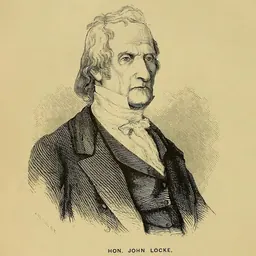
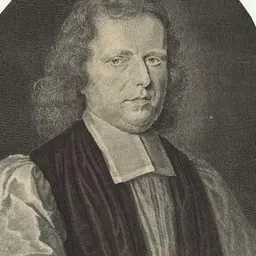
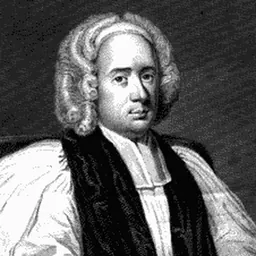
Related people
Same field, nearest in time

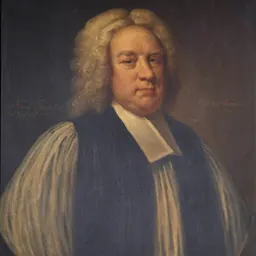

Contemporaries
People whose lives overlapped Thomas Secker's



Frequently asked questions
Who was Thomas Secker?
Archbishop of Canterbury
When was Thomas Secker born?
Thomas Secker was born on 21 September 1693 in Sibthorpe.
When did Thomas Secker die?
Thomas Secker died on 3 August 1768 in London Borough of Lambeth, London.
What was Thomas Secker's occupation?
Thomas Secker was an anglican priest.
What nationality was Thomas Secker?
Thomas Secker was British.
Sources & further reading
Cite this page
APA: Biography.guide. (2026). Thomas Secker. https://biography.guide/thomas-secker/
MLA: "Thomas Secker." Biography.guide, https://biography.guide/thomas-secker/.
Chicago: "Thomas Secker." Biography.guide. https://biography.guide/thomas-secker/.
Data last updated: 2026-09-26 · Spot an error? Report a correction.
Page generated 2026-09-27 05:14 UTC