
About Joseph Butler
Lived 1692 – 1752 (aged 60). Joseph Butler was a British philosopher, writer, anglican priest, anglican theologian, bishop and apologist.
Biography
Early life and education Butler was born on 18 May 1692. The son of a Presbyterian linen draper, Butler was destined for the ministry of that church, and with the future archbishop Thomas Secker, entered Samuel Jones's dissenting academy at Gloucester (later Tewkesbury) for the purpose. There he began a secret correspondence with the Anglican theologian and philosopher Samuel Clarke. In 1714, he decided to join the Church of England and entered Oriel College, Oxford, receiving a Bachelor of Arts degree in 1718 and named a Doctor of Civil Law on 8 December 1733. and a priest on 21 December 1718 by Talbot at St James's Church, Piccadilly. His admirers have praised him as an excellent person and a diligent and conscientious churchman. Though indifferent to literature, he had some taste in the fine arts, especially architecture.
In the Church of England, Butler is remembered with a commemoration on 16 June. He had his own collection of manuscripts (e. g. Lectionary 189).
Philosophy
Attack on deism During his lifetime and for many years after, Butler was best known for his Analogy of Religion, Natural and Revealed (1736), which according to historian Will Durant "remained for a century the chief buttress of Christian argument against unbelief." English deists such as John Toland and Matthew Tindal had argued that nature provides clear evidence of an intelligent designer and artificer, but they rejected orthodox Christianity due to the incredibility of miracles and the cruelties and contradictions recorded in the Bible.
Butler's Analogy was one of many book-length replies to the deists, and long believed to be the most effective. Butler argued that nature itself was full of mysteries and cruelties and so shared the same alleged defects as the Bible. Arguing on empiricist grounds that all knowledge of nature and human conduct is merely probable, Butler appealed to a series of patterns ("analogies") observable in nature and human affairs, which in his view make the chief teachings of Christianity likely.
Butler argued that "because nature is a mess of riddles, we cannot expect revelation to be any clearer". Today, Butler's Analogy is "now largely of historical interest," with the only part widely read being the section which deals with his criticism of John Locke's theory of personal identity. Butler's chief target in the Sermons was Thomas Hobbes and the egoistic view of human nature he had defended in Leviathan (1651). Hobbes was a materialist who believed that science reveals a world in which all events are causally determined and in which all human choices flow unavoidably from whatever desire is most powerful in a person at a given time. Hobbes saw human beings as being violent, self-seeking, and power-hungry. Such a view left no place for genuine altruism, benevolence or concept of morality as traditionally conceived.
In the Sermons, Butler argues that human motivation is less selfish and more complex than Hobbes claimed. He maintains that the human mind is an organised hierarchy of a number of different impulses and principles, many of which are not fundamentally selfish. The ground floor, so to speak, holds a wide variety of specific emotions, appetites and affections, such as hunger, anger, fear and sympathy. They, in properly organised minds, are controlled by two superior principles: self-love (a desire to maximise one's own long-term happiness) and benevolence (a desire to promote general happiness). The more general impulses are in turn subject to the highest practical authority in the human mind: moral conscience. Conscience, Butler claims, is an inborn sense of right and wrong, an inner light and monitor, received from God. Conscience tells one to promote the general happiness and personal happiness. Experience informs that the two aims largely coincide in the present life. For many reasons, Butler argues, unethical and self-centred people who care nothing for the public good are not usually very happy.
There are, however, rare cases where the wicked seem for a time to prosper. A perfect harmony of virtue and self-interest, Butler claimed, is guaranteed only by a just God, who in the afterlife rewards and punishes people as they deserve.
Criticism of Locke
In Appendix 1 of the Analogy, Butler offers a famous criticism of John Locke's influential theory of "personal identity", an explanation of what makes someone the "same person" from one time to the next, despite all the physical and psychological changes experienced over that period. Locke claimed that personal identity is not from having the same body or the same soul but from having the same consciousness and memory. According to Locke, memory is the "glue" that ties the various stages of our life together and constitutes sameness of person. This section of the Analogy is the only widely read part of it today.
More precisely, Locke claims, Person A is the same person as Person B only in a case where A and B share at least some of the same memories. Butler said that the way "real" memories can be distinguished from false ones is that people who actually had the experiences are the ones who remember. Thus, Butler claimed, memory presupposes personal identity and so cannot constitute it.
Veneration Butler is honoured on the liturgical calendar of the Episcopal Church (USA) on 16 June.
Styles and titles 1692–1718: Joseph Butler Esq. 1718–1733: The Reverend Joseph Butler 1733–1738: The Reverend Doctor Joseph Butler 1738–1752: The Right Reverend Doctor Joseph Butler
Publications Several letters to the Reverend Dr. Clarke, 1716, 1719, 1725 – reprinted in Volume 1 of Gladstone's edition of Butler's works Fifteen Sermons Preached at the Rolls Chapel, 1726, 1729, 1736, 1749, 1759, 1765, 1769, 1774, 1792 The Analogy of Religion, Natural and Revealed, to the Constitution and Course of Nature, 1736, 1740, 1750, 1754, 1764, 1765, 1771, 1775, 1785, 1788, 1791, 1793, 1796, 1798 A sermon preached before the Incorporated Society for the Propagation of the Gospel in Foreign Parts, 1739 A sermon preached before the Right Honourable the Lord-Mayor, 1740 A sermon preached before the House of Lords, 1741, 1747 A sermon preached in the parish-church of Christ-Church, London, 1745 A sermon, preached before His Grace Charles Duke of Richmond, Lenox, and Aubigny, president, 1748, 1751 Six sermons preached upon publick occasions, 1749 A catalogue of the libraries [...], 1753 A charge delivered to the clergy at the primary visitation of the diocese of Durham, 1751, 1786 – reprinted in Volume 2 of Gladstone's edition of Butler's works
Don’t just read it —
keep it.
Full-length biographies made to live with: read them, listen on the way to work, watch them tonight.
- E-book
- Audio
- Video
Instant download · yours to keep · every purchase keeps this site free
Important facts
People in Joseph Butler's life
Named in this biography and alive at the same time

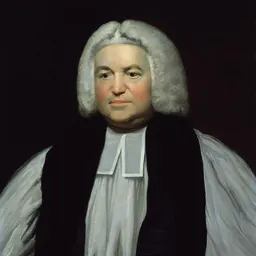


Related people
Same field, nearest in time


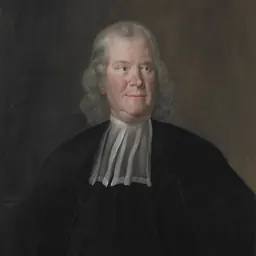
Contemporaries
People whose lives overlapped Joseph Butler's


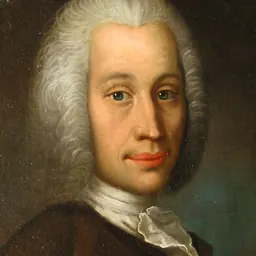
Frequently asked questions
Who was Joseph Butler?
English bishop and philosopher (1692–1752)
When was Joseph Butler born?
Joseph Butler was born on 18 May 1692 in Wantage.
When did Joseph Butler die?
Joseph Butler died on 16 June 1752 in Bath.
What was Joseph Butler's occupation?
Joseph Butler was a philosopher, writer, anglican priest, anglican theologian, bishop and apologist.
What nationality was Joseph Butler?
Joseph Butler was British.
Sources & further reading
Cite this page
APA: Biography.guide. (2026). Joseph Butler. https://biography.guide/joseph-butler/
MLA: "Joseph Butler." Biography.guide, https://biography.guide/joseph-butler/.
Chicago: "Joseph Butler." Biography.guide. https://biography.guide/joseph-butler/.
Data last updated: 2026-09-25 · Spot an error? Report a correction.
Page generated 2026-09-27 05:13 UTC