
About Colonel Pessian
Lived 1892 – 1921 (aged 29). Colonel Pessian was an Iranian military personnel.
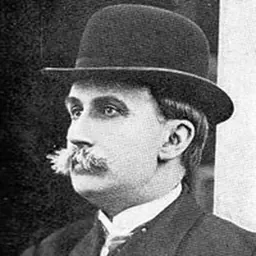
Mohammad-Taqi Khan Pessian (; 1892 – 3 October 1921), more commonly known as Colonel Pessian, was an Iranian gendarme of Kurdish origin. He was born to Moḥammad-Bāqer Khan Pesyān and his wife Fāṭema Solṭān, into a prominent, apparently Amir Solaymāni Kurdish family, who had emigrated from the Caucasus after Iran’s defeat in the Russo-Persian War of 1826-28 and the incorporation of territories into the Russian Empire (Pesyān, pp. 26–27). He was a fighter pilot and warlord who formed and led the short-lived Autonomous Government of Khorasan in 1921. He was killed in a skirmish by Kurdish tribal forces in a battle with forces sent by Ahmad Qavam, the prime minister at the time.
Biography Pessian was born into an aristocratic Kurdish family in Tabriz. Pessian's family possessed strong military traditions, his uncle General Khan Pessian was a commander in the Persian Cossack Brigade, his cousins Heydar Qoli Khan Pessian – father of Iranian author and journalist, Mahtalat Pessian, – Ali Qoli Khan Pessian, Gholam Reza Khan Pessian and he himself served in the Gendarmerie.
In Tabriz Mohammad Taqi was educated In 1907 he left for Tehran to continue his education. He was promoted to major when World War I broke out. He also translated many works from Persian to/from French, German and English, some of these included Alphonse de Lamartine and Rabindranath Tagore. He also wrote two books in Persian, Sargozasht-e yek javan-e vatandoust and Jang-e Moqaddas az Baghdad ta Iran. thumb A Khorasani Kurdish soldier standing beside his severed head. His head was brought to Tehran to prove that he had been killed. For five continuous years after his death, on 3 October people of Khorasan mourned his death.
He is buried in Mashhad, Khorasan in the same garden that contains Nader Shah's tomb.
Legacy The day after the Shah left Iran in February 1979 during the Iranian Revolution, the revolutionary leaders declared Colonel Mohammad Taqi Pessian as the first Martyr of the Revolution although Pessian was a Secularist. Other anti-Pahlavi figures such as Mirza Kuchik Khan and Hassan Modarres were also declared as matyrs.
Don’t just read it —
keep it.
Full-length biographies made to live with: read them, listen on the way to work, watch them tonight.
- E-book
- Audio
- Video
Instant download · yours to keep · every purchase keeps this site free
Important facts
People in Colonel Pessian's life
Named in this biography and alive at the same time

Related people
Same field, nearest in time





Contemporaries
People whose lives overlapped Colonel Pessian's

Frequently asked questions
Who was Colonel Pessian?
Iranian politician (1892–1921)
When was Colonel Pessian born?
Colonel Pessian was born on 7 August 1892 in Tabriz.
When did Colonel Pessian die?
Colonel Pessian died on 3 October 1921 in Mashhad.
What was Colonel Pessian's occupation?
Colonel Pessian was a military personnel.
What nationality was Colonel Pessian?
Colonel Pessian was Iranian.
Sources & further reading
· DBpedia: Mohammad Taqi Pessian
Cite this page
APA: Biography.guide. (2026). Colonel Pessian. https://biography.guide/colonel-pessian/
MLA: "Colonel Pessian." Biography.guide, https://biography.guide/colonel-pessian/.
Chicago: "Colonel Pessian." Biography.guide. https://biography.guide/colonel-pessian/.
Data last updated: 2026-09-25 · Spot an error? Report a correction.
Page generated 2026-09-27 05:13 UTC