
About Clive Forster Cooper
Lived 1880 – 1947 (aged 67). Clive Forster Cooper was a British paleontologist.
Sir Clive Forster-Cooper, FRS (3 April 1880 – 23 August 1947) was an English palaeontologist and director of the Cambridge University Museum of Zoology and Natural History Museum in London. He was the first to describe Paraceratherium, also commonly known as Indricotherium or Baluchitherium, the largest known land mammal.
Early life Forster-Cooper was born on 3 April 1880 in Hampstead, London, the second child and only son of John Forster Cooper and his wife Mary Emily Miley. His maternal grandfather, Miles Miley, was an amateur botanist and naturalist, and encouraged Clive Forster-Cooper in his interest in natural history. He was educated at Summer Fields School, Oxford, Rugby School. In 1897 he went up to Trinity College, Cambridge, and took a BA in 1901 and MA in 1904.
Early career
In 1900, Forster Cooper travelled with John Stanley Gardiner to the Maldive and Laccadive Islands to undertake collections and study the formation of coral reefs. From 1902 to 1903 he was naturalist to the North Seas Fisheries Commission Scientific Investigations, sailing around the Indian Ocean, taking soundings and collecting fauna and flora of the Seychelles. In 1905 Forster-Cooper joined the Percy Sladen expedition to the Indian Ocean, with Stanley Gardiner. In 1906, he returned to Cambridge and continued to work on the collections made on the expeditions to the Indian Ocean. In 1907 he met Dr C. W. Andrews, a specialist in the history of the elephant, at the British Museum of Natural History and became interested in fossil mammals.
As a result of this meeting, in 1907 he joined Dr Andrews' collecting expedition to the Fayum. His increasing interest in vertebrate palaeontology led him to the American Museum of Natural History, New York, where he worked under H. F. Osborn, then Professor of Zoology at Columbia University and Curator of the museum. He spent a year in America working closely Osborn, Matthew, Walter W. Granger and W. K. Gregory, studying the American collections of fossil mammals, and taking part in one of Granger's collecting expeditions to Wyoming.
He returned to Cambridge University, where he organized an expedition to collect large mammalian fauna, including specimens of the gigantic rhinoceros Baluchitherium, from the Bugti beds of Baluchistan. During the First World War, he worked on human animal parasites at the School of Tropical Medicine in the University of Liverpool, which examined the action of quinine on malaria. On his return to Cambridge University after the war, he held a variety of posts in the Zoological Laboratory, including lecturer and reader in Vertebrata, and was a fellow of Trinity Hall.
Publications 1903. Fauna and geography of the Maldive and Laccadive Archipelagoes. Cambridge University Press. (Articles on Cephalochorda, Antipatharia and Nemertinea.) 1907. (With J. S. Gardiner.) The Percy Sladen Trust Expedition to the Indian Ocean in 1905. Description of the expedition. Trans. Linn. Soc. (Zoo.), 12, 1–55. Part II. Mauritius to Seychelles. Trans. Linn. Soc. (Zoo.), 12, 111–175. 1910. Microchoerus erinaceus, Wood. Ann. Mag. Nat. Hist. ser. 8, 6, 39–43. 1911. Paraceratherium bugtiense, a new genus of Rhinocerotidae from the Bugti Hills of Baluchistan. Preliminary notice. Ann. Mag. Nat. Hist. ser. 8, 8, 711–716. 1913. Thaumastotherium osborni, a new genus of Perissodactyles from the Upper Oligocene deposits of the Bugti Hills of Baluchistan. Preliminary notice. Ann. Mag. Nat. Hist. ser. 8, 12, 367–381. 1913. New Anthracotheres and allied forms from Baluchistan. Preliminary notice. Ann. Mag. Nat. Hist. ser. 8, 12, 514–522. 1915. New genera and species of mammals from the Miocene deposits of Baluchistan. Preliminary notice. Ann. Mag. Nat. Hist. ser. 8, 16, 404–410. 1920. Chalicotheriodea from Baluchistan. Proc. Zool. Soc. Lond. pp. 357–366. 1922. Metamynodon bugtiensis, sp. n., from the Dera Bugti deposits of Baluchistan. Preliminary notice. Ann. Mag. Nat. Hist. ser. 9, 9, 617. 1922. Miocene Proboscidia from Baluchistan. Proc. Zool. Soc. Lond. pp. 609–626. 1922. Macrotherium salinum, sp. n., a new Chalicothere from India. Ann. Mag. Nat. Hist. ser. 9, 10, 542. 1922. A case of secondary adaptation in a tortoise. Ann. Mag. Nat. Hist. ser. 9, 10, 155–157. 1923. Note on a lower jaw of an African Elephant. Ann. Mag. Nat. Hist. ser. 9, 12, 263–264. 1923. Carnivora from the Dera Bugti deposits of Baluchistan. Ann. Mag. Nat. Hist. ser. 9, 12, 259. 1923. Baluchitherium osborni (? syn. Indricotherium turgaicum, Borrissyak). Phil. Trans. B, 212, 35–66. 1924. On the skull and dentition of Paraceratherium bugtiense: a genus of aberrant rhinoceroses, from the Lower Miocene deposits of Dera Bugti. Phil. Trans. B, 212, 369–394. 1924. The Anthracotheriidae of the Dera Bugti deposits in Baluchistan. Mem. Geol. Surv. India, Palaeontol. Indica, n.s. Mem. no. 2, 8, 1–59. 1924. On remains of extinct Proboscidea in the Museums of Geology and Zoology in the University of Cambridge. I. Elephas antiquus. Proc. Camb. Phil. Soc. (Biol. Soc.), 1, no. 2, 108–120. 1925. Notes on the species of Ancodon from the Hempstead Beds. Ann. Mag. Nat. Hist. ser. 9, 16, 113–138. 1926. Brachyodus woodi, a new species from the Hempstead Beds. Ann. Mag. Nat. Hist. ser. 9, 17, 337. 1928. On the ear region of certain of the Chrysochloridae. Phil. Trans. B, 216, 265–283. 1928. Pseudamphimeryx hantonensis. Ann. Mag. Nat. Hist. ser. 10, 2, 49–55. 1928. (With C. W. Andrews.) On a specimen of Elephas antiquus from Upnor. B.M.N.H. monograph. 1932. The genus Hyracotherium. A revision and description of new specimens found in England. Phil. Trans. B, 221, 431–448. 1932. Mammalian remains from the Lower Eocene of the London Clay. Ann. Mag. Nat. Hist. ser. 10, 9, 458–467. 1934. The extinct rhinoceroses of Baluchistan. Phil. Trans. 223, 569–616. 1934. A note on the body scaling of Pterichthyodes. Palaeobiol. 6, 25–29. 1937. The Middle Devonian fish fauna of Achanarras. Trans. Roy. Soc. Edinb. 59, pt. 1, no. 7, 223–239.
Taxon named in his honor The red-bar anthias, Pseudanthias cooperi.
Don’t just read it —
keep it.
Full-length biographies made to live with: read them, listen on the way to work, watch them tonight.
- E-book
- Audio
- Video
Instant download · yours to keep · every purchase keeps this site free
Important facts
People in Clive Forster Cooper's life
Named in this biography and alive at the same time

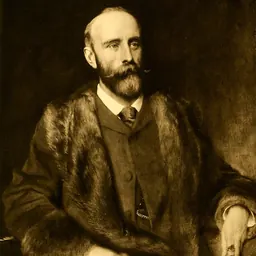

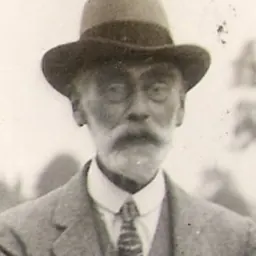
Related people
Same field, nearest in time
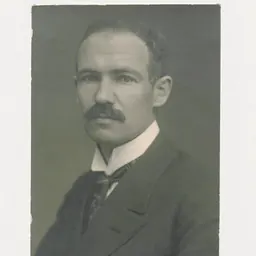

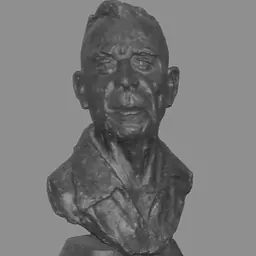

Contemporaries
People whose lives overlapped Clive Forster Cooper's



Frequently asked questions
Who was Clive Forster Cooper?
English paleontologist (1880–1947)
When was Clive Forster Cooper born?
Clive Forster Cooper was born on 3 April 1880 in London.
When did Clive Forster Cooper die?
Clive Forster Cooper died on 23 August 1947.
What was Clive Forster Cooper's occupation?
Clive Forster Cooper was a paleontologist.
What nationality was Clive Forster Cooper?
Clive Forster Cooper was British.
Sources & further reading
· Wikipedia: Clive Forster Cooper
· DBpedia: Clive Forster-Cooper
Cite this page
APA: Biography.guide. (2026). Clive Forster Cooper. https://biography.guide/clive-forster-cooper/
MLA: "Clive Forster Cooper." Biography.guide, https://biography.guide/clive-forster-cooper/.
Chicago: "Clive Forster Cooper." Biography.guide. https://biography.guide/clive-forster-cooper/.
Data last updated: 2026-09-20 · Spot an error? Report a correction.
Page generated 2026-09-27 05:12 UTC