
Claude-Henri Belgrand de Vaubois
French general
About Claude-Henri Belgrand de Vaubois
Lived 1748 – 1839 (aged 90). Claude-Henri Belgrand de Vaubois was a French military officer, politician and military personnel.
Claude-Henri Belgrand de Vaubois (; 1 October 1748 – 14 July 1839) was a French general of the Revolutionary Wars.
He led a division during Napoleon’s First Italian Campaign and commanded the Grand Harbour of Valletta from 1798 to 1800 during the Siege of Malta, eventually surrendering to the British.
Vaubois subsequently sat in the Senate under the Consulate and the Empire. Napoleon created him Count of the Empire in 1808. He served in the Chamber of Peers during the Bourbon Restoration. His name was inscribed on the Arc de Triomphe.
Ancien Régime Claude-Henri Belgrand was born in 1748 in Clairvaux, in the province of Champagne. His father, Henri Belgrand (1707–1792), was an ironmaster and tax collector for the Duchy of Châteauvillain on behalf of Louis de Bourbon, grandson of Louis XIV and Madame de Montespan. His mother, Anne (1712–1786), was the daughter of Abraham Febvre, who was also an ironmaster in the Arc-en-Barrois region. Through his mother’s family, Belgrand was connected to the regional nobility. He was also a distant cousin of Auguste de Marmont, Marshal of the Empire.
Known as Vaubois, Belgrand studied with the Oratorians in Troyes. . At the age of twenty, he entered the French Royal Army as an officer cadet at the Royal Artillery School of Auxonne. . Promoted to lieutenant in 1770, he was made captain in 1784 in the La Fère Regiment, where he met the young Napoleon in 1788.
The French Revolution In the autumn of 1791, shortly after the French royal family unsuccessfully attempted to flee the country, Vaubois was made a Knight of Saint Louis. His younger brother, a Knight Hospitaller, emigrated to Malta following the nationalization of his order's property. When their father died in September 1792, his ironworks were confiscated by the newly proclaimed French Republic. Despite being removed from the rolls of the Revolutionary Army, Vaubois enlisted in one of the volunteer battalions attached to the Army of the Midi, and was elected its commanding officer.
Army of the Alps
In the summer of 1793, his battalion was attached to the Army of the Alps, commanded by General Kellermann, the victor of the Battle of Valmy, who led the Republican forces during the Siege of Lyon. Kellermann appointed him provisional brigadier general on 3 August, a promotion confirmed by the National Convention on 6 September. At Lyon, Vaubois's columns captured the Pont Morand on 15 September, followed by the Brotteaux district the following week. The insurgents capitulated on 9 October, and the city was subjected to a severe repression ordered by the Committee of Public Safety.
At the end of 1793, as the Reign of Terror intensified with the passage of the Law of Suspects, General Kellermann was imprisoned. Vaubois, meanwhile, was sent to Savoy. The former duchy, annexed from the Kingdom of Sardinia, had become the department of Mont-Blanc. He took command of the troops stationed in the Tarentaise Valley and advanced southward, crossing the Alps into Piedmont. In September 1794, after fierce hand-to-hand fighting, he captured a strategic mountain pass, thereby opening the way into the Stura di Demonte Valley. Following his release by the Thermidorian Convention, Kellermann resumed command of the Army of the Alps in 1795. Vaubois was promoted to major general.
First Italian Campaign On 2 March 1796, Napoleon assumed command of the Army of Italy and won a series of victories over the Sardinians, forcing King Victor Amadeus III to abandon his alliance with Austria under the Armistice of Cherasco. In May, the Directory ordered General Kellermann to detach a division of 12,000 men to reinforce the Army of Italy, which was then advancing through Lombardy. The division was placed under Vaubois's command and joined General Sérurier's forces during the Siege of Mantua.
As Napoleon advanced toward Bologna, he ordered Vaubois to march on Reggio on 15 June. Following the armistice with Pope Pius VI, the commander-in-chief turned toward the Grand Duchy of Tuscany and occupied the port of Livorno on 29 June, where the French confiscated goods that the British had been unable to ship. Vaubois was appointed military commander of the city. On 20 July, Bonaparte reprimanded Vaubois in a letter, reproaching him for alienating Tuscan and Genoese merchants and for yielding to Commissioner Garrau’s demands by issuing a proclamation against the French émigrés.
On 6 August 1796, the day after the Battle of Castiglione, Vaubois was recalled to Bonaparte's side to replace General Sauret. The Austrian army, commanded by Dagobert von Wurmser, had withdrawn into the Tyrol. By the end of August, Bonaparte was at Rivoli with Masséna's 13,000-man division. On the right flank, Augereau's 9,000-man division occupied Verona. On the left flank, Vaubois's 11,000-man division was stationed at Salò, on the western shore of Lake Garda. Together with Sahuguet's division at Mantua and Kilmaine's reserve cavalry, the French army numbered 45,000 men, roughly matching Wurmser's strength.
On 1 September, the Austrians divided their army in two. General Davidovich was ordered to defend the Tyrol with 20,000 men, while Field Marshal Wurmser led the remainder of his forces—the divisions of Quasdanovich, Sebottendorf, and Mészáros—down the Brenta valley in an attempt to relieve the Siege of Mantua by outflanking the French positions.
Carl von Clausewitz was highly critical of the Austrian strategy in his study of the Italian campaign. Davidovich's forces were dispersed across three positions in the Tyrol, and only 14,000 of his men confronted the French around Trento. On 4 September, Vaubois drove back Prince Reuss at Mori, while Masséna defeated Vukassovich at Rovereto and then at Calliano. Nearly 10,000 Austrian soldiers were killed, wounded, or captured, including 3,000 prisoners. Davidovich was forced to retreat as far as San Michele. At dusk, Vaubois crossed the Adige and entered Trento at noon on 5 September, shortly after Masséna.
Having grasped Wurmser's intentions, Bonaparte set off in pursuit through the Brenta valley on 6 September. He left Vaubois's division at Lavis, where it was to contain Davidovich north of Lake Garda. Wurmser's army was routed at the Battle of Bassano on 8 September and fell back toward Mantua, where it shut itself up on 15 September.
Emperor Francis II entrusted Baron Josef Alvinczy von Borberek with the task of relieving Field Marshal Wurmser. On 22 October, 20,000 men marched from Friuli. In the Tyrol, Davidovich received reinforcements that raised his strength to 20,000 men. His orders were to join Alvinczy at Verona after securing control of the Adige valley.
Bonaparte believed that the French forces in the Tyrol still outnumbered the Austrians. On 29 October, Berthier ordered Vaubois to attack Davidovich and drive him back to Kaltern. On 2 November, his columns advanced toward San Michele, Cembra, and Segonzano. They encountered Vukassovich's forces and were compelled to withdraw the following day as Davidovich's corps advanced. Trento was abandoned on 4 November.
Louis Bonaparte reported the deteriorating situation to his brother. Napoleon blamed Vaubois for his tactical errors and poor knowledge of the terrain, and dispatched General Joubert to assist him in his retreat.
On 7 November, heavy fighting took place around Calliano. At four o'clock in the afternoon, panic spread through the French ranks when a column of Croatian troops outflanked them and attacked their rear. A disorderly retreat followed toward Rivoli. In five days, Vaubois's division had lost more than 4,000 men, while Austrian casualties were of a similar magnitude.
Davidovich hesitated, mistakenly believing that Masséna's division had come to Vaubois's aid. On 12 November, Bonaparte engaged Alvinczy at the Battle of Caldiero. Defeated, he was forced to withdraw to Verona. The poor coordination between the two Austrian armies gave the French a crucial respite. On the evening of 14 November, faced with the threat of encirclement, Bonaparte devised a bold plan and led his army across the southern bank of the Adige in an attempt to strike Alvinczy's rear during the Battle of Arcole.
Vaubois was ordered to hold his position at all costs. On 17 November, after ten days of hesitation, Davidovich attacked Rivoli. His forces quickly overwhelmed the French. One thousand soldiers, including brigadier general Fiorella, were taken prisoner. Vaubois narrowly escaped capture and withdrew to Peschiera.
After his victory at Arcole, which had forced Alvinczy's army to retreat, Bonaparte turned back and compelled Davidovich to withdraw into the Tyrol. He removed Vaubois from divisional command, writing to the French Directory that the campaign had shown him unfit to command in a war of manoeuvre, despite the numerical inferiority under which he had operated. Bonaparte replaced him with Joubert and reassigned him to the military governorship of Livorno.
A second offensive by Alvinczy culminated in the famous Battle of Rivoli in January 1797, which ended in a French victory. The Siege of Mantua came to an end on 2 February with Wurmser's surrender.
Corsica
In April 1797, Vaubois was sent to Corsica to serve as its military governor,
Late in 1797, following the Coup of 18 Fructidor, the island's clergy and civil servants were required to swear an oath of "hatred of royalty and anarchy" and of "fidelity to the Republic". Opponents of the Directory assembled on 22 December 1797 at the Convent of Saint Anthony in Casabianca. There they resolved to take up arms and appealed to the eighty-year-old General Agostino Giafferi, son of Luigi Giafferi, who had presided over the parliament of the Anglo-Corsican Kingdom. The insurgents wore white crosses on their clothing. The uprising became known as the Crocetta ("Little Cross").
Within a few days, the revolt had spread throughout Golo, the island's northern department. Vaubois initially adopted a conciliatory approach, prompting local administrators to accuse him of collusion with the rebels. He eventually took the field during the second week of January 1798 at the head of a column of 1,680 soldiers, joined by volunteer auxiliaries. On 18 January, he defeated the insurgents at Murato. Two weeks later, Agostino Giafferi was captured with forty of his supporters at La Porta. Imprisoned in Bastia, he refused Vaubois's offer to spare him from the firing squad. Giafferi was executed on 21 February.
Siege of Malta In May 1798, Vaubois and his division joined the Armée d'Orient under the command of Napoleon.
French occupation On 9 June, the French fleet reached the Maltese archipelago. The Grand Master of the Knights Hospitaller, Ferdinand von Hompesch zu Bolheim, whose order had governed Malta since 1530, initially refused the French access to the Grand Harbour of Valletta. On 10 June, 15,000 French troops landed. Vaubois came ashore at St. Julian's. His division was split into two columns: seven battalions under Lannes and five under Marmont.
In a proclamation addressed to the inhabitants, Vaubois declared that the free exercise of their religion would be guaranteed, that all those who remained peaceful would enjoy the protection of the French authorities, and that the clergy would receive special protection. These terms were accepted, the capitulation followed, and the keys of Valletta were handed over to Vaubois at noon. He then dined with Bishop Vincenzo Labini.
On 12 June, the Hospitaller plenipotentiaries formally accepted the capitulation aboard L'Orient, the flagship of the French fleet.
Eager to sail for Egypt without delay, Bonaparte issued a series of decrees inspired by the Constitution of Year III and by the measures adopted at Corfu the previous year.
The archipelago was reorganised into municipalities. A commission of nine members, whose presidency rotated every six months, was established to govern the islands, collect taxes, and administer the courts. The inhabitants were encouraged to wear the French tricolour cockade and were disarmed, except for the battalions of the National Guard established in each municipality and recruited from the wealthiest inhabitants—those considered to have "the greatest interest in maintaining public order."
All property belonging to the Knights Hospitaller was confiscated. Members of the order under the age of sixty were expelled, as were all inhabitants who were subjects of states at war with France. Each religious order was restricted to a single monastery within the archipelago. All foreign clergy were required to leave immediately, with the sole exception of the bishop.
The French abolished slavery, the nobility, the feudal system, and episcopal jurisdiction, restricted priestly ordinations, and instituted civil marriage. Protection was also granted to Jews wishing to establish a synagogue.
Bonaparte decreed the establishment of fifteen primary schools, and university chairs devoted to the sciences. Several projects were associated with this École centrale, including a library and antiquities collection, a natural history museum, a botanical garden, and an astronomical observatory. Some of the reforms also concerned public health.
Military command of Malta and Gozo was entrusted to Vaubois. In a letter to the Directory, Bonaparte wrote: "He commanded the landing and won over the inhabitants of the island through his wisdom and gentleness." Regnaud de Saint-Jean d'Angély was appointed Government Commissioner.
On 19 June, Bonaparte sailed for Alexandria, taking with him the Hospitallers' treasury (more than one million francs' worth of gold and silver). L'Orient and its cargo were sunk on 1 August by Horatio Nelson's fleet at the Battle of the Nile.
Bonaparte left Vaubois four line infantry demi-brigades (the 6th, 19th, 41st, and 80th), one light infantry demi-brigade, five artillery companies, and a medical unit. The force under his command totalled nearly 4,000 men, including 151 officers.
A supply ship succeeded in running the blockade on 14 February. The following day, Maltese insurgents assaulted the walls of Valletta but were easily repulsed without a single French casualty.
On 19 February, Alexander Ball, who had been elected head of the Maltese government, sent Vaubois a fifth summons to surrender. The latter replied: "We lack absolutely nothing, and we await with confidence any enemy who may come to attack us."
Reports gathered by spies inside the city, together with testimony from inhabitants who had gradually been expelled, led Alexander Ball to believe that the French were on the verge of surrender. On 3 March, he wrote to Admiral Nelson: "Vaubois is insulted whenever he walks out ; the garrison is very sickly, the scurvy begins to spread among them, and they have not any medicines."
On 4 March, four emissaries—one Englishman and three Maltese—requested permission to negotiate with Vaubois. He ordered the English envoy sent back and imprisoned the three "rebel spies". Ball protested in a letter: "I cannot but regard your conduct towards the envoys sent to you as a violation of the laws of war that will cast an indelible stain upon your character. ... I demand that these men, whom you have so unjustly detained, be restored to me, or I shall retaliate against every Frenchman whom I have taken prisoner. ... You appear to feel that your own situation is desperate, and you wish to involve everyone else in the same fate."
In the following days, a Genoese vessel succeeded in slipping through the blockade, bringing enough provisions to sustain the garrison for a further six months. Its merchandise was sold at exorbitant prices to speculators, whom Vaubois forbade from reselling it at a profit exceeding five percent.
Every available open space within the fortifications had been converted into vegetable gardens, while fishing supplied a small but essential source of protein. To relieve the suffering of soldiers afflicted with scurvy, Vaubois requisitioned, with compensation, all the lemons and oranges in the fortress. The population of Valletta, which had stood at around 40,000 in the summer of 1798, had fallen to only 9,000 one year later.
On 28 June 1799, Vaubois wrote to the Minister of War: "One sees nothing but walking corpses. Around twenty people die every day, and often more. I have been obliged to forbid the slaughter of horses and mules, as only a small number indispensable for the service remain. ... For several months we have been losing one hundred men each month to disease. What a scourge for so small a garrison."
Enemy artillery continued to bombard the city intermittently, but repeated attempts to storm the fortifications failed. In the countryside, the Maltese also suffered severe privations as a result of the blockade and depended on supplies furnished by the British. The number of peasants still bearing arms had fallen to six hundred.
On 19 August 1799, Vaubois refused for the sixth time to surrender. Four French sailors who had deserted from Valletta informed the British that he intended to escape by sea with his garrison. The return of the Marquess of Nisa's squadron, however, together with reinforcements dispatched by Admiral Nelson, persuaded Vaubois to abandon the plan.
On 6 September, the Marquess of Nisa was received, at his own request, inside the fortress by the French staff. Describing the meeting in a letter to the Minister of War, Vaubois wrote: "They could not utter a word of what they had come to say. ... They departed in disgrace after this absurd démarche, walking between two ranks of soldiers shouting at the top of their voices and inviting them to come and storm the place. ... I believe they have now abandoned any hope of seducing me, if indeed they ever entertained such an intention."
In the same letter, he described the suffering of the inhabitants of Valletta: "About three thousand people have died in the city. There are many walking skeletons. Their condition is dreadful."
On 5 October, the Marquess of Nisa sent Vaubois a seventh summons to surrender: "The steadfastness and perseverance with which you have maintained yourself in Valletta for more than a year, Sir, certainly deserve praise... Yet everything has its limits, beyond which what was once called virtue becomes imprudence and recklessness."
British reinforcements—800 soldiers and 400 Royal Marines under General Thomas Graham—landed on Malta on 27 December. Russian troops were also expected but never arrived.
1800
During the winter of 1800, conditions for the French garrison deteriorated further as food rations were reduced.
On 7 February, a convoy carrying supplies and 4,000 troops sailed from Toulon under the command of Jean-Baptiste Perrée. At the same time, Admirals Keith and Nelson left Palermo with 1,200 Sicilian troops, who landed on Malta on 16 February. The following day, the French convoy arrived and was pursued by the Royal Navy. In the ensuing Battle of the Malta Convoy, the British intercepted the French flagship, Généreux. Jean-Baptiste Perrée was killed in the engagement. Around 2,000 French soldiers were taken prisoner, while the remaining vessels turned back.
The failure of the expedition shattered the morale of the garrison, which abandoned all hope of being rescued. On 26 February, Vaubois relieved General Étienne Brouard of his command, declaring: "This senior officer, disregarding the authority entrusted to me, has for some time given repeated proof of insubordination, and yesterday, despite my express prohibition, circulated among the corps and detachments of the garrison a printed address signed by himself whose sole purpose was to inflame men's minds."
On 6 March 1800, a merchant vessel from Marseille succeeded in slipping through the blockade, bringing salted meat, wine, and brandy, together with news of Napoleon's Coup of 18 Brumaire.
On 30 March 1800, the Guillaume Tell, the last surviving ship of the line from the Battle of the Nile, attempted to break through the blockade. Commanded by Vice Admiral Denis Decrès, she carried about 1,000 sailors, 200 sick men to be repatriated. The French ship fought stubbornly but lost its mainmast after two hours of combat. Wounded, Decrès was forced to strike his colours and surrender to the British.
Throughout the spring of 1800, the garrison of Valletta subsisted almost entirely on bread and olive oil. On 8 June, a small vessel from Toulon evaded the British blockade and delivered provisions, which Vaubois rationed with the intention of making them last for three months. He also attempted to expel 2,000 of the 6,000 starving civilians still inside the fortress, but General Thomas Graham refused to allow them to leave.
On 17 July, a further 1,500 British troops landed under the command of General Henry Pigot. Pigot sent Vaubois an eighth summons to surrender, to which he replied: "We believe we still have much to accomplish. The capture of Malta requires a large army. Our position may be prolonged for a long time yet, and we shall not commit the crime of shortening it by a single moment. Our resistance will surely earn your esteem."
The following day, Vaubois wrote to Napoleon: "Time is pressing. I see the moment approaching when we shall have nothing but bad bread, and I fear the epidemic caused by worms; it is already beginning to appear."
By August, the garrison's diet consisted solely of bread and biscuits, with a ration of wine every three days, vinegar every five days, brandy and pasta every ten days, and bacon every fifteen days. By the end of the month, famine and dysentery were claiming dozens of lives each day.
On 2 September, Vaubois convened a council of war, which resolved to surrender. Two days later, he opened negotiations with General Henry Pigot and, together with Admiral Villeneuve, signed the capitulation on 5 September 1800. Refusing to negotiate with the leader of the Maltese insurgents, Vaubois declined to include Alexander Ball in the talks.
After a siege of two years, the 2,800 surviving members of the French garrison marched out of Valletta with the honours of war—drums beating, colours flying, and with permission to retain their arms and personal belongings. They were transported to Marseille (or Toulon in the case of the sailors) aboard British ships.
The Peace of Amiens, concluded between Napoleon and the United Kingdom in 1802, provided for the restoration of the archipelago to the Knights Hospitaller. That part of the treaty was never implemented, however, and Malta remained under British rule until 1964.
Later life
Belgrand de Vaubois returned to France on 23 September 1800. His steadfast defence of Malta during the two-year siege was celebrated by the French authorities. On Bonaparte's recommendation, he had already been appointed to the Senate on 27 July. He retired from active military service on 30 November 1801, after thirty-three years in the army.
He was serving as one of the Senate's secretaries when Bonaparte was proclaimed Consul for Life on 2 August 1802. The following year, he was appointed to the Sénatorerie of Poitiers and was granted the Castle of the Dukes of La Tremoille.
On 15 July 1804, two months after the proclamation of the Empire, Napoleon held the first Legion of Honour investiture ceremony at the Hôtel des Invalides. Vaubois was appointed a Grand Officer, the highest rank in the order at the time of its creation. He was created a Count of the Empire on 20 August 1808.
Vaubois was recalled to military service in the summer of 1809 during the British expedition to Walcheren. He was given command of the Ostend Division, composed of National Guard units from the Somme, Nord, and Pas-de-Calais departments. Ravaged by malaria, the British expeditionary force re-embarked in December, and Vaubois returned to civilian life without seeing combat.
On 2 April 1814, as the invasion of France by the Sixth Coalition culminated in the capture of Paris, the Senate declared Napoleon deposed and rallied to Louis XVIII. Under the Constitutional Charter, promulgated on 4 June 1814, the Senate was replaced by the Chamber of Peers. Count Vaubois was appointed a life peer by the King.
In March 1815, following Napoleon's return to France, Vaubois ignored a letter from Marshal Davout inviting him to rejoin the Emperor in Paris.
During the Allied occupation of France after the Battle of Waterloo, Vaubois wrote to the Duke of Wellington to complain about the pillaging committed by Allied troops. Wellington replied :
Louis XVIII rewarded Vaubois for his loyalty during the Hundred Days by confirming his peerage and making it hereditary on 19 August 1815. In December, Vaubois voted in favour of the death sentence for Marshal Ney on charges of high treason.
A supporter of the liberal opposition led by Benjamin Constant and the Marquis de Lafayette, Vaubois opposed the policies of Joseph de Villèle. After the coronation of Charles X of France in 1825, increasing deafness and declining health led him to retire to his Château de Courcelles.
Claude-Henri Belgrand de Vaubois died on 14 July 1839 at the age of ninety. He was buried in Beauvais.
His name is among the 660 inscribed on the Arc de Triomphe, inaugurated in Paris in 1836.
Marriages and issue
On 10 November 1788, Vaubois married Marie-Ursule de Barthélemy (1763–1800), who died only a few weeks before his return from Malta. They had one daughter, Marie-Thérèse (1789–1852), whose godfather was the Duke of Penthièvre and whose godmother was the Princess of Lamballe, Superintendent of the Household of Queen Marie Antoinette. In 1808, she married Count Georges Aubert du Petit-Thouars (1784–1871).
On 16 September 1801, at the Château de Courcelles, Vaubois married Catherine-Françoise de Gantelet d'Asnières de Veigy as his second wife. She was the daughter of the Baron of Veigy, who before the French Revolution had served as equerry to the future Charles X of France. She bore him three daughters and, like his first wife, died in her thirty-seventh year.
In 1803, after returning unexpectedly early from a stay in the countryside, Vaubois discovered his wife in possession of a love letter signed by General Marmont. He asked Napoleon for permission to fight a duel with his distant cousin, but the request was refused.
As Vaubois left no male heir, one of his sons-in-law, Casimir Le Poittevin de La Croix (1795–1871), was authorised in 1829 to assume the surname Vaubois. His son-in-law's nephew and son-in-law, Louis-Joseph de La Croix-Vaubois, a general in the Imperial Guard of Napoleon III, was authorised by decree of 1 August 1870 to revive the title of Count.
Claude-Henri Belgrand de Vaubois was the great-uncle of Eugène Belgrand, designer of Paris's water supply and sewerage system under the Second French Empire.
Honours
Don’t just read it —
keep it.
Full-length biographies made to live with: read them, listen on the way to work, watch them tonight.
- E-book
- Audio
- Video
Instant download · yours to keep · every purchase keeps this site free
Important facts
People in Claude-Henri Belgrand de Vaubois's life
Named in this biography and alive at the same time
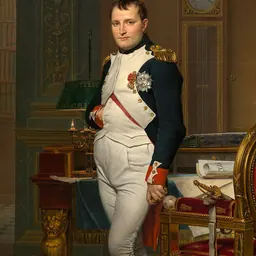


Related people
Same field, nearest in time

Contemporaries
People whose lives overlapped Claude-Henri Belgrand de Vaubois's





Frequently asked questions
Who was Claude-Henri Belgrand de Vaubois?
French general (1748–1839)
When was Claude-Henri Belgrand de Vaubois born?
Claude-Henri Belgrand de Vaubois was born on 1 October 1748 in Ville-sous-la-Ferté.
When did Claude-Henri Belgrand de Vaubois die?
Claude-Henri Belgrand de Vaubois died on 14 July 1839 in Courcelles-sur-Vesle.
What was Claude-Henri Belgrand de Vaubois's occupation?
Claude-Henri Belgrand de Vaubois was a military officer, politician and military personnel.
What nationality was Claude-Henri Belgrand de Vaubois?
Claude-Henri Belgrand de Vaubois was French.
Sources & further reading
· Wikipedia: Claude-Henri Belgrand de Vaubois
· DBpedia: Claude-Henri Belgrand de Vaubois
Cite this page
APA: Biography.guide. (2026). Claude-Henri Belgrand de Vaubois. https://biography.guide/claude-henri-belgrand-de-vaubois/
MLA: "Claude-Henri Belgrand de Vaubois." Biography.guide, https://biography.guide/claude-henri-belgrand-de-vaubois/.
Chicago: "Claude-Henri Belgrand de Vaubois." Biography.guide. https://biography.guide/claude-henri-belgrand-de-vaubois/.
Data last updated: 2026-09-20 · Spot an error? Report a correction.
Page generated 2026-09-27 05:24 UTC