
About Clarke Abel
Lived 1780 – 1826 (aged 46). Clarke Abel was a British botanist, naturalist and surgeon.
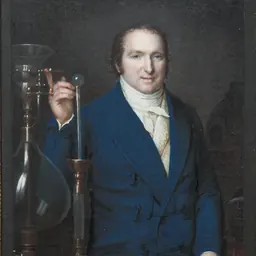
Clarke Abel (5 September 1780 – 24 November 1826) was a British surgeon and naturalist.
He accompanied Lord Amherst on his mission to China in 1816-17 as the embassy's chief medical officer and naturalist, on the recommendation of Sir Joseph Banks. En route, Abel landed twice in the Cape, where he devoted a chapter to the region's geology, and became notes a pioneer in South African Geology. This mission to China was Britain's second unsuccessful attempt to establish diplomatic relations with China and involved travelling to the Beijing and the famous botanical gardens of Fa Tee (Huadi) near Canton (Fangcun District). While in China, Abel collected specimens and seeds of the plant that carries his name, Abelia chinensis, described by Banks' botanical secretary Robert Brown, "with friendly partiality". However a shipwreck and an attack by pirates on the way back to his home in Britain caused him to lose all of his specimens. Abel's Narrative of a Journey in the Interior of China, 1818, gives a detailed account of the collection's misfortunes. However, he had left some specimens with Sir George Staunton at Canton, who was kind enough to return them to him; living specimens of the Chinese Abelia that we know today were introduced by Robert Fortune in 1844.
In March 1819 he was elected a Fellow of the Royal Society. He was also a member of the Geological Society.
Abel was the first Western scientist to report the presence of the orangutan on the island of Sumatra; the Sumatran Orangutan Pongo abelii Lesson 1827 is named for him. He went on to become the surgeon-in-chief to Lord Amherst when the earl was appointed Governor-general of India. Abel died at Cawnpore, India, 24 November 1826, aged 46.
Abel was also the first scientist to describe the Chiru or Tibetan Antelope, in 1826. It is the only member of the genus Pantholops.
In 1919, botanist Takenoshin Nakai published Abeliophyllum, which is a genus of shrubs from Korea, in the olive family, Oleaceae. It was named in Clarke Abel's honour. Then in 2010, Landrein published Diabelia, which is a genus of shrubs from China and Korea, in the Caprifoliaceae family.
Don’t just read it —
keep it.
Full-length biographies made to live with: read them, listen on the way to work, watch them tonight.
- E-book
- Audio
- Video
Instant download · yours to keep · every purchase keeps this site free
Important facts
People in Clarke Abel's life
Named in this biography and alive at the same time


Related people
Same field, nearest in time



Contemporaries
People whose lives overlapped Clarke Abel's


Frequently asked questions
Who was Clarke Abel?
British surgeon and naturalist (1780–1826)
When was Clarke Abel born?
Clarke Abel was born on 5 September 1780 in Suffolk.
When did Clarke Abel die?
Clarke Abel died on 24 November 1826 in Kanpur.
What was Clarke Abel's occupation?
Clarke Abel was a botanist, naturalist and surgeon.
What nationality was Clarke Abel?
Clarke Abel was British.
Sources & further reading
Cite this page
APA: Biography.guide. (2026). Clarke Abel. https://biography.guide/clarke-abel/
MLA: "Clarke Abel." Biography.guide, https://biography.guide/clarke-abel/.
Chicago: "Clarke Abel." Biography.guide. https://biography.guide/clarke-abel/.
Data last updated: 2026-09-20 · Spot an error? Report a correction.
Page generated 2026-09-27 05:19 UTC