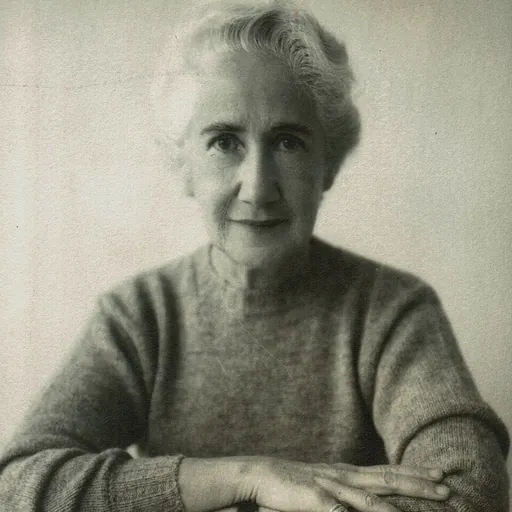
About Clara Porset
Lived 1895 – 1981 (aged 85). Clara Porset was a Cuban and Mexican interior designer, designer, architect and interior architect.
Clara Porset (May 25, 1895 – May 17, 1981) was a Cuban-born furniture and interior designer. From 1935 until her death, she lived and worked mainly in Mexico, where she is considered a pioneer in furniture design. She was educated in the United States and Cuba, and later studied in Europe in Germany and Paris. She also studied at Black Mountain College, North Carolina, in 1934.
Education Born to a wealthy Cuban family in 1895, Porset later had the opportunity to travel widely, accumulating a wide range of artistic and political influences. She studied at the Manhattanville Academy, New York (1911–14)
She returned to Cuba in 1932. Shortly afterward she presented a lecture entitled La decoración interior contemporánea su adaptación al Tropic (Contemporary Interior Decoration: Its Adaptation to the Tropics), demonstrating the nascent interests that defined her career. She worked professionally as a designer in Cuba during this time. In the summer of 1934 she traveled to the United States to study under former Bauhaus instructors, artists Josef and Anni Albers, at Black Mountain College, North Carolina.
In 1933, despite her success as a professional designer, she wrote to Walter Gropius of the Bauhaus school to inquire about enrolling. Due to worsening political pressure from the Nazis, he recommended she study instead in the United States, with Josef Albers at Black Mountain College in North Carolina.
After her return to Cuba, Porset served briefly as artistic director of the Escuela Técnica para Mujeres (Technical School for Women), but owing to her political outspokenness she was forced to leave Cuba in 1935. She moved to Mexico, where she met and married the painter Xavier Guerrero. Through their partnership, she was introduced to the folk arts as well as the prominent artists of the country, which influenced her career.
The couple collaborated on a proposal for the Museum of Modern Art's (New York) 1940 competition Organic Design in Home Furnishings. This was the first time Latin American designers were included in the museum’s call for proposals. Although it was a collaboration, Guerrero was given sole credit for the design in exhibit publications. Porset’s furniture updated vernacular Mexican materials (such as woven agave fibers) and forms (the colonial chair).
In 1952, Porset curated the exhibition Arte en la vida diaria: exposición de objetos de buen diseño hechos en México (Art in Daily Life: An Exhibition of Well-Designed Objects Made in Mexico) at the Instituto Nacional de Bellas Artes (Mexico City). She featured both handcrafted and mass-produced objects. This expansive exhibition included many artists and designers, such as Odilón Avalos, Los Castillo, José Feher, Cynthia Sargent, William Spratling, and former Bauhaus instructor Michael van Beuren.
Porset returned to post-revolutionary Cuba in 1959. President Fidel Castro commissioned her to design the furniture for the school of Camilo Cienfuegos, an institution symbolic of the new society envisioned by revolutionaries. Before her return to Mexico in 1963, she also created furniture for a number of other universities, after her plans to establish a new design school in Cuba went unrealized.
In 1969, designer Horacio Durán founded an industrial design program at the Escuela Nacional de Arquitectura (now part of Universidad Nacional Autónoma de México, UNAM) and invited Porset to give a seminar. She continued teaching for the remainder of her life.
The Instituto Nacional de Bellas Artes recognized Porset as a pioneer of Mexican modern design by awarding her a Gold Medal in 1971. The Clara Porset Design Prize has been awarded to Mexican design students since 1993.
Legacy Porset lived out her final years in Chimalistac, Mexico. Near the end of her career, she bequeathed her papers and collection to the Industrial Design Department of the Faculty of Architecture at the Universidad Nacional Autónoma de México to benefit designers. She stipulated that her house should be sold to set up a foundation to award a scholarship to a female student for postgraduate studies. Only two scholarships were awarded because of the devaluation of the Mexican peso. The scholarship was converted to the Clara Porset Award: a monetary award given to the best industry design project submitted by students around the country. The Clara Porset Library, built around her collection, is considered the best design library in Mexico today.
Don’t just read it —
keep it.
Full-length biographies made to live with: read them, listen on the way to work, watch them tonight.
- E-book
- Audio
- Video
Instant download · yours to keep · every purchase keeps this site free
Important facts
Family & relationships
People in Clara Porset's life
Named in this biography and alive at the same time






Related people
Same field, nearest in time



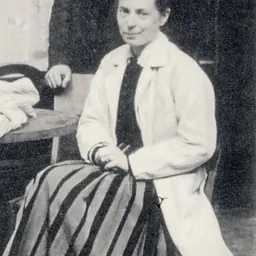
Contemporaries
People whose lives overlapped Clara Porset's
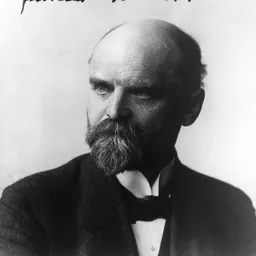
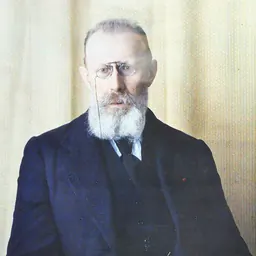
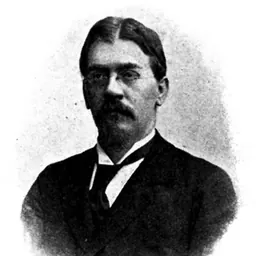

Frequently asked questions
Who was Clara Porset?
Cuban designer (1895-1981)
When was Clara Porset born?
Clara Porset was born on 25 May 1895 in Matanzas.
When did Clara Porset die?
Clara Porset died on 17 May 1981 in Mexico City.
What was Clara Porset's occupation?
Clara Porset was an interior designer, designer, architect and interior architect.
What nationality was Clara Porset?
Clara Porset was Cuban and Mexican.
Sources & further reading
Cite this page
APA: Biography.guide. (2026). Clara Porset. https://biography.guide/clara-porset/
MLA: "Clara Porset." Biography.guide, https://biography.guide/clara-porset/.
Chicago: "Clara Porset." Biography.guide. https://biography.guide/clara-porset/.
Data last updated: 2026-09-21 · Spot an error? Report a correction.
Portrait: Wikimedia Commons · author & licence
Page generated 2026-09-27 04:59 UTC