
About William Spratling
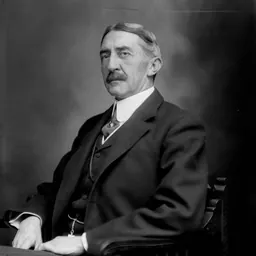
Lived 1900 – 1967 (aged 66). William Spratling was a Mexican silversmith, jewelry designer, university teacher and entrepreneur.
William Spratling (22 September 1900 – 7 August 1967) was an American architect, writer, artist, collector, and silver designer who established the Taller de Las Delicias in Taxco, Guerrero, Mexico, in 1931. Through the workshop, Spratling organized and expanded the production of handwrought silver, trained generations of Mexican silversmiths, and developed international markets for modern Taxco jewelry and decorative arts.
His workshop became an important institutional origin of what became known as the Taxco school of silver design, part of the broader twentieth-century Mexican silver renaissance. Silversmiths and designers who trained or worked in Spratling's operation before establishing their own workshops included Antonio Pineda, Héctor Aguilar, Antonio Castillo, Jorge "Chato" Castillo, Salvador Terán, and Reveriano Castillo.
Spratling also worked as a writer and illustrator, collaborating with William Faulkner on Sherwood Anderson and Other Famous Creoles (1926) and writing and illustrating Little Mexico (1932). In 1945 he was asked to prepare a plan for expanding Alaska Native craft production for the Indian Arts and Crafts Board, a scheme that was never funded, and he assembled a collection of pre-Columbian art that he largely gave to Mexican public collections. He died in an automobile accident near Taxco in 1967.
Early life Spratling was born in 1900 in Sonyea, Livingston County, New York, the son of epileptologist William P. Spratling. After the deaths of Spratling's mother and sister, he moved to his father's boyhood home outside of Auburn, Alabama. Spratling attended Auburn High School and then studied architecture at the Alabama Polytechnic Institute (now Auburn University), leaving in 1921 without a degree, a few credits short in mathematics.
Career
Architecture professor and lecturer Spratling took a position as an instructor in the architecture department at Auburn University, and in 1921 he was offered a similar position at Tulane University's School of Architecture in New Orleans, Louisiana. At the same time, he was an active participant at the New Orleans Arts and Crafts Club and taught in the New Orleans Art School. While teaching at Tulane, Spratling shared a house with the writer William Faulkner.
During the summers of 1926–1928, Spratling lectured on colonial architecture at the National University of Mexico's Summer School.
Mexico and artistic circles, 1926–1931 In Mexico, Spratling became closely associated with the muralist Diego Rivera and with other artists, writers and scholars involved in the country's postrevolutionary cultural movement, a circle that also included Frances Toor, René d'Harnoncourt and the dealer Frederick Davis. He promoted Rivera's work, helped arrange commissions for him, and took part in the exhibition and promotion of modern Mexican art in Mexico and the United States.
Using money from commissions he arranged for Rivera, Spratling bought a house in Taxco in 1928 and settled there, writing and illustrating Little Mexico (1932), an account of the town and of rural Mexican life. Spratling proposed regional workshop and exhibition centers coordinated through a Federation of Alaska Native Arts. The centers were intended to develop products from the materials, techniques and iconography of each region rather than reproduce Taxco designs. In 1948, a group of Alaska Native veterans of the Second World War travelled to Taxco for instruction in silversmithing, and Spratling produced about 200 prototype objects for the program. Congress did not allocate funds for the wider plan, and the proposed network of workshops was never established.
Design and materials
Spratling's designs drew from pre-Columbian sculpture, codices, ceramic stamps, Mexican colonial objects, and local craft traditions. His earlier jewelry often used heavy silver, deeply carved or repoussé surfaces, and representational motifs such as serpents, birds, masks, and figures. Later work became more linear and abstract.
Early designs frequently adapted pre-Columbian prototypes, among them reliefs at Xochicalco, objects in the Museo Nacional de Antropología and the pre-Columbian clay stamps Spratling collected. Some pieces followed a single model closely, such as a repoussé Quetzalcoatl brooch based on a pre-Columbian stone vessel, while others combined archaeological motifs with contemporary forms, as in a silver pitcher with a carved wooden eagle handle.
During the 1940s and 1950s his designs increasingly combined silver with locally available materials such as rosewood, ebony, amethyst and obsidian. In the 1960s he produced a limited number of gold pieces set with pre-Columbian stones, each made as a single example.
Workshop marks Spratling's workshop marks changed several times. His earliest work bears an interlocking "WS"; from 1938 many pieces carry a circular mark reading "Spratling Made in Mexico", used until 1945 alongside an oval "Spratling Silver" stamp. Work of about 1950, including the Alaska models, was marked with a script "WS", and pieces made during his 1949–51 association with the Mexico City company Conquistador were marked "Spratling de Mexico". Later production at Taxco el Viejo generally used a circular mark reading "William Spratling Taxco Mexico", and his 1960s gold jewelry was typically marked "WS" above "18K".
Museum collections Spratling's work is held by museums in Mexico and the United States.
The Museo Franz Mayer holds the Colección William Spratling, comprising 1,583 works received in 2012 on loan from the Ulrich family, among them jewelry, sculpture, and decorative and utilitarian objects in silver. The Los Angeles County Museum of Art holds jewelry, hollowware, flatware and decorative objects by Spratling in its Latin American art collection, including a silver and amethyst punch bowl of about 1940–1944 commissioned by Mexican president Manuel Ávila Camacho and the Helena Rubinstein Necklace.
The National Museum of the American Indian holds the models Spratling produced between 1945 and 1949 for the Indian Arts and Crafts Board project to develop a silver industry among Alaska Native craftworkers, including jewelry, flatware and hollowware; after the project failed the models remained in the board's headquarters collection until they were transferred to the museum in 2000. The Metropolitan Museum of Art holds a group of his silver flatware and hollowware, given to the museum in 1991. The Art Institute of Chicago holds silver salt and pepper shakers of 1960, together with the Hummingbird Necklace and Waves, both received in 2024.
Other institutional holdings include a Tree of Life Brooch at the Philadelphia Museum of Art, silver candlesticks at the Dallas Museum of Art, a silver and rosewood coffeepot at the Yale University Art Gallery, a pair of silver spurs at the Brooklyn Museum and a brooch at Cooper Hewitt, Smithsonian Design Museum.
Beyond his silverwork, the Museum of Modern Art holds the 1931 portfolio 13 Woodcuts by Siqueiros, printed by David Alfaro Siqueiros and published by Spratling in Taxco.
Writing and illustration Spratling worked as an illustrator and writer before he established his silver workshop. In 1926 he collaborated with William Faulkner on Sherwood Anderson and Other Famous Creoles, for which he supplied caricatures of figures in the French Quarter literary and artistic community. and published articles on architecture and on life in Louisiana and Mexico during the late 1920s, among them "Cane River Portraits" in Scribner's Magazine in 1928.
After settling in Taxco he wrote and illustrated Little Mexico (1932), an account of small-town and rural life in Mexico.
Spratling amassed a large collection of pre-Columbian figurines from Remojadas, Veracruz, which he donated, in large part, to the museum of the National Autonomous University of Mexico in 1959. Photographed by Manuel Álvarez Bravo, several of these works were published in More Human Than Divine. Spratling also donated hundreds of pre-Columbian objects to a museum in Taxco that today bears his name.
Death Spratling was killed in an automobile accident outside of Taxco on August 7, 1967, at the age of 66.
Legacy
The workshop system Spratling developed at Taller de Las Delicias combined design direction, apprenticeship, specialized hand production, retail sales, and international distribution. The model was subsequently adopted and modified by independent workshops established by former employees and associates, helping make Taxco an internationally recognized center of modern silver design during the 1940s and 1950s.
The workshops founded by former Las Delicias silversmiths developed distinct approaches to design and technique while retaining aspects of its apprenticeship and specialized-production system.
His work was the subject of the exhibition and catalogue William Spratling and the Mexican Silver Renaissance: Maestros de Plata, organized with the San Antonio Museum of Art.
Don’t just read it —
keep it.
Full-length biographies made to live with: read them, listen on the way to work, watch them tonight.
- E-book
- Audio
- Video
Instant download · yours to keep · every purchase keeps this site free
Important facts
People in William Spratling's life
Named in this biography and alive at the same time




Related people
Same field, nearest in time


Contemporaries
People whose lives overlapped William Spratling's

Frequently asked questions
Who was William Spratling?
American silversmith (1900–1967)
When was William Spratling born?
William Spratling was born on 22 September 1900.
When did William Spratling die?
William Spratling died on 7 August 1967.
What was William Spratling's occupation?
William Spratling was a silversmith, jewelry designer, university teacher and entrepreneur.
What nationality was William Spratling?
William Spratling was Mexican.
Sources & further reading
· Wikipedia: William Spratling
Cite this page
APA: Biography.guide. (2026). William Spratling. https://biography.guide/william-spratling/
MLA: "William Spratling." Biography.guide, https://biography.guide/william-spratling/.
Chicago: "William Spratling." Biography.guide. https://biography.guide/william-spratling/.
Data last updated: 2026-09-25 · Spot an error? Report a correction.
Page generated 2026-09-27 05:12 UTC