
About Chung Kai-lai
Lived 1917 – 2009 (aged 91). Chung Kai-lai was an American and Chinese mathematician, statistician, university teacher and translator, known for Chung–Erdős inequality and Probability theory.
Kai Lai Chung (traditional Chinese: 鍾開萊; simplified Chinese: 钟开莱; September 19, 1917 – June 2, 2009) was a Chinese-American mathematician known for his significant contributions to modern probability theory.
Biography Chung was a native of Hangzhou, the capital city of Zhejiang Province. Chung entered Tsinghua University in 1936, and initially studied physics at its Department of Physics. In 1940, Chung graduated from the Department of Mathematics of the National Southwestern Associated University, where he later worked as a teaching assistant. During this period, he first studied number theory with Lo-Keng Hua and then probability theory with Pao-Lu Hsu.
In 1944, Chung was chosen to be one of the recipients of the 6th Boxer Indemnity Scholarship Program for study in the United States. He arrived at Princeton University in December 1945 and obtained his PhD in 1947. Chung's dissertation was titled “On the maximum partial sum of sequences of independent random variables” and was under the supervision of John Wilder Tukey and Harald Cramér.
In 1950s, Chung taught at the University of Chicago, Columbia University, UC-Berkeley, Cornell University and Syracuse University. He then transferred to Stanford University in 1961, where he made fundamental contributions to the study of Brownian motion and laid the framework for the general mathematical theory of Markov chains. Chung was later appointed Professor Emeritus of Mathematics of the Department of Mathematics at Stanford.
Chung was regarded as one of the leading probabilists after World War II. He was an Invited Speaker at the ICM in 1958 in Edinburgh and in 1970 in Nice. Some of his most influential contributions have been in the form of his expositions in his textbooks on elementary probability and Markov chains. In addition, Chung also explored other branches of mathematics, such as probabilistic potential theory and gauge theorems for the Schrödinger equation.
Chung's visit to China in 1979 (together with Joseph L. Doob and Jacques Neveu), and his subsequent visits, served as points of renewed exchange between Chinese probabilists and their Western counterparts. He also served as an external examiner for several universities in the Asian region, including the National University of Singapore.
In 1981, with Erhan Cinlar and Ronald Getoor, Chung initiated the "Seminars on Stochastic Processes", a popular annual national meeting covering Markov processes, Brownian motion and probability.
Chung possessed a wide-ranging and intimate knowledge of literature and music, especially opera. He also had an interest in Italian culture and taught himself Italian after he retired. He spoke several languages and translated a probability book from Russian to English.
Chung died of natural causes on June 1, 2009, at the age of 91.
Selected publications Elementary Probability Theory; by Kai Lai Chung & Farid Aitsahlia; Springer. A Course in Probability Theory; by Kai Lai Chung. Markov Processes with Stationary Transition Probabilities, by Kai Lai Chung. Selected Works Of Kai Lai Chung; World Scientific Publishing Company. Green, Brown, & Probability and Brownian Motion on the Line; by Kai Lai Chung; World Scientific Publishing Company. Introduction to stochastic integration (Progress in probability and statistics); K. L. Chung and R. J. Williams. Introduction to Random Time and Quantum Randomness; by Kai Lai Chung & Jean Claude Zambrini; World Scientific. Chance & Choice: Memorabilia; Kai Lai Chung. Markov Processes, Brownian Motion, and Time Symmetry; (Grundlehren der mathematischen Wissenschaften); by Kai Lai Chung & John B. Walsh. From Brownian Motion to Schrödinger's Equation; (Grundlehren der mathematischen Wissenschaften); Kai Lai Chung & Zhongxin Zhao. Lectures from Markov Processes to Brownian Motion; (Grundlehren der mathematischen Wissenschaften); by Kai Lai Chung.
Don’t just read it —
keep it.
Full-length biographies made to live with: read them, listen on the way to work, watch them tonight.
- E-book
- Audio
- Video
Instant download · yours to keep · every purchase keeps this site free
Important facts
People in Chung Kai-lai's life
Named in this biography and alive at the same time



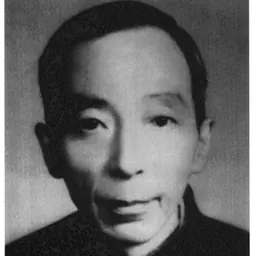
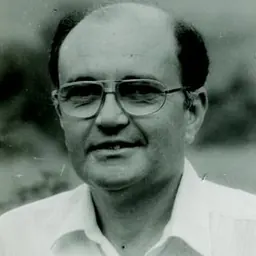


Related people
Same field, nearest in time


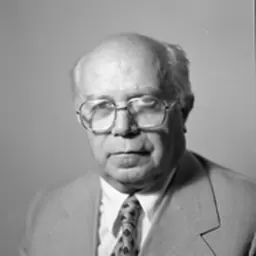
Contemporaries
People whose lives overlapped Chung Kai-lai's

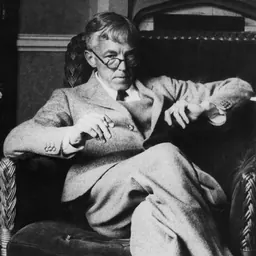
Frequently asked questions
Who was Chung Kai-lai?
American mathematician (1917–2009)
When was Chung Kai-lai born?
Chung Kai-lai was born on 19 September 1917 in Shanghai.
When did Chung Kai-lai die?
Chung Kai-lai died on 1 June 2009 in Philippines.
What was Chung Kai-lai's occupation?
Chung Kai-lai was a mathematician, statistician, university teacher and translator.
What was Chung Kai-lai known for?
Chung Kai-lai was known for Chung–Erdős inequality and Probability theory.
What nationality was Chung Kai-lai?
Chung Kai-lai was American and Chinese.
Sources & further reading
Cite this page
APA: Biography.guide. (2026). Chung Kai-lai. https://biography.guide/chung-kai-lai/
MLA: "Chung Kai-lai." Biography.guide, https://biography.guide/chung-kai-lai/.
Chicago: "Chung Kai-lai." Biography.guide. https://biography.guide/chung-kai-lai/.
Data last updated: 2026-09-26 · Spot an error? Report a correction.
Page generated 2026-09-27 05:14 UTC