
About Christopher Kelk Ingold
Lived 1893 – 1970 (aged 77). Christopher Kelk Ingold was a British chemist, known for Cahn-Ingold-Prelog priority rules, Hughes–Ingold rules and Reaction mechanism.
Sir Christopher Kelk Ingold (28 October 1893 – 8 December 1970) was a British chemist based in Leeds and London. His groundbreaking work in the 1920s and 1930s on reaction mechanisms and the electronic structure of organic compounds was responsible for the introduction into mainstream chemistry of concepts such as nucleophile, electrophile, inductive and resonance effects, and such descriptors as SN1, SN2, E1, and E2 now known as the Hughes–Ingold symbols. He also was a co-author of the Cahn–Ingold–Prelog priority rules. Ingold is regarded as one of the chief pioneers of physical organic chemistry.
Early life and education
Born in London to a silk merchant who died of tuberculosis when Ingold was five years old, Ingold received an MSc from the University of London and returned to Imperial College in 1920 to work with Thorpe. He was awarded a PhD in 1918 and a DSc in 1921.
Academic career In 1924 Ingold moved to the University of Leeds where he spent six years as Professor of Organic Chemistry working alongside his wife, Dr. Edith Hilda Ingold (Usherwood). He returned to London in 1930, and served for 24 years as head of the chemistry department at University College London, from 1937 until his retirement in 1961.
During his study of alkyl halides, Ingold found evidence for two possible reaction mechanisms for nucleophilic substitution reactions. He found that tertiary alkyl halides underwent a two-step mechanism (SN1) while primary and secondary alkyl halides underwent a one-step mechanism (SN2). This conclusion was based on the finding that reactions of tertiary alkyl halides with nucleophiles were dependent on the concentration of the alkyl halide only. Meanwhile, he discovered that primary and secondary alkyl halides, when reacting with nucleophiles, depend on both the concentration of the alkyl halide and the concentration of the nucleophile.
Starting around 1926, Ingold and Robert Robinson carried out a heated debate on the electronic theoretical approaches to organic reaction mechanisms. See, for example, the summary by Saltzman.
Ingold authored and co-authored 443 papers. Notable students include Peter de la Mare, Ronald Gillespie and Ronald Nyholm.
Honours In 1920, Ingold was awarded the British Empire Medal (BEM) for his wartime research involving "great courage in carrying out work in a poisonous atmosphere, and risking his life on several occasions in preventing serious accidents," though he subsequently never discussed the award or this period in his life. He received the Longstaff Medal of the Royal Society of Chemistry in 1951, the Royal Medal of the Royal Society in 1952, and was knighted in 1958.
The chemistry department of University College London is now housed in the Sir Christopher Ingold building, opened in 1969.
Personal life Ingold married Dr. Edith Hilda Ingold (Usherwood) in 1923. She was a fellow chemist with whom he collaborated. They had two daughters and a son, the chemist Keith Ingold.
Death Ingold died in London in 1970, aged 77.
Don’t just read it —
keep it.
Full-length biographies made to live with: read them, listen on the way to work, watch them tonight.
- E-book
- Audio
- Video
Instant download · yours to keep · every purchase keeps this site free
Important facts
People in Christopher Kelk Ingold's life
Named in this biography and alive at the same time

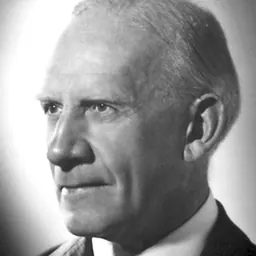


Related people
Same field, nearest in time

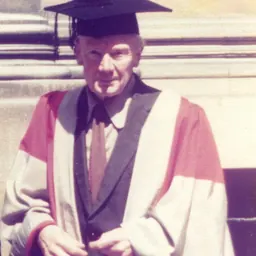
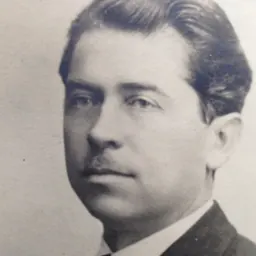


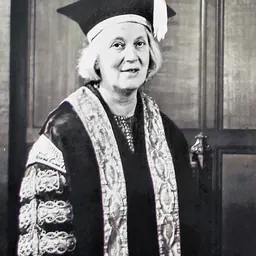
Contemporaries
People whose lives overlapped Christopher Kelk Ingold's


Frequently asked questions
Who was Christopher Kelk Ingold?
British chemist (1893-1970)
When was Christopher Kelk Ingold born?
Christopher Kelk Ingold was born on 28 October 1893 in London, Forest Gate.
When did Christopher Kelk Ingold die?
Christopher Kelk Ingold died on 8 December 1970 in Edgware.
What was Christopher Kelk Ingold's occupation?
Christopher Kelk Ingold was a chemist.
What was Christopher Kelk Ingold known for?
Christopher Kelk Ingold was known for Cahn-Ingold-Prelog priority rules, Hughes–Ingold rules, Reaction mechanism and Thorpe-Ingold effect.
What nationality was Christopher Kelk Ingold?
Christopher Kelk Ingold was British.
Sources & further reading
· Wikipedia: Christopher Kelk Ingold
· DBpedia: Christopher Kelk Ingold
Cite this page
APA: Biography.guide. (2026). Christopher Kelk Ingold. https://biography.guide/christopher-kelk-ingold/
MLA: "Christopher Kelk Ingold." Biography.guide, https://biography.guide/christopher-kelk-ingold/.
Chicago: "Christopher Kelk Ingold." Biography.guide. https://biography.guide/christopher-kelk-ingold/.
Data last updated: 2026-09-20 · Spot an error? Report a correction.
Page generated 2026-09-27 05:05 UTC