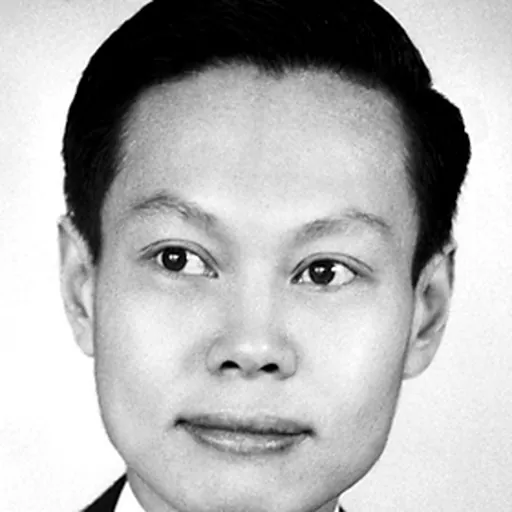
About Chen-ning Yang
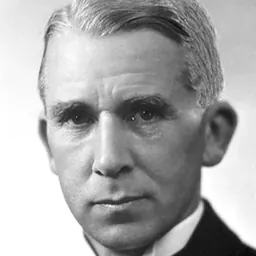
Lived 1922 – 2025 (aged 103). Chen-ning Yang was a Chinese and American physicist, university teacher and theoretical physicist, known for Byers-Yang theorem, CP violation and Fermi–Yang model.
Early life and education Yang was born in Hefei, Anhui, China, on October 1, 1922. His mother was Luo Meng-hua and his father, (; 1896–1973), was a mathematician.
Yang attended elementary school and high school in Beiping (now Beijing), and in the autumn of 1937 his family moved to Hefei after the Japanese invaded China. In 1938 they moved to Kunming, His departure for the United States was delayed for one year, during which time he taught in a middle school as a teacher and studied field theory.
Yang visited the Chinese mainland in 1971 for the first time after the thaw in China–US relations, and subsequently worked to help the Chinese physics community rebuild the research atmosphere, which later eroded due to political movements during the Cultural Revolution. He was also one of the two Shaw Prize Founding Members and was a Distinguished Professor-at-Large at the Chinese University of Hong Kong.
Yang helped to establish the Theoretical Physics Division at the Chern Institute of Mathematics in 1986 at the request of Shiing-Shen Chern who was serving as the inaugural director of the Institute at the time.
Personal life and death Yang married Tu Chih-li , a teacher, in 1950; they had two sons and a daughter together. His father-in-law was the Kuomintang general Du Yuming. Tu died in October 2003. In January 2005, Yang married Weng Fan , a university student. They met in 1995 at a physics seminar; the couple reestablished contact in February 2004 when Yang moved to China to become affiliated with Tsinghua University. Yang called Weng, who was 54 years his junior, his "final blessing from God".
Yang obtained U.S. citizenship during his research within the country. According to the state-run Xinhua News Agency, Yang said the decision was painful as his father never forgave him for that. According to Xinhua and other mainstream Chinese media, he formally renounced his American citizenship on April 1, 2015. He acknowledged that while the U.S. was a beautiful country that gave him good opportunities to study science, China since his youth had offered the best secondary and undergraduate institutions, though the US had the top graduate studies. However, circumstances changed in favor of China's growth by the turn of the century.
His son Guangnuo was a computer scientist. His second son Guangyu is an astronomer, and his daughter Youli is a doctor.
Yang turned 100 on October 1, 2022, and died in Beijing on October 18, 2025, at the age of 103.
Views on the CEPC Yang is known for having opposed the construction of the Circular Electron Positron Collider (CEPC), a 100 km circumference particle collider in China that would study the Higgs boson. He catalogued the project as "guess" work and without guaranteed results. Yang said that "even if they see something with the machine, it's not going to benefit the life of Chinese people any sooner."
At the University of Chicago, Yang first spent twenty months working in an accelerator lab, but found he was not good at experimental physics and switched back to theory. His doctoral thesis was about an atomic beam apparatus for measuring the nuclear quadrupole resonance of sodium.
Later, Yang worked on particle phenomenology; a well-known work was the Fermi–Yang model of 1949, treating the pion as a bound nucleon–antinucleon pair.
Main contributions
Yang is well known for his 1953 collaboration with Robert Mills in developing non-abelian gauge theory, widely known as the Yang–Mills theory. During the academic year 1953–54, Yang was a visitor to Brookhaven National Laboratory ... I was at Brookhaven also ... and was assigned to the same office as Yang. Yang, who demonstrated on a number of occasions his generosity to physicists beginning their careers, told me about his idea of generalizing gauge invariance and we discussed it at some length ... I was able to contribute something to the discussions, especially with regard to the quantization procedures, and to a small degree in working out the formalism; however, the key ideas were Yang's.
The Scientist called Yang–Mills theory: The foundation for the current understanding of how subatomic particles interact is a contribution which has restructured modern physics and mathematics.In 1956, he and T. D. Lee analyzed a problem known as the τ–θ puzzle, in which a particle called θ decayed into two pions and a particle τ into three pions, the two decays with different parity symmetry. The results were also confirmed by two other independent experiments by Valentine Telegdi and Jerome Isaac Friedman at the University of Chicago and by Richard Garwin and Leon M. Lederman at Columbia University. Their 1975 paper, known as the Wu–Yang dictionary, helped bridge gaps between physics and differential geometry.
On Yang's retirement from SUNY in 1999, Freeman Dyson called Yang "the pre-eminent stylist" of 20th-century physics alongside Albert Einstein and Paul Dirac, citing how Yang "turns his least important calculations into miniature works of art, and turns his deeper speculations into masterpieces." Physicist Kenneth Young opened the ceremony. with 13 of his seminal contributions engraved on the faces of the cube. On the cube is also written "Congratulations on Professor Chen Ning Yang's 90th birthday" in Chinese. The cube also includes an ancient Chinese poem used by Yang in his 2013 Selected Papers and Commentaries; it reads:
Statistical mechanics: Phase transitions (1952): for his works with Lee on the Lee–Yang theory and the Lee–Yang theorem, which describe the liquid-gas phase transition based on microscopic properties. ). ODLRO (1962): for his development of the concept of off-diagonal long-range order (ODLRO) that characterizes macroscopic quantum phenomena like superconductivity and superfluidity. Neutrino experiment (1960): for the Lee and Yang paper that proposed to study the weak interaction with high energy neutrinos. This work promoted various neutrino experiments. CP nonconservation (1964): for his paper on CP violation, in collaboration with T. T. Wu. the first foreign-to-domestic member of the Chinese Academy of Sciences, the Academia Sinica in 1958, the Russian Academy of Sciences, and the Royal Society. He was an elected member of the American Academy of Arts and Sciences, the American Philosophical Society, and the United States National Academy of Sciences. He was awarde Princeton University (1958), Moscow State University (1992), and the Chinese University of Hong Kong (1997).
List of awards
Ten Outstanding Young Americans (1957) Nobel Prize in Physics (1957) with T. D. Lee. Rumford Prize (1980), with Robert Mills. National Medal of Science (1986) First laureate of the Oskar Klein Memorial Lecture and Medal (1988) Benjamin Franklin Medal for Distinguished Achievement in the Sciences of the American Philosophical Society (1993) Bower Award (1994) Albert Einstein Medal (1995) Lars Onsager Prize (1999) King Faisal International Prize (2001) Marcel Grossmann Awards (2015), "for deepening Einstein's geometrical approach to physics in the best tradition of Paul Dirac and Hermann Weyl" Asian Scientist 100, Asian Scientist (2016 and 2020)
Awards and places named after him Yang was the first president of the Association of Asia Pacific Physical Societies (AAPPS) when it was established in 1989. In 1997, the AAPPS created the C. N. Yang Award in his honor to highlight young researchers.
In 1998, after his retirement, the Institute of Theoretical Physics of Stony Brook University was renamed C. N. Yang Institute for Theoretical Physics. The C. N. Yang Hall, a residence hall and activity center at Stony Brook University, was dedicated in 2010.
Selected publications
Don’t just read it —
keep it.
Full-length biographies made to live with: read them, listen on the way to work, watch them tonight.
- E-book
- Audio
- Video
Instant download · yours to keep · every purchase keeps this site free
Important facts
more
Lee–Yang theorem, Off-diagonal long-range order, Parity violation, Standard Model, Wu–Yang dictionary, Wu–Yang monopole, Yangian, Yang–Baxter equation, Yang–Mills theory, Yang–Mills–Higgs equationsmore
C.N. YangPeople in Chen-ning Yang's life
Named in this biography and alive at the same time


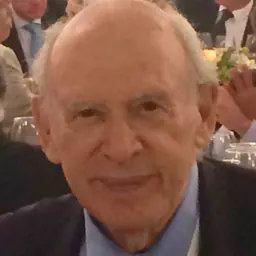
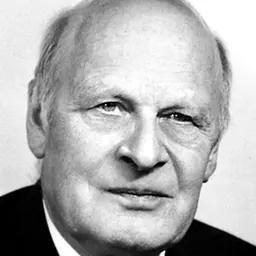
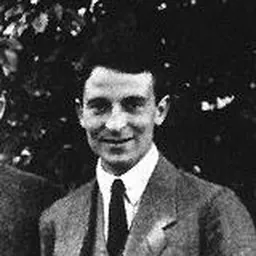
Related people
Same field, nearest in time

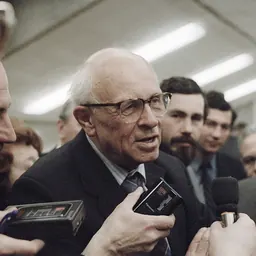
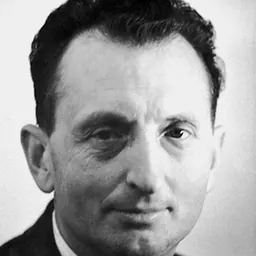



Contemporaries
People whose lives overlapped Chen-ning Yang's

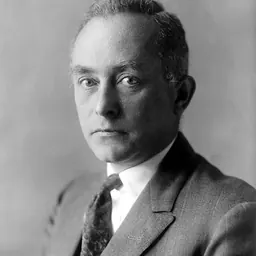
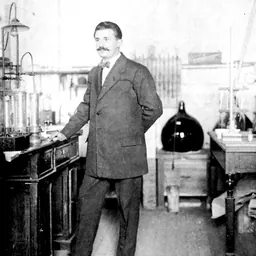
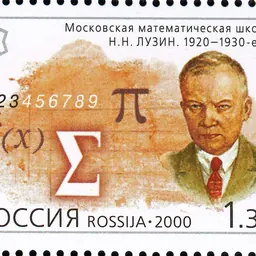
Frequently asked questions
Who was Chen-ning Yang?
Chinese physicist (1922–2025)
When was Chen-ning Yang born?
Chen-ning Yang was born on 1 October 1922 in Hefei.
When did Chen-ning Yang die?
Chen-ning Yang died on 18 October 2025 in Beijing.
What was Chen-ning Yang's occupation?
Chen-ning Yang was a physicist, university teacher and theoretical physicist.
What was Chen-ning Yang known for?
Chen-ning Yang was known for Byers-Yang theorem, CP violation, Fermi–Yang model, G-parity, Gauge theory and Landau–Yang theorem.
What nationality was Chen-ning Yang?
Chen-ning Yang was Chinese and American.
Sources & further reading
Cite this page
APA: Biography.guide. (2026). Chen-ning Yang. https://biography.guide/chen-ning-yang/
MLA: "Chen-ning Yang." Biography.guide, https://biography.guide/chen-ning-yang/.
Chicago: "Chen-ning Yang." Biography.guide. https://biography.guide/chen-ning-yang/.
Data last updated: 2026-09-20 · Spot an error? Report a correction.
Page generated 2026-09-27 05:10 UTC