
About Chen Jiangong
Lived 1893 – 1971 (aged 77). Chen Jiangong was a Chinese mathematician.
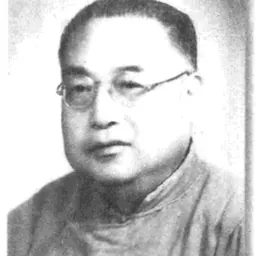
Chen Jiangong (; 1893–1971), or Jian-gong Chen, was a Chinese mathematician. He was a pioneer of modern Chinese mathematics. He was the dean of the Department of Mathematics, National Chekiang University (now Zhejiang University), and a founding academician the Chinese Academy of Sciences (elected 1955).
Early life and education
Chen was born in Shanyin County (now Shaoxing), Zhejiang Province during the late Qing dynasty. He studied at Shanyin School and later Shaoxing Prefecture School. In 1910 he entered the Zhejiang Advanced Normal School, a teacher-training institution which was later merged into National Chekiang University.
Chen later went to Japan to continue his studies. In 1916, he graduated from the Tokyo Institute of Technology, where he majored in textile technology, and the Tokyo Academy of Physics (now known as the Tokyo University of Science).
Career After graduating from Tohoku Imperial University in 1923, Chen returned to China and became a lecturer at the Zhejiang Industrial School, which was later merged into National Chekiang University. In 1924, he went to Wuhan, Hubei Province, and became a professor at National Wuchang University (now Wuhan University).
In 1926, Chen returned to Tohoku Imperial University to continue his studies in mathematics, completing his Ph.D. in 1929 and becoming the first international student awarded a Ph.D. by a Japanese university. It was during this time that he met his later colleague Su Buqing, a fellow mathematics Ph.D. candidate.
After earning his doctorate, Chen was offered teaching positions at institutions including Peking University and Wuhan University. However, on the invitation of National Chekiang University president Shao Feizhi, Chen returned to Zhejiang University to serve as dean of the Department of Mathematics, a position he held for the next 20 years.
After earning his doctorate in 1931, Su Buqing was invited to join Chen's department and take over his position as department chair, allowing Chen to focus more on research. Their collaboration resulted in the Chen-Su school of mathematics in Hangzhou.
The outbreak of the Second Sino-Japanese War in 1937 forced Chen, and much of Zhejiang University, to relocate from Hangzhou. In February 1940, Chen arrived at Zunyi, and then subsequently Meitan, Guizhou Province, where he helped re-establish the colleges of engineering and sciences.
In 1945, after the end of the Second Sino-Japanese War, Chen was invited by biologist Luo Zongluo (Lo Tsung-lo), who was serving as the 1st president of National Taiwan University (formerly Taihoku Imperial University), as well as the Nationalist government in Nanjing, to travel to Taipei and serve as acting dean of NTU during its reorganization.
In the spring of 1946, Chen returned to mainland China (then still controlled by Nationalist government), where he continued teaching in National Chekiang University and became a researcher in the Mathematics Research Institute at the Academia Sinica. From 1947 to 1948, Chen traveled to the United States to do research at the Institute for Advanced Study in Princeton, New Jersey. He was elected an academician of the Academia Sinica in 1948.
After the Chinese Civil War, Chen remained in Zhejiang, now part of the People's Republic of China.
In 1952, Zhejiang University was dissociated and its colleges of sciences and humanities were merged with Fudan University in Shanghai. Both Chen and Su Buqing moved to Fudan University, where they continued their cooperation and the Chen-Su school of mathematics. While in Shanghai, Chen translated many mathematical works produced in the USSR.
In recognition of his advancements in the field of mathematics, in 1955 Chen was elected an academician of the Chinese Academy of Sciences in its inaugural year.
In 1958, some departments of Zhejiang University were split from the university in order to form Hangzhou University (which eventually merged back into Zhejiang University in 1998). Chen was appointed to vice president of Hangzhou University and moved back to Hangzhou.
Notable students Gu Chaohao – mathematician, former president of the University of Science and Technology of China Xia Daoxing – mathematician Hu Hesheng – mathematician, 2002 Noether Lecturer
Don’t just read it —
keep it.
Full-length biographies made to live with: read them, listen on the way to work, watch them tonight.
- E-book
- Audio
- Video
Instant download · yours to keep · every purchase keeps this site free
Important facts
People in Chen Jiangong's life
Named in this biography and alive at the same time



Related people
Same field, nearest in time

Contemporaries
People whose lives overlapped Chen Jiangong's

Frequently asked questions
Who was Chen Jiangong?
Chinese mathematician
When was Chen Jiangong born?
Chen Jiangong was born on 8 September 1893 in Shaoxing.
When did Chen Jiangong die?
Chen Jiangong died on 11 April 1971 in Hangzhou.
What was Chen Jiangong's occupation?
Chen Jiangong was a mathematician.
What nationality was Chen Jiangong?
Chen Jiangong was Chinese.
Sources & further reading
Cite this page
APA: Biography.guide. (2026). Chen Jiangong. https://biography.guide/chen-jiangong/
MLA: "Chen Jiangong." Biography.guide, https://biography.guide/chen-jiangong/.
Chicago: "Chen Jiangong." Biography.guide. https://biography.guide/chen-jiangong/.
Data last updated: 2026-09-20 · Spot an error? Report a correction.
Page generated 2026-09-27 05:27 UTC