
Chaudhry Niaz Ali Khan
Pakistan engineer, agriculturalist and philanthropist
About Chaudhry Niaz Ali Khan
Lived 1880 – 1976 (aged 95). Chaudhry Niaz Ali Khan was a civil engineer and engineer.
Chaudhry Niaz Ali Khan ( June 28, 1880 – February 24, 1976) was a civil engineer, agriculturalist, and philanthropist who founded "Dar ul Islam Movement" and "Dar ul Islam Trust" in South Asia and "Dar ul Islam Trust" Institutes in Pathankot and Jauharabad. Besides a philanthropist, Niaz was also a civil servant, and a landowner. He was the member of All-India Muslim League and a participant of the Pakistan Movement with the ultimate aim of creating the Muslim-majority areas of British India.
"Dar ul Islam Trust" Institutes established by Niaz Ali Khan are examples of Muslim institutional efforts in India and Pakistan in the mid-20th century to re-establish a culture of learning and scholarship in the Islamic world leading to intellectual enlightenment and social reform.
As a civil engineer, he designed the original tunnel layout inside the Khewra Salt Mines in Pakistan, the world's second largest salt mines.
Early life The Thomason College of Civil Engineering, Roorkee (now Indian Institute of Technology Roorkee) from where Chaudhry Niaz Ali Khan graduated with a degree in civil engineering in 1900.
Chaudhry Niaz Ali Khan was born in Mahilpur, Hoshiarpur District, Punjab in the British Indian Empire on 28 June 1880. He was the eldest of four brothers. He had a strict upbringing and that he grew up to become an educated professional.
Between 1896 and 1900, Khan studied at The Thomason College of Civil Engineering in Roorkee and was awarded a degree in civil engineering.
Chaudhry Niaz Ali Khan was an expert equestrian and used to ride regularly, on occasions up to 40–50 kilometres a day. He was also a photography enthusiast and had accumulated a vast collection of cameras and used to develop his own photographs.
Career After graduating in 1900, Khan joined the British Indian Government and served in the Public Works Department, the Mines Department and the Irrigation Department as Sub-Divisional Officer (SDO). He was able to save much of his salary, which he invested in agricultural landholdings in Jamalpur.
While serving in the Public Works Department in 1901, Chaudhry Niaz Ali Khan oversaw the designing and construction of the 80 km long Pathankot-Dalhousie Road.
While serving in the Mines Department, Chaudhry Niaz Ali Khan designed the tunnel layout inside the Khewra Salt Mines, the world's second largest salt mines.
While serving in the Irrigation Department, Chaudhry Niaz Ali Khan worked on the 3-Canal Anhar-Salasa Irrigation project near Dipalpur in the Punjab. Earlier, while posted near the tribal areas in the North-West Frontier Province, a dam breached and Chaudhry Niaz Ali Khan, being the Sub-Divisional Officer, was tasked with overseeing the repair of the breach. While the repair work was being carried out, a band of tribals started firing on the engineers and labourers working on the repair of the dam from the hills surrounding the dam. Chaudhry Niaz Ali Khan, picked up his rifle, and, along with a couple of labourers, went up to the tribals and asked them to stop the firing and explained to them that the dam project was providing employment to local tribals and would help store water and irrigate barren fields. The tribals, who, perhaps, were more appreciative of his sheer tenacity than the logic of his argument, agreed to immediately halt the attacks. In recognition of his act of courage, the British Indian Government awarded Chaudhry Niaz Ali Khan the Tamgha-e-Shujaat (Medal of Bravery), a military medal seldom awarded to civilians. Chaudhry Niaz Ali Khan explained to the government that he did not deserve the medal since his bravery and success was aided by the fact that some of the labourers working on the project also belonged to the same tribe as those who were attacking them and they played a part in convincing their fellow tribals to halt the attacks. This honest explanation notwithstanding, the medal was awarded.
The Khan Sahib medal that accompanies the Khan Sahib title, which was conferred upon Chaudhry Niaz Ali Khan by the British Indian Government in 1931.
In 1931, in recognition of his exemplary public service spanning 30 years, the 32nd Viceroy and Governor-General of India, Freeman Freeman-Thomas, 1st Marquess of Willingdon, on behalf of the British Indian Government, conferred upon Chaudhry Niaz Ali Khan the title of Khan Sahib.
In 1935, Chaudhry Niaz Ali Khan retired from government service and his career in civil engineering and returned to his vast estate in Jamalpur to manage his agricultural lands, which spanned . He built his residential complex known as "Qila Jamalpur" (Jamalpur Fort) at a cost of Rs. 100,000, a significant amount at the time. This structure stands to this day and Jamalpur today is also, alternatively, called "Qila Jamalpur".
Chaudhry Niaz Ali Khan was a philanthropist by heart and generously spread charity around him and donated money to various social causes and endowed various charitable and educational institutions with a share of his wealth, especially in the form of land. While spreading charity, he did not discriminate between Muslims and non-Muslims, however, he was particularly concerned about the plight of Muslims in India and, therefore, focused on them. He soon acquired a reputation in northern India as a notable philanthropist.
Monthly Dar ul Islam journal
In 1940, the Dar ul Islam Movement began publishing an Urdu-language monthly journal called Monthly Dar ul Islam, from Pathankot, whose publisher and printer was Chaudhry Niaz Ali Khan. The Dar ul Islam was a scholarly and literary journal whose purpose was to create enlightenment and awareness amongst the Muslims of British India and also to present the case for an independent state for Muslims in South Asia.
Maulana Maududi Chaudhry Niaz Ali Khan requested Allama Muhammad Iqbal to nominate an Islamic scholar with good management skills who could manage the day-to-day affairs of the Dar ul Islam Trust. Allama Muhammad Iqbal nominated Ghulam Ahmed Pervez, an eminent civil servant and Islamic scholar.
When Ghulam Ahmed Pervez told Muhammad Ali Jinnah that he had been asked by Allama Muhammad Iqbal to join the Dar ul Islam Trust at Pathankot and sought his permission, Muhammad Ali Jinnah told Ghulam Ahmed Pervez to nominate someone else for the purpose as he wanted Ghulam Ahmed Pervez to focus entirely on the Tolu-e-Islam project. Ghulam Ahmed Pervez, therefore, recommended the name of Maulana Maududi to Chaudhry Niaz Ali Khan. Ghulam Ahmed Pervez knew Maududi as a young, energetic and intelligent journalist working in Hyderabad Deccan who had considerable knowledge of Islam and felt that Maududi was the right person for the job. It was, therefore, at the recommendation of Ghulam Ahmed Pervez that Chaudhry Niaz Ali Khan wrote to Maududi and invited him to join the Dar ul Islam Trust in Pathankot. The prospect of heading a well-endowed Islamic research institute with a custom-built campus near the picturesque foothills of the Himalayas was an attractive one for Maududi and he agreed.
In 1938, Maulana Maududi, then aged 35, arrived at Dar-ul-Islam in Pathankot and remained there for some time under the patronage of Chaudhry Niaz Ali Khan before founding the religious political party Jamaat-e-Islami in Lahore in 1941. It was at Chaudhry Niaz Ali Khan's estate at Jamalpur where Maulana Maududi established his publishing house, the Maktabah Jama'at-i-Islami, which published Maulana Maududi's Musalman Aur Maujoodah Siyasi Kashmakash ("Muslims and the Current Political Dilemma"). In 1945, an all-India level conference of the Jamaat-e-Islami was held at the Dar ul Islam Institute, Pathankot. Among the attendees were Maulana Maududi, Maulana Said-ud-din, Maulana Saif-ud-din Qari and Maulana Ghulam Ahmad Ahrar. After the independence of Pakistan on 14 August 1947, the Jamaat-e-Islami was bifurcated into two separate political parties, namely the Jamaat-e-Islami Hind in India and the Jamaat-e-Islami Pakistan.
In his article, "Lessons from History", the noted Islamic scholar, Dr. Israr Ahmad, who himself was influenced by Chaudhry Niaz Ali Khan, writes about Maulana Maududi:
Like the second runner in a relay race, another unconventional and courageous young man appeared on the scene with the firm resolve to continue the mission that was forsaken by Maulana Abul Kalam. He worked alone for nearly seven years as a journalist, presenting a methodology for the establishment of “God’s Kingdom”...and the revival of Islam as a complete way of life. He then worked for sometime at Darul Islam an Islamic research academy established by Chaudhry Niaz Ali Khan, a devotee of Allama Iqbal. He finally laid the foundation of his own party in 1941, called Jama’at-e-Islami, and started an organised movement. This young man was, of course, none other than Maulana Sayyid Abul A’la Maududi (1903 – 1979).
Although the genesis of the Jamaat-e-Islami can be traced to the Dar ul Islam Institute established by Chaudhry Niaz Ali Khan in Pathankot, Chaudhry Niaz Ali Khan himself, being a committed "Muslim Leaguer", never joined the Jamaat-e-Islami nor had anything to do with its founding. This was due to Chaudhry Niaz Ali Khan's disagreement with Maulana Maududi's and the Jamaat-Islami's ideology and approach on a number of issues, particularly on his opposition to the Muslim League's methodology.
Pakistan Chaudhry Niaz Ali Khan was a member of the All-India Muslim League, the political party led by Muhammad Ali Jinnah that was fighting for a separate homeland for Muslims in India. Chaudhry Niaz Ali Khan's belief in Iqbal's dream for a separate homeland for Muslims in India and his support for the idea of Pakistan led to increased distance between him and Maulana Maududi.
Chaudhry Niaz Ali Khan's support for the creation of Pakistan became evident immediately after Pakistan's independence on 14 August 1947 when Chaudhry Niaz Ali Khan, leaving his home and vast Jamalpur estate behind in the divided Independent India, migrated with his family to the newly established Muslim state of Pakistan and established there the second Dar-ul-Islam Trust Institute in Jauharabad in Khushab District in central Punjab.
Don’t just read it —
keep it.
Full-length biographies made to live with: read them, listen on the way to work, watch them tonight.
- E-book
- Audio
- Video
Instant download · yours to keep · every purchase keeps this site free
Important facts
People in Chaudhry Niaz Ali Khan's life
Named in this biography and alive at the same time
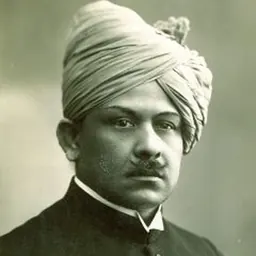


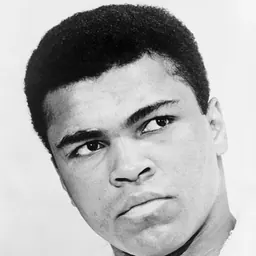
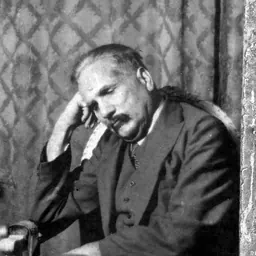

Related people
Same field, nearest in time


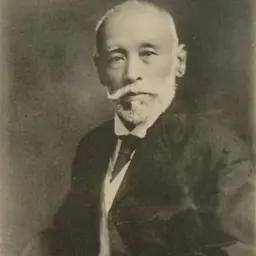
Contemporaries
People whose lives overlapped Chaudhry Niaz Ali Khan's




Frequently asked questions
Who was Chaudhry Niaz Ali Khan?
Pakistan engineer, agriculturalist and philanthropist (1880–1976)
When was Chaudhry Niaz Ali Khan born?
Chaudhry Niaz Ali Khan was born on 28 June 1880 in Mahilpur.
When did Chaudhry Niaz Ali Khan die?
Chaudhry Niaz Ali Khan died on 24 February 1976 in Jauharabad.
What was Chaudhry Niaz Ali Khan's occupation?
Chaudhry Niaz Ali Khan was a civil engineer and engineer.
Sources & further reading
· Wikipedia: Chaudhry Niaz Ali Khan
Cite this page
APA: Biography.guide. (2026). Chaudhry Niaz Ali Khan. https://biography.guide/chaudhry-niaz-ali-khan/
MLA: "Chaudhry Niaz Ali Khan." Biography.guide, https://biography.guide/chaudhry-niaz-ali-khan/.
Chicago: "Chaudhry Niaz Ali Khan." Biography.guide. https://biography.guide/chaudhry-niaz-ali-khan/.
Data last updated: 2026-09-20 · Spot an error? Report a correction.
Page generated 2026-09-27 05:28 UTC