
About Charles Moore Watson
Lived 1844 – 1916 (aged 71). Charles Moore Watson was a British engineer and army officer.
Sir Charles Moore Watson (1844–1916) was a British Army officer, engineer and administrator. In later life he was known for his association with the Palestine Exploration Fund.
Early life He was the second son of William Watson, J.P., of Dublin, and his wife, Sarah, daughter of the Rev. Moore Morgan, rector of Dunlavin, born in Dublin 10 July 1844. His father worked for the City of Dublin Steam Packet Company, and died in 1883. Of his four sons, William and Edward followed him into business, and the other son Arthur became a soldier, dying in the British defeat at the Battle of Colenso. Charles was educated at Trinity College, Dublin.
Tethered balloons were in military use in the American Civil War, and attracted attention from the Royal Engineers, with Frederick Beaumont and Sapper George Grover making trial ascents in 1863 with Henry Tracey Coxwell. Shortly after the outbreak of the Franco-Prussian War in 1870, a committee of the Royal Engineers was set up to look into innovations, and a Balloon Sub-Committee was formed of Beaumont, Grover and Frederick Abel. Peter Scratchley then replaced Grover, and then in 1873 Watson took over Beaumont's place on the Royal Engineers committee. Watson requested two balloons from Coxwell to go with the Ashanti expedition, but Abel came down against the idea.
Sudan and points south In 1874–1875 Watson served in Sudan under General Charles George Gordon, and was engaged in the survey of the White Nile. With William Harold Chippendall (1850–1942), also of the Royal Engineers, he mapped the part of the Nile between Fashoda (now Kodok) and Gondokoro, now lying in South Sudan, in October and November 1874. The larger task on hand was to map from Khartoum to Rageef (Rejaf). They then travelled south in 1874–5, to the area of Lake Albert. In 1875 Watson was elected a Fellow of the Royal Geographical Society.
Administrator Watson subsequently filled an appointment at the War Office. and the development of a military observation balloon was authorised. In 1882 the Store was moved to Chatham, and the development work on balloons by James Templer and Henry Elsdale came much closer to realisation in the form of a field unit.
In 1878, Watson was promoted to captain and aide-de-camp to Sir John Lintorn Arabin Simmons. In 1880 he began two years' duty in the India Office, receiving in 1882 the brevet rank of major. He received the surrender of the Cairo Citadel (14 September 1882). He continued to serve in the Egyptian army until 1886, when he became governor-general of the Red Sea littoral.
Don’t just read it —
keep it.
Full-length biographies made to live with: read them, listen on the way to work, watch them tonight.
- E-book
- Audio
- Video
Instant download · yours to keep · every purchase keeps this site free
Important facts
People in Charles Moore Watson's life
Named in this biography and alive at the same time
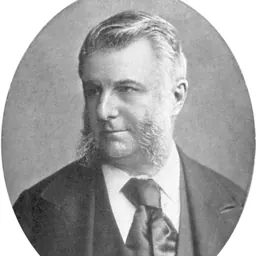





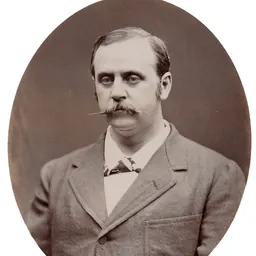
Related people
Same field, nearest in time
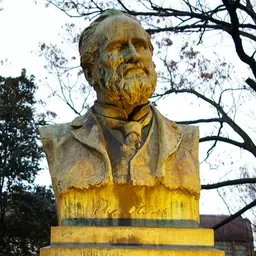
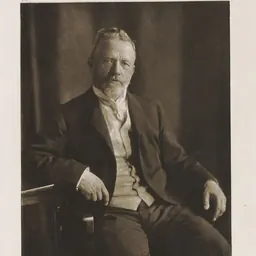
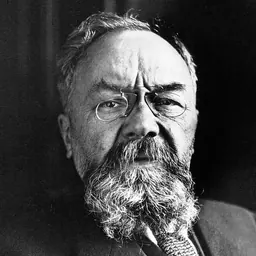
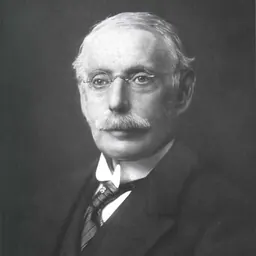
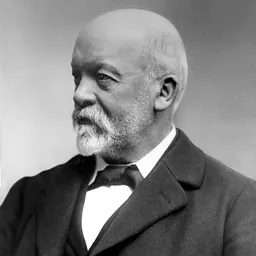
Contemporaries
People whose lives overlapped Charles Moore Watson's
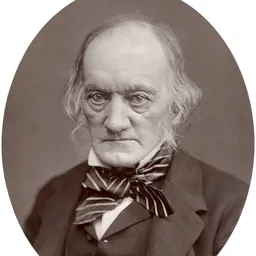
Frequently asked questions
Who was Charles Moore Watson?
Anglo-Irish army officer
When was Charles Moore Watson born?
Charles Moore Watson was born on 10 July 1844.
When did Charles Moore Watson die?
Charles Moore Watson died on 15 March 1916.
What was Charles Moore Watson's occupation?
Charles Moore Watson was an engineer and army officer.
What nationality was Charles Moore Watson?
Charles Moore Watson was British.
Sources & further reading
· Wikipedia: Charles Moore Watson
· DBpedia: Charles Moore Watson
Cite this page
APA: Biography.guide. (2026). Charles Moore Watson. https://biography.guide/charles-moore-watson/
MLA: "Charles Moore Watson." Biography.guide, https://biography.guide/charles-moore-watson/.
Chicago: "Charles Moore Watson." Biography.guide. https://biography.guide/charles-moore-watson/.
Data last updated: 2026-09-20 · Spot an error? Report a correction.
Page generated 2026-09-27 05:24 UTC