
About George Gordon
Lived 1836 – 1911 (aged 74). George Gordon was an American politician and lawyer.
George Washington Gordon (October 5, 1836 – August 9, 1911) was a general in the Confederate States Army during the American Civil War. After the war, he practiced law in Pulaski, Tennessee, where the Ku Klux Klan was formed. He became one of the Klan's first members. In 1867, Gordon became the Klan's first Grand Dragon for the Realm of Tennessee, and wrote its "Precept," a book describing its organization, purpose, and principles. He was also a member of the United States House of Representatives for the 10th congressional district of Tennessee.
Early life Gordon was born on October 5, 1836, in Pulaski, Tennessee. His father was Andrew Gordon and his mother, Eliza K. Gordon. He grew up in Mississippi and Texas. Gordon graduated from the Western Military Institute in Nashville, Tennessee, in 1859. He worked on the Nashville & Northwestern Railway.
Civil War At the start of the Civil War, Gordon enlisted in the military service of the Confederacy and became drillmaster of the 11th Regiment, Tennessee Infantry, which saw action defending the Cumberland Gap during the winter and spring months of 1862. Gordon became regimental commander when James E. Rains assumed command of Carter L. Stevenson's brigade, and fought at the Battle of Tazewell on August 6, 1862. In November 1862 he became the regiment's colonel. Gordon was promoted to brigadier general in August 1864, and was one of the youngest Confederate generals. Gordon led Vaughn's Brigade, in Maj. Gen. John C. Brown's division, at the Battle of Franklin (November 30, 1864), where he was wounded and captured. Many of the men he led are buried at McGavock Confederate Cemetery in Franklin, Tennessee. Gordon was sent to the prisoner-of-war camp at Fort Warren until he was paroled in the summer of 1865. in 1867 and its revised edition the following year. Following Gordon's death, his widow, Minnie, claimed that he had been the original Grand Wizard of the Klan and that it was he, not Nathan Bedford Forrest, who disbanded it.
Political career Gordon was elected as a Democrat to the Sixtieth, Sixty-first, and Sixty-second Congresses. He served from March 4, 1907, until his death in Memphis. He was interred in Elmwood Cemetery in Memphis.
Don’t just read it —
keep it.
Full-length biographies made to live with: read them, listen on the way to work, watch them tonight.
- E-book
- Audio
- Video
Instant download · yours to keep · every purchase keeps this site free
Important facts
People in George Gordon's life
Named in this biography and alive at the same time

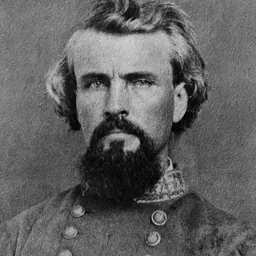

Related people
Same field, nearest in time




Contemporaries
People whose lives overlapped George Gordon's




Frequently asked questions
Who was George Gordon?
Civil War general (1836-1911)
When was George Gordon born?
George Gordon was born on 5 October 1836 in Giles County.
When did George Gordon die?
George Gordon died on 9 August 1911 in Memphis.
What was George Gordon's occupation?
George Gordon was a politician and lawyer.
What nationality was George Gordon?
George Gordon was American.
Sources & further reading
· DBpedia: George Gordon (Civil War general)
Cite this page
APA: Biography.guide. (2026). George Gordon. https://biography.guide/george-gordon/
MLA: "George Gordon." Biography.guide, https://biography.guide/george-gordon/.
Chicago: "George Gordon." Biography.guide. https://biography.guide/george-gordon/.
Data last updated: 2026-09-20 · Spot an error? Report a correction.
Page generated 2026-09-27 05:23 UTC