
About Charles Kittel
Lived 1916 – 2019 (aged 102). Charles Kittel was an American physicist, engineer and university teacher, known for Introduction to Solid State Physics (Kittel book) and RKKY interaction.
Charles Kittel (July 18, 1916 – May 15, 2019) was an American physicist. He was a professor at the University of California, Berkeley from 1951 and was professor emeritus from 1978 until his death. He is known for co-introducing the Ruderman–Kittel–Kasuya–Yosida interaction models and for his famous textbook Introduction to Solid State Physics.
Early life and education Charles Kittel was born in New York City in 1916. He attended the Horace Mann School for Boys, graduating in June 1934. Kittel then entered the Massachusetts Institute of Technology as a chemistry major before switching to physics. He transferred to the St John's College, Cambridge two years later, where he obtained a bachelor of arts in 1938.
Kittel began his graduate studies at the University of Wisconsin–Madison the same year and obtained his Doctor of Philosophy degree in 1941, with a thesis supervised by Gregory Breit.
Career During World War II, he joined the Submarine Operations Research Group (SORG). (He is mentioned on page 478 of RV Jones' book Most Secret War, published 1978.) He served in the United States Navy as a naval attache.
Kittel joined MIT again in 1945, this time as a research associate, remaining there until 1947. From 1947 to 1951, he worked for Bell Laboratories, New Jersey, USA, especially on ferromagnetism.
From 1951 to 1978, he worked at the University of California, Berkeley, where he taught and did research in the field of theoretical solid-state physics, a part of condensed-matter physics. He was awarded a Guggenheim Fellowship in 1945, 1956 and 1963. Many well-known postdoctoral fellows worked with him, including James C. Phillips and Pierre-Gilles de Gennes.
Among other achievements, Kittel is credited with the theoretical discovery of the RKKY interaction (the first K standing for Kittel) and the Kittel magnon mode in ferromagnets.
Physics students worldwide study his classic text Introduction to Solid State Physics, now in its 8th edition.
Kittel died on May 15, 2019, at his home in Berkeley. He was 102.
Honors and awards Oliver E. Buckley Condensed Matter Prize, 1957 Berkeley Distinguished Teacher Award, 1970 Oersted Medal, American Association of Physics Teachers, 1979
Kittel was a member of the U.S. National Academy of Sciences, elected in 1957. 1969: Thermal Physics, 2nd ed. 1980 (with Herbert Kroemer)
Don’t just read it —
keep it.
Full-length biographies made to live with: read them, listen on the way to work, watch them tonight.
- E-book
- Audio
- Video
Instant download · yours to keep · every purchase keeps this site free
Important facts
People in Charles Kittel's life
Named in this biography and alive at the same time
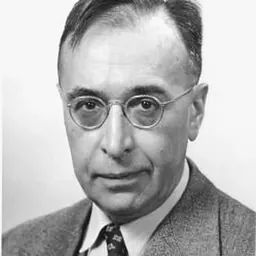

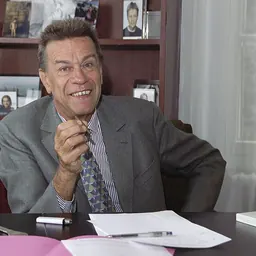

Related people
Same field, nearest in time
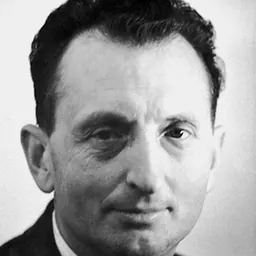
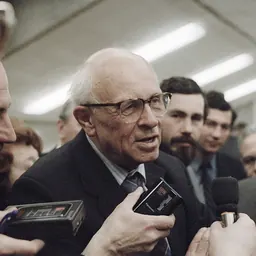


Contemporaries
People whose lives overlapped Charles Kittel's



Frequently asked questions
Who was Charles Kittel?
American physicist (1916–2019)
When was Charles Kittel born?
Charles Kittel was born on 18 July 1916 in New York City.
When did Charles Kittel die?
Charles Kittel died on 15 May 2019 in Berkeley.
What was Charles Kittel's occupation?
Charles Kittel was a physicist, engineer and university teacher.
What was Charles Kittel known for?
Charles Kittel was known for Introduction to Solid State Physics (Kittel book) and RKKY interaction.
What nationality was Charles Kittel?
Charles Kittel was American.
Sources & further reading
Cite this page
APA: Biography.guide. (2026). Charles Kittel. https://biography.guide/charles-kittel/
MLA: "Charles Kittel." Biography.guide, https://biography.guide/charles-kittel/.
Chicago: "Charles Kittel." Biography.guide. https://biography.guide/charles-kittel/.
Data last updated: 2026-09-20 · Spot an error? Report a correction.
Page generated 2026-09-27 05:16 UTC