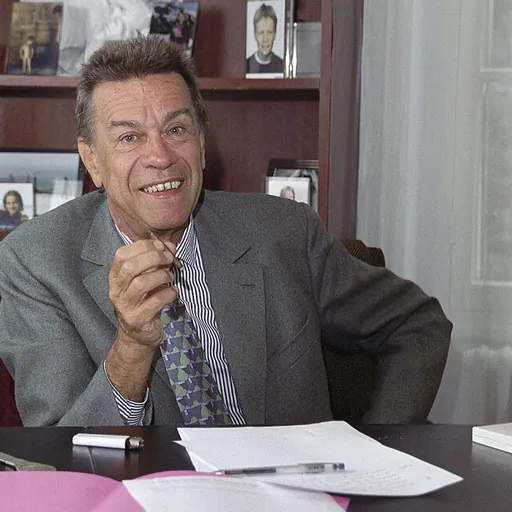
About Pierre-Gilles de Gennes
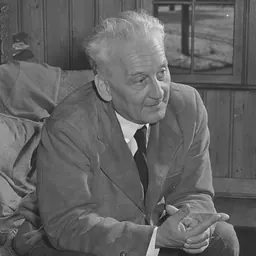
Lived 1932 – 2007 (aged 74). Pierre-Gilles de Gennes was a French physicist, theoretical physicist, professor, university teacher and researcher, known for Bogoliubov transformation, Liquid crystalline elastomer and Polymer physics.
Education and early life He was born in Paris, France, and was home-schooled to the age of 12. By the age of 13, he had adopted adult reading habits and was visiting museums. Later, de Gennes studied at the École Normale Supérieure. After leaving the École in 1955, he became a research engineer at the Saclay center of the Commissariat à l'Énergie Atomique, working mainly on neutron scattering and magnetism, with advice from Anatole Abragam and Jacques Friedel. He defended his Ph.D. in 1957 at the University of Paris.
Career and research In 1959, he was a postdoctoral research visitor with Charles Kittel at the University of California, Berkeley, and then spent 27 months in the French Navy. In 1961, he was assistant professor in Orsay and soon started the Orsay group on superconductors. In 1968, he switched to studying liquid crystals.
In 1971, he became professor at the Collège de France, and participated in STRASACOL (a joint action of Strasbourg, Saclay and Collège de France) on polymer physics. From 1980 on, he became interested in interfacial problems: the dynamics of wetting and adhesion.
He worked on granular materials and on the nature of memory objects in the brain.
Awards and honours Awarded the Fernand Holweck Medal and Prize in 1968.
He was awarded the Harvey Prize, Lorentz Medal and Wolf Prize in 1988 and 1990. In 1991, he received the Nobel Prize in Physics. He was then director of the École Supérieure de Physique et de Chimie Industrielles de la Ville de Paris (ESPCI), a post he held from 1976 until his retirement in 2002.
P.G. de Gennes has also received the F.A. Cotton Medal for Excellence in Chemical Research of the American Chemical Society in 1997, the Holweck Prize from the joint French and British Physical Society; the Ampere Prize, French Academy of Science; the gold medal from the French CNRS; the Matteuci Medal, Italian Academy; the Harvey Prize, Israel; and polymer awards from both APS and ACS.
He was awarded the above-mentioned Nobel Prize for discovering that "methods developed for studying order phenomena in simple systems can be generalized to more complex forms of matter, in particular to liquid crystals and polymers".
The Royal Society of Chemistry awards the De Gennes Prize biennially, in his honour. He was elected a Foreign Member of the Royal Society (ForMemRS) in 1984. He was awarded A. Cemal Eringen Medal in 1998.
Personal life
He married Anne-Marie Rouet They remained married until his death and had three children together: Christian (born 9 December 1954), Dominique (born 6 May 1956) and Marie-Christine (born 11 January 1958). Matthieu Wyart (born 24 May 1978), Olivier Wyart (born 3 August 1984) and Marc de Gennes (born 16 January 1991). "Pierre was a man of great charm and humour, capable of making others believe they, too, were wise. We will remember him as an inspirational lecturer and teacher, an authority on Shakespeare, an expert skier who attended conference lectures appropriately attired with skis to hand, and, robed in red, at the Bordeaux liquid crystal conference in 1978, took great delight in being inaugurated as a Vignoble de St Émilion."
In 2003 he was one of 22 Nobel Laureates who signed the Humanist Manifesto.
On 22 May 2007, his death was made public as official messages and tributes poured in.
Publications
Books
Don’t just read it —
keep it.
Full-length biographies made to live with: read them, listen on the way to work, watch them tonight.
- E-book
- Audio
- Video
Instant download · yours to keep · every purchase keeps this site free
Important facts
Family & relationships
People in Pierre-Gilles de Gennes's life
Named in this biography and alive at the same time




Related people
Same field, nearest in time

Contemporaries
People whose lives overlapped Pierre-Gilles de Gennes's

Frequently asked questions
Who was Pierre-Gilles de Gennes?
French physicist
When was Pierre-Gilles de Gennes born?
Pierre-Gilles de Gennes was born on 24 October 1932 in 16th arrondissement of Paris.
When did Pierre-Gilles de Gennes die?
Pierre-Gilles de Gennes died on 18 May 2007 in Orsay.
What was Pierre-Gilles de Gennes's occupation?
Pierre-Gilles de Gennes was a physicist, theoretical physicist, professor, university teacher and researcher.
What was Pierre-Gilles de Gennes known for?
Pierre-Gilles de Gennes was known for Bogoliubov transformation, Liquid crystalline elastomer, Polymer physics, Reptation and Soft matter.
What nationality was Pierre-Gilles de Gennes?
Pierre-Gilles de Gennes was French.
Sources & further reading
· Wikipedia: Pierre-Gilles de Gennes
· DBpedia: Pierre-Gilles de Gennes
Cite this page
APA: Biography.guide. (2026). Pierre-Gilles de Gennes. https://biography.guide/pierre-gilles-de-gennes/
MLA: "Pierre-Gilles de Gennes." Biography.guide, https://biography.guide/pierre-gilles-de-gennes/.
Chicago: "Pierre-Gilles de Gennes." Biography.guide. https://biography.guide/pierre-gilles-de-gennes/.
Data last updated: 2026-09-22 · Spot an error? Report a correction.
Portrait: Wikimedia Commons · author & licence
Page generated 2026-09-27 05:01 UTC