
About Charles Hatchett
Lived 1765 – 1847 (aged 82). Charles Hatchett was a British chemist, inventor, writer, organist and collector, known for Niobium.
Charles Hatchett FRS FRSE (2 January 1765 – 10 March 1847 ) was an English mineralogist and analytical chemist who discovered the element niobium, for which he proposed the name "columbium".
Hatchett was elected a Fellow of the Linnaean Society in 1795, and of the Royal Society in 1797. Hatchett was elected to the Literary Club in London in 1809 and became its treasurer in 1829. at St Martin-in-the-Fields. Their children included: John Charles Hatchett (bapt 27 January 1788 St Martin-in-the-Fields)
Following their marriage, Hatchett and his wife traveled extensively in Poland and Russia for 2 years before settling in Hammersmith. In 1790, Hatchett again had the opportunity to travel extensively, when his father sent him to deliver a coach to Catherine the Great in St. Petersburg. With an introduction from Sir Joseph Banks, he visited chemist Martin Klaproth, geologist and botanist Peter Pallas, Neapolitan mineralogist , and other scientists.
Chemistry Charles Hatchett's work on chemistry occurred mostly between 1796 and 1806, a ten-year period. In 1796, he published "An analysis of the Corinthian molybdate of lead", resolving a dispute over the nature of the mineral. In 1797 he was elected a Fellow of The Royal Society, largely as a result of this work. In more than 20 additional papers, he addressed the chemistry of minerals, resins and natural products.
In 1798, Hatchett was asked by members of the Privy Council to work with Henry Cavendish and assess "the state of the coins of the realm" to ensure that they were not being adulterated. He produced a 152-page-long report in 1803. He concluded that 'there was no important defect in the composition or quantity of the standard gold'. On 26 November of that year he announced his discovery before the Royal Society.
In 1802 Anders Gustaf Ekeberg (1767–1813) announced the discovery of another new element, "tantalum". For many years, there was confusion over whether columbium and tantalum were the same. In 1846, German chemist Heinrich Rose argued that there were two additional elements in tantalite, which he named niobium and pelopium for the children of the Cyclops. Eventually, Rose's niobium (atomic number 41) was found to be identical to Hatchett's columbium. In 1949, the name niobium was chosen for element 41 at the 15th Conference of the Union of Chemistry in Amsterdam.
Publications
Analysis of Magnetical Pyrites (1804) Treatise on Spikenard of the Ancients (1836)
Later life After his father's death, Hatchett largely gave up his activities as a chemist. He inherited his father's coach-making business and pursued interests in collecting books (including a First Folio) manuscripts, paintings, and musical instruments. His loss was lamented by colleagues such as Thomas Thomson (1773–1852), who wrote that Hatchett "was an active chemist…but unfortunately this most amiable and accomplished man has been lost to science for more than a quarter of a century; the baneful effects of wealth, and cares of a lucrative and extensive business, having completely waned him from scientific pursuits". It has been described as "a little estate built in a fine Italian style" with nearby "a very well-equipped laboratory". A grade II listed building, it has a large central portion with bay windows back and front, and two wings. It overlooks gardens and the River Thames. He lived there for the rest of his life. Elizabeth, his wife, predeceased him in 1837. the same church where his friend William Herschel is interred.
Recognition Hatchett was awarded the Copley Medal by the Royal Society in 1798. The medal is cast in pure niobium.
Don’t just read it —
keep it.
Full-length biographies made to live with: read them, listen on the way to work, watch them tonight.
- E-book
- Audio
- Video
Instant download · yours to keep · every purchase keeps this site free
Important facts
People in Charles Hatchett's life
Named in this biography and alive at the same time

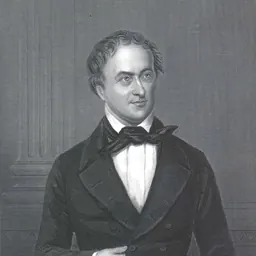
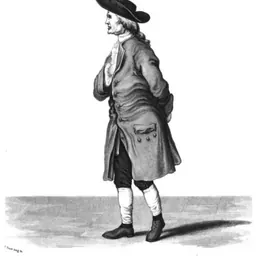
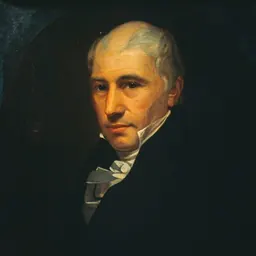
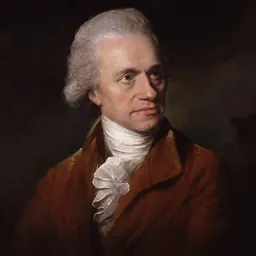

Related people
Same field, nearest in time


Contemporaries
People whose lives overlapped Charles Hatchett's




Frequently asked questions
Who was Charles Hatchett?
British chemist
When was Charles Hatchett born?
Charles Hatchett was born on 2 January 1765 in London, Long Acre.
When did Charles Hatchett die?
Charles Hatchett died on 10 February 1847 in London, Chelsea.
What was Charles Hatchett's occupation?
Charles Hatchett was a chemist, inventor, writer, organist and collector.
What was Charles Hatchett known for?
Charles Hatchett was known for Niobium.
What nationality was Charles Hatchett?
Charles Hatchett was British.
Sources & further reading
Cite this page
APA: Biography.guide. (2026). Charles Hatchett. https://biography.guide/charles-hatchett/
MLA: "Charles Hatchett." Biography.guide, https://biography.guide/charles-hatchett/.
Chicago: "Charles Hatchett." Biography.guide. https://biography.guide/charles-hatchett/.
Data last updated: 2026-09-20 · Spot an error? Report a correction.
Page generated 2026-09-27 05:30 UTC