
About Charles Harpur
Lived 1813 – 1868 (aged 55). Charles Harpur was an Australian and British poet, writer and literary critic.
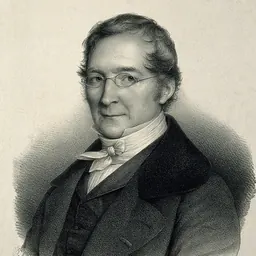
Charles Harpur (23 January 1813 – 10 June 1868) was an Australian poet and playwright. He is regarded as "Australia's most important nineteenth-century poet."
Life
Early life on the Hawkesbury Harpur was born on 23 January 1813 at Windsor, New South Wales. His mother, Sarah Chidley, was originally from Somerset, and had been sentenced to transportation in 1805. Harpur presumably went to school in Windsor, but little information about his education is available. Later in life, he claimed that he taught himself the principles of English verse by obsessively reading William Shakespeare.
Sydney and first publications In the early 1830s, Harpur seems to have moved between Sydney and the Hunter Valley, but by 1833 he had settled with his parents in Sydney. At this time he began to publish his writings in newspapers. His earliest known publications were the poems 'An Australian Song' and 'At the Grave of Clements', which appeared in The Currency Lad on the 4th and 11 May 1833. In February 1835 he published parts of his first play, The Tragedy of Donohoe, in The Sydney Monitor, a radical newspaper edited by Edward Smith Hall. Harpur would continue to publish in newspapers throughout his life, eventually publishing hundreds of works in this manner.
In Sydney, Harpur worked as a clerk and letter-sorter in the Post Office, while pursuing a career in the theatre. He acted in three plays at the Theatre Royal in October 1833: The Mutiny at the Nore by Douglas Jerrold, The Miller and His Men by Isaac Pocock, and The Tragedy of Chrononhotonthologos, a farce. His career at the Post Office ended equally poorly, after he quarrelled with the Postmaster-General.
During these years, Harpur befriended many of Sydney's prominent literary and political figures, including Henry Parkes, Daniel Deniehy, and W. A. Duncan. Looking back at the end of his life, Parkes traced the development of his radical politics back to this circle of friends: I had now formed the acquaintance of two men of more than ordinary character and ability, Mr. Charles Harpur, one of the most genuine of Australian poets, and Mr. William Augustine Duncan, then proprietor and editor of the 'Weekly Register.' They were my chief advisers in matters of intellectual resource and enquiry, when the prospect before me was opening and widening, often with many cross lights and drifting clouds, but ever with deepening radiance.
In 1988, as part of Australia's bicentennial celebrations, a plaque was laid at the site of Harpur's grave , describing him as "Australia’s first native born poet".
Work
Textual history Harpur continually revised, redrafted and republished his works throughout his life, creating an "editorial nightmare". In all he is credited with over 700 poems, which exist in some 2,700 distinct versions. His major play, The Tragedy of Donohoe, exists in four distinct versions, with different titles, plots and names for the characters. Many of his works exist only in manuscript, or lie scattered among dozens of newspapers and journals. In the past, this hindered research into Harpur's work, because only a small portion was available in reliable and accessible texts. In the twentieth century, however, editors such as Charles Salier, Elizabeth Perkins and Michael Ackland greatly improved the situation, by publishing wide selections of Harpur's poetry in book form. In the twenty-first century, Paul Eggert embarked on an ambitious project to make every version of every Harpur poem available online, along with tools to examine Harpur's complex process of rewriting. The fruit of this project was the Charles Harpur Critical Archive, the first variorum edition of Harpur's poetry.
Description of the bush
Many of Harpur's poems describe the Australian bush. Scholars have praised the accuracy and variety of his natural descriptions, while also critiquing his tendency to 'gothicise' the Australian landscape. In 'gothicising' poems such as "The Creek of the Four Graves", Harpur depicts the Australian landscape as dark, strange, wild and exotic. Some scholars argue that this gothic depiction of the Australian landscape implies that Australia was a terra nullius, and that Harpur's poetry therefore supports the expropriation of Aboriginal lands. In other poems, however, Harpur presents a more positive view of the Australian bush. In "The Kangaroo Hunt," Harpur invokes an Aboriginal deity as his Muse, while in "Aboriginal Death Song", he makes explicit reference to Aboriginal sovereignty over land within their "borders". Observing these different strains in his poetry, some scholars argue that Harpur's nature poetry is ironic; rather than describing nature from his own perspective, Harpur's poetry describes how nature appears from the point of view of different characters.
Harpur underpinned his nature poetry with a sophisticated theory of natural description. This theory relied on two central principles. The second principle was "sublimation" or "compression": rather than describing a particular scene, the poet should combine many observations together to give a complete picture of nature at different times.
Don’t just read it —
keep it.
Full-length biographies made to live with: read them, listen on the way to work, watch them tonight.
- E-book
- Audio
- Video
Instant download · yours to keep · every purchase keeps this site free
Important facts
People in Charles Harpur's life
Named in this biography and alive at the same time



Related people
Same field, nearest in time

Contemporaries
People whose lives overlapped Charles Harpur's




Frequently asked questions
Who was Charles Harpur?
Anglo-Australian colonial poet
When was Charles Harpur born?
Charles Harpur was born on 23 January 1813 in Windsor.
When did Charles Harpur die?
Charles Harpur died on 10 June 1868 in Eurobodalla Shire.
What was Charles Harpur's occupation?
Charles Harpur was a poet, writer and literary critic.
What nationality was Charles Harpur?
Charles Harpur was Australian and British.
Sources & further reading
Cite this page
APA: Biography.guide. (2026). Charles Harpur. https://biography.guide/charles-harpur/
MLA: "Charles Harpur." Biography.guide, https://biography.guide/charles-harpur/.
Chicago: "Charles Harpur." Biography.guide. https://biography.guide/charles-harpur/.
Data last updated: 2026-09-20 · Spot an error? Report a correction.
Page generated 2026-09-27 05:27 UTC