
About Charles Evers
Lived 1922 – 2020 (aged 97). Charles Evers was an American human rights defender and politician.
James Charles Evers (September 11, 1922 – July 22, 2020) was an American civil rights activist, businessman, radio personality, and politician. Evers was known for his role in the civil rights movement along with his younger brother Medgar Evers.
He ran for governor in 1971 and the United States Senate in 1978, both times as an independent candidate. In 1989, Evers was defeated for re-election after serving sixteen years as mayor. Evers graduated from Alcorn State University in Lorman, Mississippi. He could not marry her and bring her home to Mississippi because the state's constitution prohibited interracial marriages. making him the first black disc jockey in the state. By the early 1950s, he was managing a hotel, cab company, and burial insurance business in the town. He had a cafe in Philadelphia and influenced over two hundred black citizens to pay their poll tax. Forced to leave due to local white hostility in 1956, he moved to Chicago. Low on money, he began working as a meatpacker in stockyards during the day and as an attendant for the men's restroom at the Conrad Hilton Hotel at nights. He also began pimping and ran a numbers game, taking $500 a week from the latter. He gained enough money to purchase several bars, bootlegged liquor, and sold jukeboxes.
Civil rights activism In Mississippi about 1951, brothers Charles and Medgar Evers grew interested in African freedom movements. They were interested in Jomo Kenyatta and the rise of the Kikuyu tribal resistance to colonialism in Kenya, known as the Mau Mau uprising as it moved to open violence. He also helped his brother with black voter registration drives. Between 1952 and 1955, Evers often spoke at the RCNL's annual conferences in Mound Bayou, a town founded by freedmen, on such issues as voting rights. His brother Medgar continued to be involved in civil rights, becoming field secretary and head of the National Association for the Advancement of Colored People (NAACP) in Mississippi. Charles learned of his brother's death several hours later and flew to Jackson the following morning. Deeply upset by the assassination, he heavily involved himself in the planning of his brother's funeral. He decided to relocate to Mississippi to carry on his brother's work. Journalist Jason Berry, who later worked for Charles, said, "I think he wanted to be a better person. I think Medgar's death was a cathartic experience." A decade after his death, Evers and blues musician B.B. King created the Medgar Evers Homecoming Festival, an annual three-day event held the first week of June in Mississippi.
Over the opposition of more establishment figures in the National Association for the Advancement of Colored People (NAACP) such as Roy Wilkins, Evers took over his brother's post as head of the NAACP in Mississippi. Wilkins never managed a friendly relationship with Evers, and Medgar's widow, Myrlie, also disapproved of Charles' replacing him. A staunch believer in racial integration, he distrusted what he viewed as the militancy and separatism of the Student Nonviolent Coordinating Committee and the Mississippi Freedom Democratic Party, a black-dominated breakaway of the segregationist Mississippi Democratic Party. In 1965 he launched a series of successful black boycotts in southwestern Mississippi which partnered with the Natchez Deacons for Defense and Justice, which won concessions from the Natchez authorities and ratified his unconventional boycott methods. Often accompanied by a group of 65 male followers, he would pressure local blacks in small towns to avoid stores under boycott and directly challenge white business leaders. He also led a voter registration campaign. He coordinated his efforts from the small town of Fayette in Jefferson County. Fayette was a small, economically depressed town of about 2,500 people. About three-fourths of the population was black, and they had long been socially and economically subordinate to the white minority. Evers moved the NAACP's Mississippi field office from Jackson to Fayette to take advantage of the potential of the black majority and achieve political influence in Jefferson and two adjacent counties. He explained, "My feeling is that Negroes gotta control somewhere in America, and we've dropped anchor in these counties. We are going to control these three counties in the next ten years. There is no question about it."
With his voter registration drives having made Fayette's number of black registered voters double the size of the white electorate, Evers helped elect a black man to the local school board in 1966. He also established the Medgar Evers Community Center at the outskirts of town, which served as a center for registration efforts, grocery store, restaurant, and dance hall. By early 1968 he had established a network of local NAACP branches in the region. The president of each branch served as Evers' deputies, and he attended all of their meetings. That year he made a bid for the open seat of the 3rd congressional district in the U.S. House of Representatives, facing six white opponents in the Democratic primary. Though low on funds, he led in the primary with a plurality of the votes. The Mississippi Legislature responded by passing a law mandating a runoff primary in the event of no absolute majority in the initial contest, which Evers lost. He also supported Robert F. Kennedy's 1968 presidential campaign, serving as co-director of his Mississippi campaign organization, and was with Kennedy in Los Angeles when he was assassinated.
Mayor of Fayette In May 1969, Evers ran for the office of Mayor of Fayette and defeated white incumbent R. J. Allen, 386 votes to 255. This made him the first black mayor of a biracial Mississippi town (unlike the all-black Mound Bayou) since Reconstruction. Evers' election as mayor had great symbolic significance statewide and attracted national attention. The NAACP named Evers their 1969 Man of the Year. Evers popularized the slogan, "Hands that picked cotton can now pick the mayor." In his response to the defeat, Evers accepted, said he was tired, and that: "Twenty years is enough. I'm tired of being out front. Let someone else be out front." Despite the fears of public observers, the campaign was largely devoid of overt racist appeals and Evers and Waller avoided negative tactics. Though about 40 percent of the Mississippi electorate in 1971 was black, Evers only secured about 22 percent of the total vote; Waller won with 601,222 votes to Evers' 172,762 and Brady's 6,653. The night of the election, Evers shook the hands of Waller supporters in Jackson and then went to a local television station where his opponent was delivering a victory speech. Learning that Evers had arrived, Waller's nervous aides hurried the governor-elect to his car. Evers approached the car shortly before its departure and told Waller, "I just wanted to congratulate you." Waller replied, "Whaddya say, Charlie?" and his wife leaned over and shook Evers' hand. He finished in third place behind his opponents, Democrat Maurice Dantin and Republican Thad Cochran. He received 24 percent of the vote, likely siphoning off African-American votes that would have otherwise gone to Dantin. Republican Leon Bramlett of Clarksdale, also known as a college All-American football player, finished second with 39 percent of the vote. Evers criticized the NAACP and other organizations for opposing Pickering, as he said the candidate had a record of supporting the civil rights movement in Mississippi.
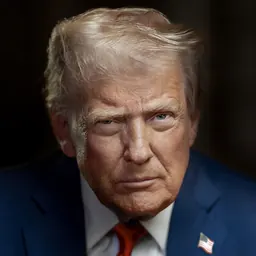
Evers befriended a range of people from sharecroppers to presidents. He was an informal adviser to politicians as diverse as Lyndon B. Johnson, George C. Wallace, Ronald Reagan and Robert F. Kennedy. During the 2016 presidential election, Evers supported Donald Trump's presidential campaign.
Books Evers wrote two autobiographies or memoirs: Evers (1971), written with Grace Halsell and self-published; and Have No Fear, written with Andrew Szanton and published by John Wiley & Sons (1997).
Personal life Evers was briefly married to Christine Evers until their marriage ended in annulment. In 1951, Evers married Nannie L. Magee, with whom he had four daughters.
Media portrayal Evers was portrayed by Bill Cobbs in the 1996 film Ghosts of Mississippi (1996).
Honors 1969: Evers was named "Man of the Year" by the NAACP. 2025: Evers was honored with a Freedom Trail Marker in Fayette.
Don’t just read it —
keep it.
Full-length biographies made to live with: read them, listen on the way to work, watch them tonight.
- E-book
- Audio
- Video
Instant download · yours to keep · every purchase keeps this site free
Important facts
People in Charles Evers's life
Named in this biography and alive at the same time
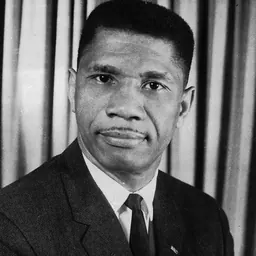




Related people
Same field, nearest in time




Contemporaries
People whose lives overlapped Charles Evers's



Frequently asked questions
Who was Charles Evers?
American civil rights activist
When was Charles Evers born?
Charles Evers was born on 11 September 1922 in Decatur.
When did Charles Evers die?
Charles Evers died on 22 July 2020 in Brandon.
What was Charles Evers's occupation?
Charles Evers was a human rights defender and politician.
What nationality was Charles Evers?
Charles Evers was American.
Sources & further reading
Cite this page
APA: Biography.guide. (2026). Charles Evers. https://biography.guide/charles-evers/
MLA: "Charles Evers." Biography.guide, https://biography.guide/charles-evers/.
Chicago: "Charles Evers." Biography.guide. https://biography.guide/charles-evers/.
Data last updated: 2026-09-20 · Spot an error? Report a correction.
Page generated 2026-09-27 05:26 UTC