
About Charles-Édouard Lefebvre
Lived 1843 – 1917 (aged 74). Charles-Édouard Lefebvre was a French composer, musicologist and university teacher.
Charles-Édouard Lefebvre (19 June 1843 – 8 September 1917) was a French composer.
Lefebvre was born in Paris, the son of painter Charles Lefebvre, and studied with Charles Gounod and Ambroise Thomas at the Paris Conservatoire. In 1870, he was awarded the Prix de Rome together with Henri Maréchal (1842–1924) for the cantata Le Jugement de Dieu. He was awarded the Prix Chartier for his compositions twice, in 1884 and 1891. In 1895 he succeeded Benjamin Godard as director of the Paris Conservatoire's chamber music class. According to Elaine Brody's entry on him in The New Grove Dictionary of Music and Musicians (1980), "In his own words, he worked in pastels rather than oils." He died in Aix-les-Bains, Savoie, aged 74. He is buried in Pere Lachaise cemetery (division 18 ), in Paris.
Works Le Jugement de Dieu (1870) Le Chant du cavalier (Duo for Cello (or Bassoon) and Piano (or Organ), 1876) op. 46: 3 Pièces (Duos for Cello and Piano, 1877) Lucrèce (opera, 1878) op. 53: Le Trésor (comic opera in 1 act, libretto by François Coppée, premiered 1883 in Angers) op. 57: Suite (for Flute, Oboe, Clarinet in Bb, Bassoon and Horn) (1884) op. 66: Zaïre (opera in 4 acts, libretto by P. Collin based on the homonymous play by Voltaire, premiered 1887 in Lille) op. 68: Méditation (for Organ and Orchestra, arranged for Harmonium, Piano, Violin and Cello in 1899 by A. Jeanbernat) Djelma (opera in 3 acts, libretto by Charles Lomon, premiered on May 25, 1894, at the Théâtre de l'Opéra in Paris) Andante (for 2 Celli, 1895) op. 98: Sonate pour violoncelle et piano (in a minor, dedicated to Mme. Félix Guyon, 1896) op.102: Dieu Pieces pour hatbois et piano (Andante et Allegro) op. 118: Fantaisie Caprice (for Clarinet in Bb and Piano) Psalm, for choir and orchestra Judith, lyrical drama Dalila, oratorium Melka, oratorium Eloa, oratorium Sainte-Cécile, oratorium La Fille de Jephthe, oratorium La Messe du Fantôme, oratorium Toggenburg, oratorium
Don’t just read it —
keep it.
Full-length biographies made to live with: read them, listen on the way to work, watch them tonight.
- E-book
- Audio
- Video
Instant download · yours to keep · every purchase keeps this site free
Important facts
People in Charles-Édouard Lefebvre's life
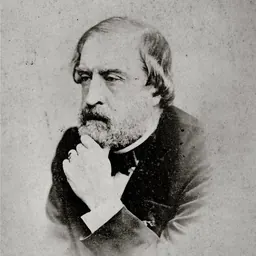
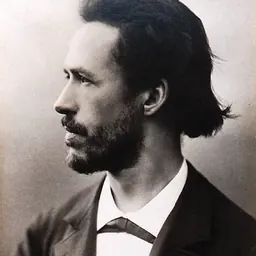
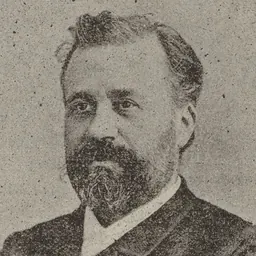
Named in this biography and alive at the same time


Related people
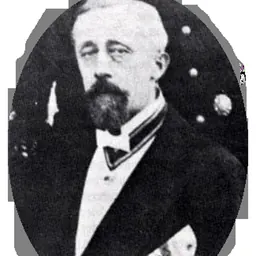
Same field, nearest in time

Contemporaries
People whose lives overlapped Charles-Édouard Lefebvre's
Frequently asked questions
Who was Charles-Édouard Lefebvre?
French composer (1843–1917)
When was Charles-Édouard Lefebvre born?
Charles-Édouard Lefebvre was born on 19 June 1843 in Paris.
When did Charles-Édouard Lefebvre die?
Charles-Édouard Lefebvre died on 8 September 1917 in Aix-les-Bains.
What was Charles-Édouard Lefebvre's occupation?
Charles-Édouard Lefebvre was a composer, musicologist and university teacher.
What nationality was Charles-Édouard Lefebvre?
Charles-Édouard Lefebvre was French.
Sources & further reading
· Wikipedia: Charles-Édouard Lefebvre
· DBpedia: Charles-Édouard Lefebvre
Cite this page
APA: Biography.guide. (2026). Charles-Édouard Lefebvre. https://biography.guide/charles-edouard-lefebvre/
MLA: "Charles-Édouard Lefebvre." Biography.guide, https://biography.guide/charles-edouard-lefebvre/.
Chicago: "Charles-Édouard Lefebvre." Biography.guide. https://biography.guide/charles-edouard-lefebvre/.
Data last updated: 2026-09-20 · Spot an error? Report a correction.
Page generated 2026-09-27 05:34 UTC