
About Charles Cunningham
Lived 1755 – 1834 (aged 78–79). Charles Cunningham was a British naval officer.
Rear-Admiral Sir Charles Cunningham KCH (175511 March 1834) was an officer of the Royal Navy during the late eighteenth and early nineteenth century. He saw action during the American War of Independence and the French Revolutionary and Napoleonic Wars, eventually rising to the rank of rear-admiral.
Early life Son of Charles and Elizabeth Cunningham, Charles Cunningham was born in Eye, Suffolk in 1755, and after reading Robinson Crusoe at a young age, decided on a career at sea. As the country was at peace he joined a merchant ship. While serving as a seaman, the American War of Independence broke out and Cunningham joined the Royal Navy as a midshipman in 1775. He initially served aboard the 32-gun frigate , which sailed to the West Indies in early 1776, joining Sir Peter Parker's fleet.
On 8 July the Ostrich engaged a 16-gun French privateer. In the ensuing three-hour battle, both the commander and the lieutenant of the Ostrich were wounded but the French were forced to surrender, having lost 30 dead. The British casualties were four dead and 28 wounded. The Hinchinbrook was then under the command of Horatio Nelson. Alerted to this, Nelson gathered together a small squadron and set off to attempt to recapture it, relying on Cunningham's expert knowledge of the waters around the island. Nelson's force fell in with Cunningham's Barrington off the island, and together the Barrington and another of Nelson's ships, began to bombard the French positions whilst troops were landed. The two ships came under heavy fire from the entrenched French and were compelled to withdraw, having had several wounded. Nelson tried again the following day, but again failed to make much headway, and the attempt was called off.
The end of the war in 1783 meant that the Barrington was paid off and Cunningham retired from active naval life. The Captain and Speedy then sailed to the Gulf of Spezia where they caught another French frigate, the Imperieuse at anchor. The Imperieuse scuttled herself, but was subsequently salvaged and recommissioned as HMS Imperieuse. Seven days later on 29 May, the mutineer leader Richard Parker called for delegates to come from other ships to his headquarters aboard . and several days later captured the Dorade. Several men were put aboard the prize from the Clyde, but while returning to port, a gale blew up. The prize had attempted to outsail the Clyde but capsized. On 10 June 1799 she captured the French privateer schooner Air, following this up three days later by capturing the privateer Bon Ordre. The Clyde brought her to battle and after an engagement of an hour forced her to strike her colours. The Vestale had lost 10 killed and 22 wounded to two killed and three wounded on the Clyde.
The Clyde then joined Sir John Jervis and Admiral Cornwallis. She was occupied throughout the summer of 1800 conveying the artist John Thomas Serres around the French coast so that he could carry out surveys and make sketches of the headlands for charts.
In summer 1801 Cunningham was appointed Commodore, and given command of a squadron of frigates to guard against a possible French invasion of the Channel Islands.
Promotions and flag rank With the Peace of Amiens the Clyde was paid off at the Nore on 24 June 1802. He was relieved in this post by Sir Sidney Smith, and Cunningham moved aboard . In 1829 he had published his account of the events at the Nore, entitled A narrative of occurrences that took place during the mutiny at the Nore in the months of May and June 1797.
Family and later years Cunningham had married twice, first to Miss Boycott, and secondly to Miss Proby. He had a number of children. His son joined the navy but died at sea in 1822. Cunningham spent the later years of his life living with his daughters at the family seat of Oak Lawn House in Eye. He died there at the age of 80 on 11 March 1834.
Don’t just read it —
keep it.
Full-length biographies made to live with: read them, listen on the way to work, watch them tonight.
- E-book
- Audio
- Video
Instant download · yours to keep · every purchase keeps this site free
Important facts
People in Charles Cunningham's life
Named in this biography and alive at the same time
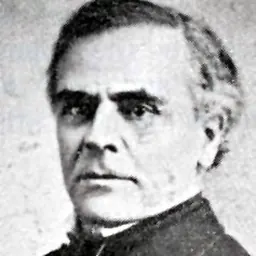

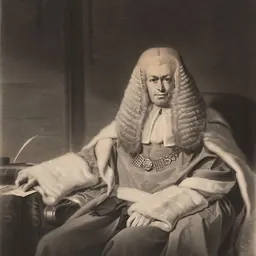
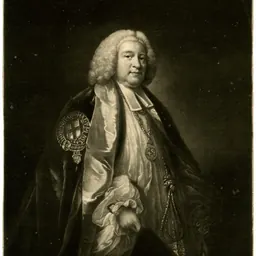
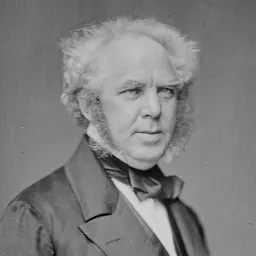

Related people
Same field, nearest in time





Contemporaries
People whose lives overlapped Charles Cunningham's




Frequently asked questions
Who was Charles Cunningham?
Royal Navy admiral (1755-1834)
When was Charles Cunningham born?
Charles Cunningham was born in 1755 in Eye.
When did Charles Cunningham die?
Charles Cunningham died on 11 March 1834 in Eye.
What was Charles Cunningham's occupation?
Charles Cunningham was a naval officer.
What nationality was Charles Cunningham?
Charles Cunningham was British.
Sources & further reading
· Wikipedia: Charles Cunningham
Cite this page
APA: Biography.guide. (2026). Charles Cunningham. https://biography.guide/charles-cunningham/
MLA: "Charles Cunningham." Biography.guide, https://biography.guide/charles-cunningham/.
Chicago: "Charles Cunningham." Biography.guide. https://biography.guide/charles-cunningham/.
Data last updated: 2026-09-20 · Spot an error? Report a correction.
Page generated 2026-09-27 05:30 UTC