
About Charles Boycott
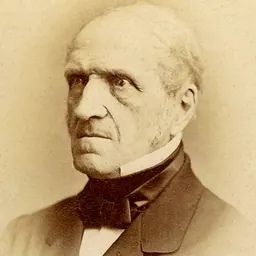
Lived 1832 – 1897 (aged 65). Charles Boycott was a British entrepreneur and land agent.
Captain Charles Cunningham Boycott (12 March 1832 – 19 June 1897) was an English land agent whose ostracism by his local community in Ireland gave the English language the term boycott. He had served in the British Army 39th Foot, which brought him to Ireland. After retiring from the army, Boycott worked as a land agent for Lord Erne, a landowner in the Lough Mask area of County Mayo.
In 1880, as part of a campaign for free sale, fixity of tenure, and fair rent, and specifically in resistance to proposed evictions on the estate, local activists of the Irish National Land League encouraged Boycott's employees, including the seasonal workers required to harvest the crops on Lord Erne's estate, to withdraw their labour, and began a campaign of isolation against Boycott in the local community. Shops in nearby Ballinrobe refused to serve him. Some were threatened with violence to ensure compliance.
Opposition to the campaign against Boycott became a in the British press after he wrote a letter to The Times. Newspapers sent correspondents to County Mayo to highlight what they viewed as the victimisation of a servant of a peer of the realm by Irish nationalists. Fifty Orangemen from County Cavan and County Monaghan travelled to Lord Erne's estate to harvest the crops, while a regiment of the 19th Royal Hussars and more than 1,000 men of the Royal Irish Constabulary (RIC) were deployed to protect the harvesters. The episode was estimated to have cost the British government and others at least £10,000 to harvest about £500 worth of crops.
Boycott left Ireland on 1 December 1880, and in 1886, became land agent for Hugh Adair's Flixton estate in Suffolk. He died at the age of 65 on 19 June 1897 in his home in Flixton, after an illness earlier that year.
Early life and family
Charles Cunningham Boycott was born on 12 March 1832 in Burgh St Peter, in Norfolk, England, as the eldest surviving son of Reverend William Boycatt, an Anglican rector, and Elizabeth Georgiana Boycatt (née Beevor). He grew up in a devout Anglican household. The Boycatt family had lived in Norfolk for almost 150 years.
Boycott was educated at a boarding school in Blackheath, London. He was interested in the military—and in 1848, entered the Royal Military Academy, Woolwich, in hopes of serving in the Corps of Royal Sappers and Miners.
Boycott's regiment transferred to Belfast shortly after his arrival. Six months later, it was sent to Newry before marching to Dublin, where it remained for a year. He was ill between August 1851 and February 1852 and sold his commission the following year,
Life on Achill Island alt=Charles Boycott's house on Achill Island. It is a large white house with two storeys. The mountainous terrain on the island is seen in the background. The former house of Charles Boycott on Achill Island. The house has since been modernised and renovated.
After receiving an inheritance, Boycott was persuaded by his friend, Murray McGregor Blacker, a local magistrate, to move to Achill Island, a large island off the coast of County Mayo. McGregor Blacker agreed to sublet of land belonging to the Irish Church Mission Society on Achill to Boycott, who moved there in 1854. According to Joyce Marlow in the book Captain Boycott and the Irish, Boycott's life on the island was difficult initially, and in Boycott's own words it was only after "a long struggle against adverse circumstances" that he became prosperous.
Boycott was involved several disputes on Achill Island. John Crichton, 3rd Earl Erne, was a wealthy Ulster landowner who lived at Crom Castle, a country house near Newtownbutler in the south-east of County Fermanagh. He owned of land in Ireland, of which 31,389 were in County Fermanagh, 4,826 in County Donegal, 1,996 in County Sligo, and 2,184 in County Mayo.
Lough Mask affair Historical background
In the 19th century, agriculture was the biggest industry in Ireland. In 1876, the government of the United Kingdom of Great Britain and Ireland commissioned a survey to find who owned the land in Ireland. The survey found that almost all land was the property of just 10,000 people, or 0.2% of the population. In the 1870s, the Fenians tried to organise the tenant farmers in County Mayo to resist eviction. He asked the crowd, "What do you do with a tenant who bids for a farm from which his neighbour has been evicted?"
This speech set out the Land League's powerful weapon of social ostracism, which was first used against Charles Boycott. On 14 October of that year, Boycott wrote a letter to The Times about his situation: According to Becker, "Personally he is protected, but no woman in Ballinrobe would dream of washing him a cravat or making him a loaf. All the people have to say is that they are sorry, but that they 'dare not.
Saving the crops In Belfast, in early November 1880, The Boycott Relief Fund was established to arrange an armed expedition to Lough Mask. He said that the government would consider it their duty to protect this group. A carriage had been hired for the family, but no driver could be found for it, and an army ambulance and driver had to be used. in Parnell's words, "one shilling for every turnip dug from Boycott's land".
"Boycotting" had strengthened the power of the peasants, and by the end of 1880, there were reports of boycotting from all over Ireland. The events at Lough Mask had also increased the power of the Land League, and the popularity of Parnell as a leader. In December 1880, the Bessborough Commission, headed by Frederick Ponsonby, 6th Earl of Bessborough, recommended major land reforms, including the Three Fs.
William Edward Forster argued that a Coercion Act—which would punish those who participated in events like those at Lough Mask, and would include the suspension of habeas corpus—should be introduced before any Land Act. The act set up the Irish Land Commission, a judicial body that would fix rents for a period of 15 years and guarantee fixity of tenure.
According to Joyce Marlow, the word was first used in print by Redpath in the Inter-Ocean on 12 October 1880. Still in 1880, The Illustrated London News described how "To 'Boycott' has already become a verb active, signifying to 'ratten', to intimidate, to 'send to Coventry', and to 'taboo. In 1888, the word was included in the first volume of A New English Dictionary on Historical Principles (later known as The Oxford English Dictionary). The word also entered the lexicon of languages other than English, such as Dutch, French, German, Italian, Polish and Russian. His arrival in New York generated a great deal of media interest; the New York Tribune wrote that "The arrival of Captain Boycott, who has involuntarily added a new word to the language, is an event of something like international interest." Boycott returned to England after some months. He had a passion for horses and racing, and became secretary of the Bungay race committee.
Boycott (2012), a novel by Colin C. Murphy.
Don’t just read it —
keep it.
Full-length biographies made to live with: read them, listen on the way to work, watch them tonight.
- E-book
- Audio
- Video
Instant download · yours to keep · every purchase keeps this site free
Important facts
People in Charles Boycott's life
Named in this biography and alive at the same time






Related people
Same field, nearest in time


Contemporaries
People whose lives overlapped Charles Boycott's

Frequently asked questions
Who was Charles Boycott?
British land agent (1832–1897)
When was Charles Boycott born?
Charles Boycott was born on 12 March 1832 in Norfolk.
When did Charles Boycott die?
Charles Boycott died on 19 June 1897 in Flixton.
What was Charles Boycott's occupation?
Charles Boycott was an entrepreneur and land agent.
What nationality was Charles Boycott?
Charles Boycott was British.
Sources & further reading
Cite this page
APA: Biography.guide. (2026). Charles Boycott. https://biography.guide/charles-boycott/
MLA: "Charles Boycott." Biography.guide, https://biography.guide/charles-boycott/.
Chicago: "Charles Boycott." Biography.guide. https://biography.guide/charles-boycott/.
Data last updated: 2026-09-26 · Spot an error? Report a correction.
Page generated 2026-09-27 05:15 UTC