
Charles Ashleigh
British labour activist, writer, and translator
About Charles Ashleigh
Lived 1892 – 1974 (aged 81–82). Charles Ashleigh was a British activist, writer and translator.
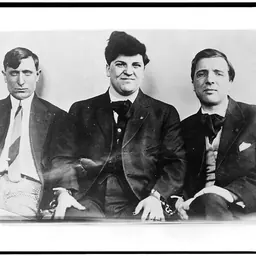
Ashleigh (front row, center) amongst a group of I.W.W. prisoners, June 1921 Charles Ashleigh (25 November 1888 – 25 December 1974) was an English labour activist, writer, and translator who became prominent in the Industrial Workers of the World (IWW) and later the Communist Party of Great Britain.
Life Ashleigh was born in West Hampstead, London in 1888. His mother was Lillie Ashleigh living at 66 West End Lane, on the corner with Cleve Lane. Later, in about 1918, he stated he was not married and that his father was deceased but no name was given.
Around 1905 or 1906, Ashleigh had been in London as in a letter he mentioned meeting a Mrs Horsley, outside Cornwall Hall, wishing to attend a lecture which had been cancelled. In 1909 he lectured on socialism across Wales.
In 1916, seven members of the IWW were killed by sheriff's deputies during the Everett Massacre. 74 IWW members were then arrested. Ashleigh worked for the Everett Prisoners’ Defense League during their trial.
While working as a journalist in San Francisco, Ashleigh was arrested on 20 October 1917, during a national sweep of radical leaders and organizers. Ashleigh was put on trial for seditious conspiracy, conspiracy to injure civil rights, and conspiracy to obstruct the military service with other IWW leaders in Chicago in 1918. He was sentenced to 10 years in the United States Penitentiary, Leavenworth, Kansas, on 7 September 1918, Ashleigh was inmate 13115. A fellow inmate was William D. Haywood, together with around 90 others from the IWW. His sentence was commuted on 26 December 1921, after Ashleigh agreed to be deported to England.
After his release from prison Ashleigh moved to New York City at the insistence of The Liberator, which had published his prison poems and implored their readers to fund his bail. While in New York, Ashleigh befriended the Jamaican poet, Claude McKay. The pair were romantically involved off and on throughout the 1910s and 1920s.
Ashleigh died from cancer on 25 December 1974 in Brighton.
Works
Fiction Charles Ashleigh, The Rambling Kid (London: Faber & Faber, 1930). Reprinted by Charles H. Kerr in 2004.
Poetry Charles Ashleigh, "Poems," The Little Review, Vol. 1, No. 5 (July 1914), 1–5. Charles Ashleigh, "A Miracle," The Little Review, Vol. 1, No. 9 (December 1914), 54. Charles Ashleigh, "Once More - The Road," The Little Review, Vol. 3, No. 10 (April 1917), 15. Charles Ashleigh, "Everett, November Fifth," Labor Defender, Vol. 1, No. 11 (November 1926), 193.
Non-fiction
"The Poetry of Revolt (Review of Arturo Giovannitti's Arrows in the Gale)," The Little Review, Vol. 1, No. 6 (September 1914), 22-25 "New War For Old (Review of John Galsworthy's The Mob)," and "Two Finds (Review of George Cronyn's Poems and James Oppenheim's Songs for the New Age)," The Little Review, Vol. 1, No. 7 (October 1914), 11–12, 40–41. "Everett Prosecution Forces Are Lining Up: Ted Kenedy's Bravery," Brotherhood of Locomotive Firemen and Enginemen's Magazine, Vol. 62, No. 2 (15 January 1917), 8–9. "Everett's Bloody Sunday," The Masses, Vol. 9, No. 4 (February 1917), 18–19. "The Lumber Trust and Its Victims," International Socialist Review, Vol. 17, No. 9 (March 1917), 536–538. "To Soviet Russia - An American Working Man Speaks," Industrial Pioneer, Vol. 1, No. 2 (March 1921), 46–47. "Radio in Russia", The Radio Times, 4 January 1924, p. Russia's Second Front in 1914-1916 (London: Russia Today Society, 1943).
Translations Fedor Gladkov, Cement. Translated by A. S. Arthur and Charles Ashleigh (New York: F. Ungar, 1929). Max Heinz, Loretto, Sketches of a German Volunteer. Translated by Charles Ashleigh (New York, Horace Liveright, 1930). Theodore Plivier, Revolt on the Pampas. Translated by Charles Ashleigh (London: M. Joseph, Ltd., 1937). Hans Behrend, The Real Rulers of Germany. Translated by Charles Ashleigh (London: Lawrence & Wishart, 1938). Bertolt Brecht, "The Informer." Translated by Charles Ashleigh. New Writing (Spring 1939), 113–120.
Don’t just read it —
keep it.
Full-length biographies made to live with: read them, listen on the way to work, watch them tonight.
- E-book
- Audio
- Video
Instant download · yours to keep · every purchase keeps this site free
Important facts
People in Charles Ashleigh's life
Named in this biography and alive at the same time





Related people
Same field, nearest in time

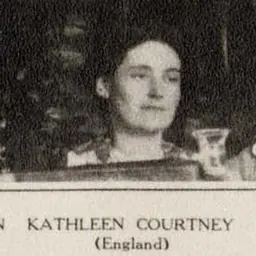
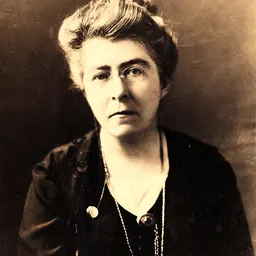
Contemporaries
People whose lives overlapped Charles Ashleigh's
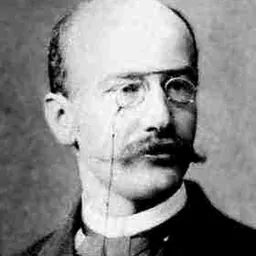
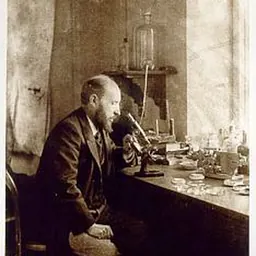


Frequently asked questions
Who was Charles Ashleigh?
British labour activist, writer, and translator
When was Charles Ashleigh born?
Charles Ashleigh was born in 1892.
When did Charles Ashleigh die?
Charles Ashleigh died in 1974.
What was Charles Ashleigh's occupation?
Charles Ashleigh was an activist, writer and translator.
What nationality was Charles Ashleigh?
Charles Ashleigh was British.
Sources & further reading
Cite this page
APA: Biography.guide. (2026). Charles Ashleigh. https://biography.guide/charles-ashleigh/
MLA: "Charles Ashleigh." Biography.guide, https://biography.guide/charles-ashleigh/.
Chicago: "Charles Ashleigh." Biography.guide. https://biography.guide/charles-ashleigh/.
Data last updated: 2026-09-20 · Spot an error? Report a correction.
Page generated 2026-09-27 05:15 UTC