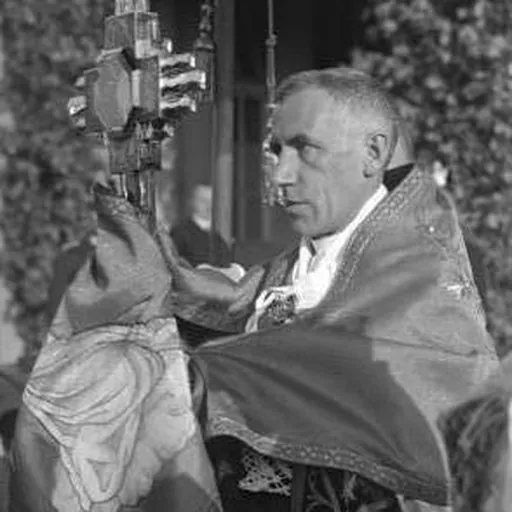
About Cesare Orsenigo
Lived 1873 – 1946 (aged 72). Cesare Orsenigo was an Italian catholic priest, non-fiction writer, diplomat, catholic bishop, cleric and catholic theologian.
Cesare Vincenzo Orsenigo (13 December 1873 – 1 April 1946) was an Italian prelate of the Catholic Church who served as Apostolic Nuncio to Germany from 1930 to 1945, during the rise of Nazi Germany and World War II. Along with the German ambassador to the Vatican, Diego von Bergen and later Ernst von Weizsäcker, Orsenigo was the direct diplomatic link between Pope Pius XI and Pope Pius XII and the Nazi regime, meeting several times with Adolf Hitler directly and frequently with other high-ranking officials and diplomats.
Orsenigo was close to Achille Ratti, the Archbishop of Milan, and was appointed to the Vatican diplomatic corps when Ratti was elected Pope Pius XI, as nuncio to the Netherlands (1922–1925), Hungary (1925–1930), and Germany (1930–1945).
Orsenigo believed in the Italian fascist ideal and hoped the German variety would develop into something similar. He was a controversial figure among his contemporaries and remains the subject of historical criticism for his advocacy of "compromise and conciliation" with the Nazis, particularly about The Holocaust. He attended a seminary in Milan and was ordained in 1896. He became a priest at San Fedele in Milan, Ecclesiastical Censor, and Synodal Examiner. In 1912, at thirty-nine, he was appointed a canon of the cathedral of Milan. In August 1921, he was awarded Commander of the Order of the Crown of Italy for philanthropic work.
Nuncio to the Netherlands (1922–1925) After being elected as pope in 1922, Pius XI appointed Orsenigo as titular archbishop of Ptolemais and made him nuncio to the Netherlands, effective 23 June 1922. Pius overruled Orsenigo's objections that he lacked experience, noting that he had spent decades as a librarian before being appointed apostolic delegate to Poland. He received episcopal consecration on 29 June 1922 from Pietro Gasparri, then Camerlengo and Cardinal Secretary of State.
Nuncio to Hungary (1925–1930) On 2 June 1925 Orsenigo was named apostolic nuncio in Hungary.
Nuncio to Germany
Under Pius XI (1930–1939) On 25 April 1930, he became Apostolic Nuncio in Germany, a post previously held by Eugenio Pacelli (future Pope Pius XII), who had been appointed Cardinal.
On 16 February 1933, Orsenigo wrote to Pacelli that it would be "ingenuous and incoherent" to support the newly elected Nazi government, but that he feared open opposition would lead to a new Kulturkampf. As early as March 1933, Orsenigo concluded that compromise and conciliation was the only option, arguing that earlier condemnations of Nazism by German bishops had concerned only its religious, not political, tenets. Of the 95 documents from the Berlin nunciature in the Vatican Secret Archives from 1930 to 1938, only four contain references to Jews.
Writing on 8 May 1933 about an earlier conversation with Hitler, Orsenigo opined that Hitler saw Christianity as essential to private life and the German state and that without the cooperation of the Nazis the German Church could not hope to defeat liberalism, socialism, communism, anarchism and Bolshevism. Orsenigo reported that Hitler disagree with the neo-pagan wing of the Nazi party, as represented in Alfred Rosenberg's The Myth of the Twentieth Century. According to Phayer, "In Orsenigo, Pius had the right man for the job. A pro-German, pro-Nazi, antisemitic fascist, Orsenigo would have no trouble adjusting to the Nazi regime in Berlin. In addition, Orsenigo, who hankered after the cardinal's hat, could be trusted not to interfere with Pius's well-known intention to deal with Germany himself." In a 1940 note to Pius XII, Orsenigo again argued in favor of conciliation, stating his fears of lapsed religiosity among German Catholics unless the clergy appeased the regime and relieved members of the Church of a conflict of conscience.
On 21 June 1942, he was a consecrator at the Cologne Cathedral for the inauguration of the new archbishop in Cologne, Joseph Frings. In November 1943, he again met with Hitler on behalf of Pius XII. According to Orsenigo's account: "As soon as I touched upon the question of Jews and Judaism, the serenity of the meeting ended at once. Hitler turned his back on me, went to the window and started drumming his fingers on the pane [...] Still, I went on, voicing our complaints. Hitler suddenly turned around, went to a small table, took a water glass and furiously smashed it on the floor. In the face of such diplomatic behaviour, I had to consider my mission terminated".
The Holocaust Orsenigo, as nuncio, routinely refused to intervene on behalf of Jews and more often than not failed to forward to Rome reports descriptive or critical of the Holocaust. A rare exception, was the Nazi plan to "resettle" Jews married to Christians, although Phayer argues that his concern was primarily with their Catholic spouses. Informed of the purpose of Gerstein's visit, Orsenigo refused to meet with him. Gerstein's message was eventually sent to the Vatican by the auxiliary bishop of Berlin, not the nuncio's office, where the information reached a "dead end." Orsenigo sent word to the Vatican that the protest of the Church had caused the Dutch deportations to end, even though precisely the opposite had occurred, and seizures, murders, and deportations of Catholics of Jewish heritage increased. On 1 November 1939, Orsenigo's authority was formally extended to Poland. A 25 November 1939 dispatch from Orsenigo prompted Pius XII to make "one of his most controversial decisions." Orsenigo informed the Pope of the situation in the diocese of Chełmno-Pelpin: the bishop, Stanisław Wojciech Okoniewski, was in exile; his auxiliary was ill; all but one canon was absent; only 20 of the 500 priests of the diocese had not been forced out, imprisoned, or murdered.
Among Polish Catholics, there was a widespread perception that Orsenigo "purposefully minimized their situation in his reports to Rome." According to Alvarez and Graham, this espionage provides "access to the attitudes and intentions of the nuncio." It is unknown whether Orsenigo was aware of his assistant's party membership; however, this fact was certainly known by Robert Leiber, a German Jesuit who served as one of Pius XII's closest confidants and advisers during the war.
On 8 February 1945, after the destruction of the Nunciature due to a bombing, Orsenigo moved to Eichstätt, in Bavaria.
Legacy Cardinal Theodor Innitzer was among the contemporary critics of Orsenigo. Prof. Jose Sánchez states, "a chief point of criticism of Pope Pius XII is his unwillingness to replace Cesare Orsenigo as his nuncio to Berlin." The Vatican received many contemporary complaints about Orsenigo as nuncio; for example, Cardinal Theodor Innitzer, the Archbishop of Vienna, wrote to Cardinal Secretary of State Luigi Maglione in 1939, stating that Orsenigo was too timid and ineffectual. The German episcopate was divided on Orsenigo; Bishop Konrad von Preysing wrote a letter to the Vatican in 1937 calling Orsenigo too sympathetic with the Nazis, but Cardinal Adolf Bertram, the chairman of the German Bishops Conference, wrote a letter of praise recommending that Orsenigo be allowed to stay. Von Preysing had a history of correspondence with Orsenigo, but became frustrated upon receiving the following response: "Charity is well and good, but the greatest charity is not to make problems for the church."
Owen Chadwick argues that "the Pope knew how weak with the Nazis [Orsenigo] was." Chadwick states that "Orsenigo saw nothing but ill to come from a breach between the Church and a Nazi State. As an Italian, he believed in the Fascist State. His ideas on what ought to happen in Germany were formed based on what happened in Italy." Chadwick credits Orsenigo with the creation of a chaplain-general for the German army, the circulation of pastoral letters from German bishops on pro-Nazi subjects such as mass procreation.
Don’t just read it —
keep it.
Full-length biographies made to live with: read them, listen on the way to work, watch them tonight.
- E-book
- Audio
- Video
Instant download · yours to keep · every purchase keeps this site free
Important facts
People in Cesare Orsenigo's life
Named in this biography and alive at the same time

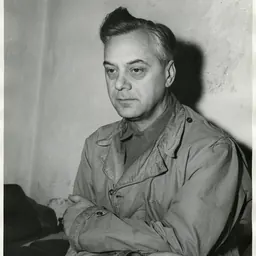
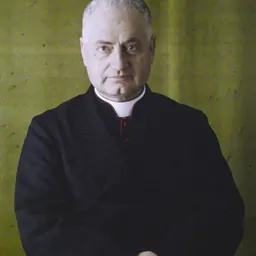

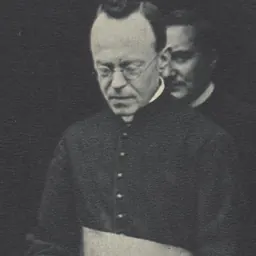
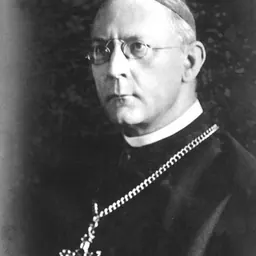
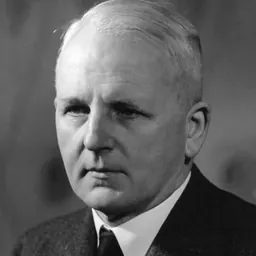
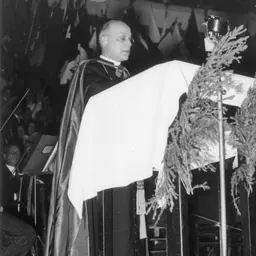
Related people
Same field, nearest in time

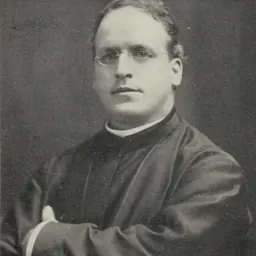
Contemporaries
People whose lives overlapped Cesare Orsenigo's


Frequently asked questions
Who was Cesare Orsenigo?
Roman Catholic archbishop (1873-1946)
When was Cesare Orsenigo born?
Cesare Orsenigo was born on 13 December 1873 in Villa San Carlo.
When did Cesare Orsenigo die?
Cesare Orsenigo died on 1 April 1946 in Eichstätt.
What was Cesare Orsenigo's occupation?
Cesare Orsenigo was a catholic priest, non-fiction writer, diplomat, catholic bishop, cleric and catholic theologian.
What nationality was Cesare Orsenigo?
Cesare Orsenigo was Italian.
Sources & further reading
Cite this page
APA: Biography.guide. (2026). Cesare Orsenigo. https://biography.guide/cesare-orsenigo/
MLA: "Cesare Orsenigo." Biography.guide, https://biography.guide/cesare-orsenigo/.
Chicago: "Cesare Orsenigo." Biography.guide. https://biography.guide/cesare-orsenigo/.
Data last updated: 2026-09-20 · Spot an error? Report a correction.
Page generated 2026-09-27 05:10 UTC