
About Casimir Funk
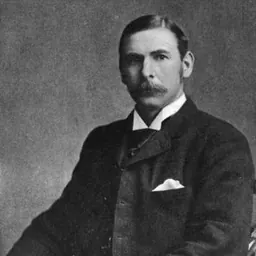
Lived 1884 – 1967 (aged 83). Casimir Funk was a Polish and American biochemist, chemist and opinion journalist, known for Vitamins.
Casimir Funk (born Kazimierz Funk; August 5, 1884 – November 19, 1967) was a Polish biochemist who formulated the definitive concept of vitamins and was the first to isolate a vitamin (vitamin B1) from rice bran in 1911. He coined the term "vitamines" (vital amines) in his landmark 1912 medical writing, establishing a major shift in scientific thinking by proving that specific nutritional deficiencies cause diseases such as beriberi, pellagra, and rickets. While the English chemist Frederick Gowland Hopkins had earlier hypothesized the existence of "accessory food factors," it was Funk who provided the definitive functional theory and nomenclature. His scientific work involved research in interwar Poland, France, and the United Kingdom. In 1920, he became a citizen of the United States where he continued his work.
Early life and education He was born in Warsaw (the capital of Poland), being the son of a medical specialist in dermatology. In his early career, he worked as a biochemist at the Pasteur Institute, the Wiesbaden Municipal Hospital, the University of Berlin, and the Lister Institute. Funk emigrated to New York State in 1915, moving back and forth between the United States and Europe until World War II.
Career Dr. Casimir Funk at his research laboratory in New York City in 1953 After reading an article by Christiaan Eijkman that indicated that persons who ate brown rice were less vulnerable to beri-beri than those who ate only the fully milled product, Funk tried to isolate the substance responsible, and he succeeded. Because that substance contained an amine group, he called it "vitamine". It was later to be known as vitamin B3 (niacin), although he thought it would be thiamine (vitamin B1) and described it as "anti-beri-beri-factor".
In 1911, he published his first paper in English, on dihydroxyphenylalanine. Funk was sure more than one substance like Vitamin B1 existed, and in his 1912 article for the Journal of State Medicine, he proposed the existence of at least four vitamins: one preventing beriberi ("antiberiberi"); one preventing scurvy ("antiscorbutic"); one preventing pellagra ("antipellagric"); and one preventing rickets ("antirachitic"). From there, Funk published a book, The Vitamines, in 1912, and later that year received a Beit Fellowship to continue his research.
Funk proposed the hypothesis that other diseases, such as rickets, pellagra, coeliac disease, and scurvy could also be cured by vitamins. Funk was an early investigator of the problem of pellagra. He suggested that a change in the method of milling corn was responsible for the outbreak of pellagra, but no attention was paid to his article on this subject.
The "e" at the end of "vitamine" was later removed, when it was realized that vitamins need not be nitrogen-containing amines. He postulated the existence of other essential nutrients, which became known as vitamins B1, B2, C, and D. In 1936, he determined the molecular structure of thiamine, though he was not the first to isolate it. Funk also conducted research into hormones, diabetes, peptic ulcers, and the biochemistry of cancer. In 1940, after returning to the United States, he became president of the Funk Foundation for Medical Research. He spent his last years studying the causes of neoplasms.
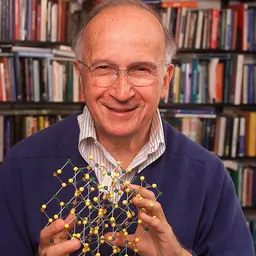
Outside of vitamin-related research, Funk's career history has been described as also having significantly extended humanity's "knowledge of sex hormones." Past winners have included Nobel Laureate Roald Hoffmann, Aleksander Wolszczan, Hilary Koprowski, Peter T. Wolczanski, Wacław Szybalski, Zbyszek Darzynkiewicz and Benoit Mandelbrot.
A Google Doodle commemorated Funk's 140th birthday on February 23rd of 2024 in tandem with his family's estate and its various efforts. This included working with Erik Funk, Casimir Funk's grandson, who praised the company's actions.
Don’t just read it —
keep it.
Full-length biographies made to live with: read them, listen on the way to work, watch them tonight.
- E-book
- Audio
- Video
Instant download · yours to keep · every purchase keeps this site free
Important facts
People in Casimir Funk's life
Named in this biography and alive at the same time






Related people
Same field, nearest in time

Contemporaries
People whose lives overlapped Casimir Funk's

Frequently asked questions
Who was Casimir Funk?
Polish-American biochemist
When was Casimir Funk born?
Casimir Funk was born on 23 February 1884 in Warsaw.
When did Casimir Funk die?
Casimir Funk died on 20 November 1967 in Albany.
What was Casimir Funk's occupation?
Casimir Funk was a biochemist, chemist and opinion journalist.
What was Casimir Funk known for?
Casimir Funk was known for Vitamins.
What nationality was Casimir Funk?
Casimir Funk was Polish and American.
Sources & further reading
Cite this page
APA: Biography.guide. (2026). Casimir Funk. https://biography.guide/casimir-funk/
MLA: "Casimir Funk." Biography.guide, https://biography.guide/casimir-funk/.
Chicago: "Casimir Funk." Biography.guide. https://biography.guide/casimir-funk/.
Data last updated: 2026-09-20 · Spot an error? Report a correction.
Page generated 2026-09-27 05:31 UTC