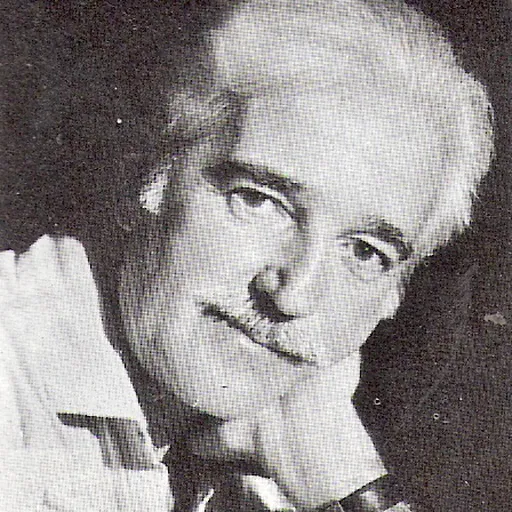
About Carlos Gorostiza
Lived 1920 – 2016 (aged 96). Carlos Gorostiza was an Argentine university teacher, writer, screenwriter, film director, poet and playwright.
Carlos Gorostiza Rodríguez (; June 7, 1920 – July 19, 2016) was an Argentine playwright, theatre director, and novelist. His seminal work El puente debuted in 1949 and he garnered numerous awards for his proceeding works. He later was Secretary of Culture between 1983-86.
Early life Carlos Gorostiza Rodríguez was born to Basque Argentine parents in the upscale Buenos Aires borough of Palermo. He and an older brother enjoyed a happy early childhood until, in 1926, their father, Fermín Gorostiza (among the first Argentines to receive a pilot's licence) abandoned the family.
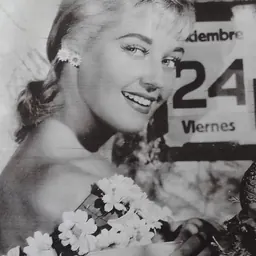
His mother took up employment with a clothing designer, and her two sons, who entered the labour force as children, gradually recovered from the setback. In 1931, she remarried and had a daughter, María Esther, who went on to become a moderately successful actress under the pseudonym Analía Gadé.
Career Gorostiza's Spanish-born stepfather, a playwright, introduced Carlos to the theatre. In 1943, he debuted his first work, a puppet show, La clave encantada (The enchanted key). The show's success allowed him to open a puppet theatre, La Estrella Grande. He began frequenting the Máscara Theatre, where he began a successful run as Creon in their productions of the classic Greek tragedy, Antigone. Encouraged by friends, he presented his first play at the Máscara Theatre in 1949, El puente (The Bridge).
Capturing the tension between different social classes in Buenos Aires, the realist El puente drew partly on his own childhood experiences with his mother's fallen social status and secured his reputation in Buenos Aires. Produced in a professional version by director Armando Discépolo at the prestigious Argentine Theatre, El puente was adapted into a film version, which Gorostiza directed in 1950.
Following El puente success, Gorostiza returned to theatre direction, though without the draw of spectators he had earlier enjoyed. Turning to work as a publicist for an ad agency whose chief customer was a laundry soap maker, his fame returned somewhat as a screenwriter for Julio Saraceni's drama Marta Ferrari (1954) and when his play El pan de la locura (The bread of madness) was produced at Buenos Aires' famed Cervantes Theatre to acclaim in 1958. The tragedy won him the coveted Municipal Prize, an award that earned him an invitation to the Central University of Venezuela Drama School in 1960, where he taught and co-wrote Los Caobos (The mahogany trees) with Juana Sujo. Returning to Argentina in 1964, he continued his academic experience as professor of drama at the University of Buenos Aires.
A certain loosening of censorship in 1980 led his fellow playwright Osvaldo Dragún to form a partnership with Gorostiza, writer Roberto Cossa, actor Pepe Soriano and others in an Argentine Open Theatre in the hope of encouraging a further return of the freedom of expression whose absence had led so many other cultural figures to leave Argentina since 1975. Converting a shuttered spark plug factory in the Balvanera district of Buenos Aires to the Picadero Theatre, they premiered a festival of their collective new works (including Gorostiza's El acompañamiento – The entourage) to acclaim on July 28, 1981. This success was marred by the theatre's fire bombing a week later, still an "unsolved mystery" (the Picadero reopened in 2001).
The return to democracy imminently following the Falklands War and economic collapse at the hand of the dictators' economists, Gorostiza produced Killing Time and A Fire to Put Out in 1982, plays which earned him an Argentores Prize.
Appointed Secretary of Culture by President Alfonsín upon taking office on December 10, he rescinded the National Film Rating Entity and devoted his time to the post, helping encourage a strong recovery in the theatre and cinema of Argentina amid continuing economic malaise and budgetary scarcity. Frustrated by the post's limitations, he resigned amicably in 1986. He was replaced by Marcos Aguinis.
Later work Gorostiza returned to writing, publishing a novella, collaborating on an acclaimed 1989 documentary of the Open Theatre and penning a nostalgic look at his brief time with his barnstorming natural father, Aeroplanos, which won him another Argentores Prize.
His works continued to be shown into his 90s, with four in rotation on the Buenos Aires theatre circuit in 2015. He died at the age of 96 in Buenos Aires on 19 July 2016. A vigil was held in the Teatro Nacional Cervantes.
Plays La clave encantada, 1943 El puente, 1949 El pan de la locura, 1958 Vivir aquí, teatro, 1964 Los prójimos, 1966 ¿A qué jugamos? 1968 El lugar, 1970 Los hermanos queridos, 1978 El acompañamiento, 1981 Matar el tiempo, 1982 Hay que apagar el fuego, 1982 Aeroplanos, 1990
Novels “Los Cuartos Oscuros” – 1976 “Cuerpos Presentes” - 1981 “El Basural”- 1988 “La buena gente” - 2001 “La tierra inquieta” - 2008
Don’t just read it —
keep it.
Full-length biographies made to live with: read them, listen on the way to work, watch them tonight.
- E-book
- Audio
- Video
Instant download · yours to keep · every purchase keeps this site free
Important facts
People in Carlos Gorostiza's life
Named in this biography and alive at the same time




Related people
Same field, nearest in time

Contemporaries
People whose lives overlapped Carlos Gorostiza's





Frequently asked questions
Who was Carlos Gorostiza?
Argentine author and playwright (1920-2016)
When was Carlos Gorostiza born?
Carlos Gorostiza was born on 7 June 1920 in Palermo.
When did Carlos Gorostiza die?
Carlos Gorostiza died on 19 July 2016 in Buenos Aires.
What was Carlos Gorostiza's occupation?
Carlos Gorostiza was a university teacher, writer, screenwriter, film director, poet and playwright.
What nationality was Carlos Gorostiza?
Carlos Gorostiza was Argentine.
Sources & further reading
Cite this page
APA: Biography.guide. (2026). Carlos Gorostiza. https://biography.guide/carlos-gorostiza/
MLA: "Carlos Gorostiza." Biography.guide, https://biography.guide/carlos-gorostiza/.
Chicago: "Carlos Gorostiza." Biography.guide. https://biography.guide/carlos-gorostiza/.
Data last updated: 2026-09-21 · Spot an error? Report a correction.
Portrait: Wikimedia Commons · author & licence
Page generated 2026-09-27 05:00 UTC