
About Carl Joachim Hambro
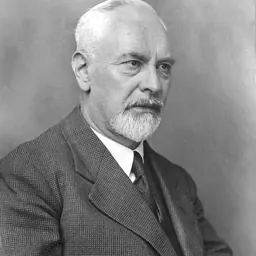
Lived 1914 – 1985 (aged 70). Carl Joachim Hambro was a Norwegian linguist, translator, philologist, writer and journalist.
Carl Joachim Hambro (7 June 1914 – 19 February 1985) was a Norwegian novelist, journalist, essayist, translator and Romance philologist. The son of the Conservative politician C. J. Hambro, he embarked on a philological career, graduating in 1939. During the Second World War he lectured at Oslo Commerce School and the Norwegian College in Uppsala. After the war, he taught Norwegian at Sorbonne, and also started working as Paris correspondent for the Norwegian Broadcasting Corporation and a few Norwegian daily newspapers.
Born into a well-read and educated family, Hambro developed a penchant for French literature, marking a distinction from the literary taste of his parents—they had been readers of English literature in the Anglo-American tradition. Making his debut in 1960 with the satirical novel De frafalnes klubb, Hambro published trilogies and other novels for the next two decades. He had a keen interest in linguistics; in the 1969 book Ting, tanke, tale he problematized linguistic questions in a popular scientific way. A translator of French literature, he chaired the Norwegian Association of Literary Translators in the early 1960s.
Biography Early life and education
Hambro was born in Kristiania (now Oslo), capital of Norway. and his first wife, Gudrun "Dudu" Grieg (1881–1943). On the younger Carl Joachim's date of birth, 7 June 1914, his father, for whom he was named, made a speech at the Jubilee Exhibition in the Frogner Park, which commemorated the 1814 constitution. whilst the latter became board member of the World Federation for Mental Health. The younger brother, Johan, was secretary general of the Norse Federation for 27 years in the post-war period, yet is remembered above all for his commercially successful biography of their father. Living in the Uranienborg neighbourhood of Western Oslo, the Hambro family belonged to the upper-class society of early 20th-century Norway, its forebears included both businesspeople and women's rights activists, of whom many were active in politics.
The younger Carl Hambro was educated at Fagerborg Upper Secondary School, whence he graduated in 1932, following Latin studies. Among his school contemporaries were Niels Christian Brøgger, who became an essayist and novelist, and Kaare Martin, a future Nazi politician.
Journalistic and educational career Having made study trips to London and Paris in the mid-1930s, Hambro graduated with a cand.philol. degree in 1939. From 1951 to 1952 he was a press worker for the Research Councils in Norway and for the Norwegian delegation to the United Nations. Employed in 1952, he acted in that position for seven years, whereupon he returned to Oslo.
Literary career and death Hambro made his literary debut in 1958 with the non-fiction book Frankrike ("France"), and released his first novel two years later. The younger Hambro's most well-known and successful book within linguistics was the 1969 Ting, tanke, tale ("Thing, Thought, Speech"), followed by Språket i funksjon ("Language in Operation") in 1972. Their daughter Ellen Hambro would later become Director of Norway's Climate and Pollution Agency. Carl Joachim Hambro died on 19 February 1985 Hambro's obituarist Finn Jor described him as a man fond of debate with a keen interest in societal issues, yet who was no front person in public discourse, not possessing the eloquence of his father.
His debut novel, the satirical De frafalnes klubb, was published in 1960. It tells a story of some disillusioned cynics in Paris who create a new philosophical and literary "-ism," Jensen also commended Hambro for his "un-Norwegian" perspective, calling him a "distinguished European."
The elder Hambro was also, according to literary scholar Per Thomas Andersen, vital for the next literary work of the younger Hambro: he provided biographical context for a trilogy comprising the novels Frels oss fra det gode (1963; "Deliver Us From the Good"), Utfor stryket (1964; "Down the River") and Vi vil oss en drøm (1966; "We Want a Dream"), which describe the adolescence of a young man named Nico Dietmeyer. Living in the upper-class society of Western Oslo in the 1930s, Dietmeyer has an authoritarian father who commits adultery, despite personally emphasising decorum in his moral system. Reviewing for the same newspaper, Ragnhild Lorentzen gave the second novel a laudatory review, praising Hambro for having taken an important task upon his shoulders, whilst simultaneously criticising him for blurring the line between adolescence and adulthood. Dahl maintained that these novels constituted an unpretentious, yet clear-eyed criticism of conformity in that milieu, whilst Andersen considered them stories about double standards and liberation from one's own father. and subsequently, in September, delivered a vehement critique of the Norwegian education system in the pamphlet Er gymnasiaster mennesker? ("Are Graduates People?"). The last novel of his trilogy about Nico Dietmeyer was released in November of the same year; Lorentzen deemed the first part of the book to be somewhat verbose, inconclusive and unoriginal, yet also well-written. before publishing his semantic and psycholinguistic study Ting, tanke, tale ("Thing, Thought, Speech") in 1969. The journalist Iver Tore Svenning recognized that work as one of the very few successful attempts at a popular scientific treatment of structural linguistics, The former book is about a love affair between an erstwhile cultural radical and a young woman with aggressive political opinions. The affair makes, according to Dahl, the cultural radical think about his nonconformist past, yet he abandons it, and seeks safety in the bourgeoisie class. In 1972 he resumed his endeavour to popularise linguistics: together with Erik Rudeng and Knut Svortdal he compiled Språket i funksjon ("Language in Operation"), a primer on language comprehension and essay writing. Rudeng later recalled that it cited philosophers and linguists hitherto unknown in Norwegian public discourse, like Michel Foucault (1926–1984) among others. In the latter part of his life Hambro wrote monographs on the Norwegian authors Jens Bjørneboe and Arnulf Øverland; he also compiled a collection of the latter's poems. He was active in the Norwegian Authors' Union, becoming known as "a man of compromise" after having calmed a linguistic debate in the union. He also sought to relax the membership criteria, so that non-fiction authors also could become members, but to no avail. Yet, the Norwegian Non-fiction Writers Association was established in 1978. Hambro's good reputation dwindled with the years, especially following his vehement defence of the writers Agnar Mykle and Bjørneboe, who had been brought to court for their soft-core pornographic novels.
Hambro also translated the works of others, mostly French and English authors, among them the philosopher Jean-Paul Sartre, the French novelist Jacques de Lacretelle, the Canadian-American novelist Saul Bellow, the Irish playwright Samuel Beckett, the Northern Irish novelist Brian Moore, the Hungarian-British author Arthur Koestler, and the British novelist William Golding. In 1963 he was rewarded the Bastian Prize for his translation of Claude Simon's The Flanders Road. He chaired the Norwegian Association of Literary Translators from 1961 to 1965.
Don’t just read it —
keep it.
Full-length biographies made to live with: read them, listen on the way to work, watch them tonight.
- E-book
- Audio
- Video
Instant download · yours to keep · every purchase keeps this site free
Important facts
Family & relationships
People in Carl Joachim Hambro's life
Named in this biography and alive at the same time

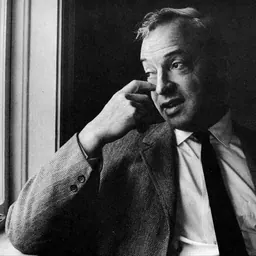
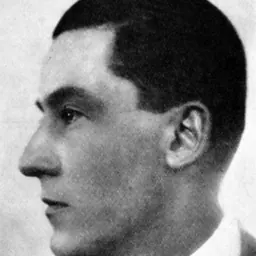
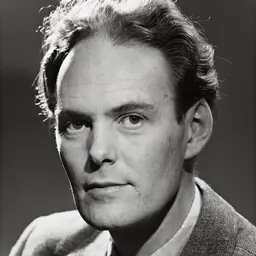



Related people
Same field, nearest in time
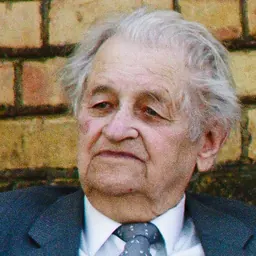

Contemporaries
People whose lives overlapped Carl Joachim Hambro's
Frequently asked questions
Who was Carl Joachim Hambro?
novelist
When was Carl Joachim Hambro born?
Carl Joachim Hambro was born on 7 June 1914 in Christiania, Oslo Municipality.
When did Carl Joachim Hambro die?
Carl Joachim Hambro died on 19 February 1985.
What was Carl Joachim Hambro's occupation?
Carl Joachim Hambro was a linguist, translator, philologist, writer and journalist.
What nationality was Carl Joachim Hambro?
Carl Joachim Hambro was Norwegian.
Sources & further reading
· Wikipedia: Carl Joachim Hambro
Cite this page
APA: Biography.guide. (2026). Carl Joachim Hambro. https://biography.guide/carl-joachim-hambro-linguist/
MLA: "Carl Joachim Hambro." Biography.guide, https://biography.guide/carl-joachim-hambro-linguist/.
Chicago: "Carl Joachim Hambro." Biography.guide. https://biography.guide/carl-joachim-hambro-linguist/.
Data last updated: 2026-09-22 · Spot an error? Report a correction.
Page generated 2026-09-27 05:18 UTC