
About Caesar Rodney
Lived 1728 – 1784 (aged 55). Caesar Rodney was an American lawyer, politician, jurist and military officer.
Caesar Rodney (October 7, 1728 – June 26, 1784) was an American Founding Father, lawyer, and politician from St. Jones Neck in Dover Hundred, Kent County, Delaware. He was an officer of the Delaware militia during the French and Indian War and the American Revolutionary War, a Continental Congressman from Delaware, a signer of the Continental Association and Declaration of Independence, and president of Delaware during most of the American Revolution.
Rodney family and early years
Rodney was born on October 7, 1728, on his family's plantation, "Byfield", on St. Jones Neck in East Dover Hundred, Kent County, Delaware. Caesar was the eldest son of 2 children of Caesar and Elizabeth Crawford Rodney and grandson of William Rodney. William Rodney emigrated to the American colonies in 1681–1682, along with William Penn, and was speaker of the Colonial Assembly of the Delaware Counties in 1704.
Rodney's mother was the daughter of the Rev. Thomas Crawford, Anglican rector of Christ Church at Dover. as attested by genealogy studies.
Byfield was an farm worked by enslaved labor. The Rodneys were, by the standards of the day, prosperous members of the local gentry. The farm earned sufficient income from the sale of wheat and barley to the Philadelphia and West Indies markets to provide enough cash and leisure to allow members of the family to participate in the social and political life of Kent County.
Caesar was educated when he was 13 or 14 years old. He attended The Latin School, part of the academy and the College of Philadelphia (now known as University of Pennsylvania) in Philadelphia, Pennsylvania until his father's death. Caesar was the only one of the Rodney children to receive anything approaching a formal education. He lived as a bachelor, was generally esteemed and was very popular. He had professed his love and affection for several Delaware ladies at various times but was never a successful suitor.
During the French and Indian War, he was commissioned captain of the Dover Hundred company in Colonel John Vining's regiment of the Delaware militia. They never saw active service. From 1769 to 1777, he was an associate justice of the Supreme Court of the Lower Counties.
Eighteenth-century Delaware was politically divided into loose factions known as the "Court Party" and the "Country Party." He began his service in the Assembly of Delaware in the 1761/1762 session and continued in office to the 1775/1776 session. Several times he served as speaker, including the momentous day of June 15, 1776, when "with Rodney in the chair and Thomas McKean leading the debate on the floor," the Assembly of Delaware voted to sever all ties with the British Parliament and King.
Declaration of Independence, by John Trumbull (1818) portrays the presentation of the Declaration of Independence to Congress. Rodney is not depicted.
Rodney served in the Continental Congress along with McKean and Read from 1774 to 1776.
An Equestrian statue of Caesar Rodney on Rodney Square. Removed in June 2020, it is currently exhibited in Washington, D.C.’s Freedom Plaza. Upon learning of the death of his friend John Haslet at the Battle of Princeton, Rodney rushed to the Continental Army to try to fill his place. Haslet was succeeded as colonel by David Hall, as General George Washington returned Rodney home to be Delaware's wartime governor and major-general of Delaware militia. The regiment Haslet had built was virtually destroyed at the Battle of Camden in 1780. Rodney, as major-general of the Delaware militia, protected the state from British military intrusions and controlled continued Loyalist activity, particularly in Sussex County, site of the 1780 Black Camp Rebellion.
In October 1777, amidst the catastrophic events following the Battle of Brandywine and the British occupation of Wilmington and Philadelphia, a new General Assembly was elected. It promptly put Rodney and McKean back into the Continental Congress. With state President John McKinly in captivity and President George Read completely exhausted, they elected Rodney as President of Delaware on March 31, 1778.
The office did not have the authority of a modern governor in the United States, so Rodney's success came from his popularity with the General Assembly, where the real authority lay, and from the loyalty of the Delaware militia, which was the only means of enforcing that authority. Via his distant Italian heritage, one source has identified Rodney as the first Italian-American governor of a U.S. state.
Meanwhile, Rodney scoured the state for money, supplies and soldiers to support the national war effort. Delaware Continentals had fought well in many battles from the Battle of Long Island to the Battle of Monmouth, but in 1780 the army suffered its worst defeat at the Battle of Camden in South Carolina. The regiment was nearly destroyed and the remnant so reduced it could only fight with a Maryland regiment for the remainder of the war. Rodney had done much to stabilize the situation, but his health was worsening, and he resigned his office on November 6, 1781, just after the conclusive Battle of Yorktown.
Rodney was elected by the Delaware General Assembly to the United States Congress under the Articles of Confederation in 1782 and 1783 but was unable to attend because of ill health. Two years after leaving the state presidency he was elected to the 1783/84 session of the Legislative Council. As a final gesture of respect, the council selected him to be their speaker. His health was now in rapid decline. Even though the Legislative Council met at his home for a short time, he died before the session ended.
Death and legacy Rodney was tormented throughout his life by asthma, and his adult years were plagued by a facial cancer. He experienced expensive, painful, and futile medical treatments for the cancer.
The Caesar Rodney School District in Delaware is named after him.
A statue of Rodney riding a horse was unveiled in Rodney Square in Wilmington, Delaware on July 4, 1923. The statue was removed and placed in private storage in 2020, amidst the George Floyd protests.
Positions held
Elections were held October 1. Members of the General Assembly took office on October 20 or the following weekday. The State Legislative Council was created in 1776. Its Legislative Councilmen had a three-year term. State Assemblymen had a one-year term.
The whole General Assembly chose the Continental Congressmen for a one-year term and the State President for a three-year term. The county sheriff had a three-year term. Associate Justices of the state Supreme Court were selected by the General Assembly for the life of the person appointed.
Delaware General Assembly service Dates Assembly Chamber Majority Governor Committees District1783/848thState CouncilNon-partisanNicholas Van DykeSpeakerKent at-large
In popular culture Caesar Rodney appears in the 1969 Broadway musical 1776 and its 1972 film adaptation. He is portrayed as an elderly man suffering severely from facial cancer, and he has to be taken home by fellow Delaware delegate Thomas McKean. Later, John Adams sends McKean back to Delaware to bring back Rodney to break the deadlock over independence between pro-independence McKean and anti-independence George Read. He is portrayed in the musical by Robert Gaus and in the film by William Hansen.
Caesar Rodney appears in HBO's 2008 miniseries John Adams. He is played by Tim Parati.
Don’t just read it —
keep it.
Full-length biographies made to live with: read them, listen on the way to work, watch them tonight.
- E-book
- Audio
- Video
Instant download · yours to keep · every purchase keeps this site free
Important facts
People in Caesar Rodney's life
Named in this biography and alive at the same time

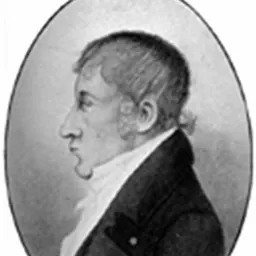
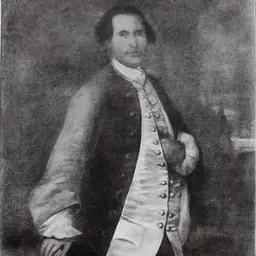

Related people
Same field, nearest in time
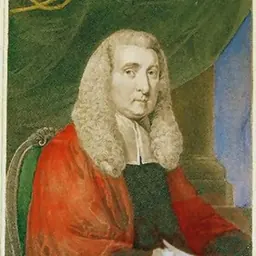


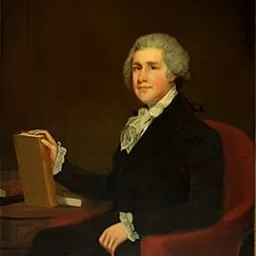
Contemporaries
People whose lives overlapped Caesar Rodney's






Frequently asked questions
Who was Caesar Rodney?
American politician (1728-1784)
When was Caesar Rodney born?
Caesar Rodney was born on 7 October 1728 in Kent County.
When did Caesar Rodney die?
Caesar Rodney died on 26 June 1784 in Kent County.
What was Caesar Rodney's occupation?
Caesar Rodney was a lawyer, politician, jurist and military officer.
What nationality was Caesar Rodney?
Caesar Rodney was American.
Sources & further reading
Cite this page
APA: Biography.guide. (2026). Caesar Rodney. https://biography.guide/caesar-rodney/
MLA: "Caesar Rodney." Biography.guide, https://biography.guide/caesar-rodney/.
Chicago: "Caesar Rodney." Biography.guide. https://biography.guide/caesar-rodney/.
Data last updated: 2026-09-25 · Spot an error? Report a correction.
Page generated 2026-09-27 05:13 UTC