
Boubou Hama
Nigerien author, historian, and politician
About Boubou Hama
Lived 1906 – 1982 (aged 75–76). Boubou Hama was a Nigerien politician, screenwriter, non-fiction writer, writer, teacher and researcher.
Boubou Hama (1906 – 29 January 1982) was a Nigerien writer, historian, and politician. He was President of the National Assembly of Niger under former President of Niger, Hamani Diori. He died in Niamey in 1982.
He was also a member of the Scientific Committee of UNESCO's General History of Africa (1971–1978). He contributed to the establishment of the project and chaired the founding expert meeting held in June 1969, entitled Meeting of Experts on the Measures to be Taken for Drafting and Publishing a General History of Africa, during which the methodological principles and the organization of the drafting of the work were defined.
Life and works Hama was born at Fonéko, a small Songhai village in western Niger. His essay on African education won the Léopold Sédar Senghor Prize in the same year. His histories are said to place a great value on oral literature.
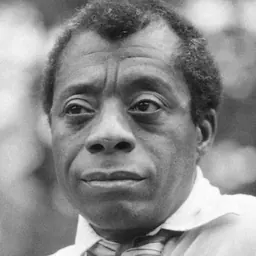
In 1956, he participated alongside Alioune Diop, Aimé Césaire, Cheikh Anta Diop, Frantz Fanon, James Baldwin and others in the First Congress of Black Writers and Artists held at the Sorbonne in Paris.
Political career Hama had been one of the founders of the Nigerien Progressive Party (PPN), a regional branch of the African Democratic Rally (RDA), and rose to become a close adviser of party leader and Deputy to the French National Assembly Hamani Diori. Following independence in 1960, the PPN became the ruling and sole legal party in Niger, and Hama became President of the National Assembly of Niger from 1961 to 1964. He was also one of the most prominent, and perhaps most powerful, members of the PPN politburo, which became the effective ruling body of the nation. One writer has called Boubou Hama the "eminence grise" behind Diori's rule. The National Assembly of Niger met in largely ceremonial yearly sittings to ratify government positions. Traditional notables, elected as parliamentary representatives, often unanimously endorsed government proposals. Diori was re-elected unopposed in 1965 and 1970, but overthrown by military coup in 1974.
Literary works L'Empire de Gao : histoire, coutumes et magie des Sonrai, Adrien-Maisonneuve, 1954 (with Jean Boulnois), preface by Théodore Monod. Histoire du Gobir et de Sokoto, Présence africaine,1967 Recherche sur l'histoire des Touareg sahariens et soudanais, Présence africaine, 1967 Histoire traditionnelle d'un peuple: les Zarma-Songhay, Présence africaine, 1967 Contribution à la connaissance de l'histoire des Peul, Présence africaine, 1968 Histoire traditionnelle d'un village songhay, Fonéko, Présence africaine, 1970 L'Empire songhay : ses ethnies, ses légendes et ses personnages historiques, P.J. Oswald, 1974 Écrits sur le Soudan, Niamey, CELHTO, 1983 Askia Mohammed Aboubaca : l'élhadj et le khalife, à travers la tradition et le "Fettach", CELTHO, 1980
Novels Kotia-Nima, a work in three volumes, Présence africaine, 1969 L'Aventure extraordinaire de Bi Kado, fils de Noir, Paris, République du Niger - Présence africaine, 1971 Le Double d'hier rencontre demain, Paris, Union générale d'éditions, 1973 (preface by Jean Rouch) Hon si suba ben (aujourd'hui n'épuise pas demain), Paris, P.J. Oswald, 1973
Essays Enquête sur les fondements et la genèse de l'unité africaine, Présence africaine, 1966 Essai d'analyse de l'éducation africaine, Présence africaine, 1968 Merveilleuse Afrique, Présence africaine, 1971 Le Retard de l'Afrique, Présence africaine, 1972 Cet autre de l'homme, Présence africaine, 1972 Les Problèmes brûlants de l'Afrique, Paris, P.J. Oswald, 1973 (preface by Cheikh Hamidou Kane). Les Grands problèmes de l'Afrique des indépendances, P.J. Oswald, 1974
Tales and children's books Bagouma et Tégouma, a work in two volumes, Présence africaine, 1973 Contes et légendes du Niger, Présence africaine, a work in six volumes, 1972-1976 Izé-Gani, a work in two volumes, Présence africaine, 1985
With Andrée Clair :
Le Baobab merveilleux, images de Marianne Padé, Éditions La Farandole, 1971 L'Aventure d'albarka, Juillard, 1972 Kangué Izé, images from Béatrice Tanaka, La Farandole, 1974 Founya le vaurien, images from Béatrice Tanaka, G.P., 1975 Les Fameuses histoires du village de Tibbo, La Farandole, 1977
UNESCO collective works Le Droit d'être un homme, Jeanne Hersch, UNESCO, 1968 (L'odyssée du vaillant Goroo-Bâ-Dicko, Boubou Hama) Le Temps et les philosophies, Paul Ricoeur, UNESCO, 1978, (chap. 7 : Le Devin. Temps et histoire dans la pensée animiste de l'Afrique noire, Boubou Hama) The General History of Africa (GHA), The place of history in African society, UNESCO, 1980, volume 1, chap, 2, with Joseph Ki-Zerbo)
Cinematographic works Babatu, les trois conseils, screenwriter (by Jean Rouch, 1976)
Selected in Festival de Cannes's official competition in 1976 and Cannes Classics in 2017.
Toula ou le génie des eaux, screenwriter (by Moustapha Alassane, 1973)
Theatrical works La force du lait, RFI Théâtre, 1971 Sonni Ali Ber, RFI Théâtre, 1971
Heritage and legacy Musée National Boubou Hama: In 2008, the museum was renamed Musée National Boubou Hama (MNBH) under Law No. 2008-11 of 30 April 2008. The Boubou Hama Literary Prize: Created in 1989 by Niger's Ministry of Culture, under the initiative of Inoussa Ousseïni, this prize aimed to honor the memory of Boubou Hama while encouraging national literary production. It has rewarded major works such as Sarraounia by Abdoulaye Mamani. The renaming of Niamey's streets: In January 2025, Avenue François Mitterrand was renamed Avenue Boubou Hama. The Year of Boubou Hama: Ministerial Order No. 012/MCA/C of 14 February 2006 designated the year 2006 as the Boubou Hama Year to celebrate the centenary of his birth.
Don’t just read it —
keep it.
Full-length biographies made to live with: read them, listen on the way to work, watch them tonight.
- E-book
- Audio
- Video
Instant download · yours to keep · every purchase keeps this site free
Important facts
People in Boubou Hama's life
Named in this biography and alive at the same time




Related people
Same field, nearest in time




Contemporaries
People whose lives overlapped Boubou Hama's


Frequently asked questions
Who was Boubou Hama?
Nigerien author, historian, and politician (1906-1982)
When was Boubou Hama born?
Boubou Hama was born in 1906 in Fonéko Tédjo.
When did Boubou Hama die?
Boubou Hama died on 29 January 1982 in Niamey.
What was Boubou Hama's occupation?
Boubou Hama was a politician, screenwriter, non-fiction writer, writer, teacher and researcher.
What nationality was Boubou Hama?
Boubou Hama was Nigerien.
Sources & further reading
Cite this page
APA: Biography.guide. (2026). Boubou Hama. https://biography.guide/boubou-hama/
MLA: "Boubou Hama." Biography.guide, https://biography.guide/boubou-hama/.
Chicago: "Boubou Hama." Biography.guide. https://biography.guide/boubou-hama/.
Data last updated: 2026-09-20 · Spot an error? Report a correction.
Page generated 2026-09-27 05:32 UTC