
About Boss Schmidt
Lived 1880 – 1932 (aged 52). Boss Schmidt was an American baseball player.
Charles "Boss" Schmidt (September 12, 1880 – November 14, 1932) was an American professional baseball catcher for the Detroit Tigers of Major League Baseball (MLB)
A native of Arkansas, Schmidt played professional baseball from 1901 to 1926, including six seasons in MLB with Detroit from 1906 to 1911. He was the starting catcher on the Detroit teams that won three consecutive American League pennants from 1907 to 1909. He also led the American League in errors by a catcher in each of those seasons. Schmidt had a reputation for toughness enhanced by his grotesque-looking hands, the result of work as a coal miner and prizefighter.
Following his MLB career, Schmidt played Minor League Baseball for another 15 seasons. He then coached and managed ballclubs before dying suddenly of an intestinal obstruction in 1932.
Early years Schmidt was born on September 12, 1880, in London, Arkansas. (Schmidt's 1932 obituary in the Detroit Free Press lists his place of birth as Coal Hill, Arkansas.) His parents were immigrants from Germany. As a young man, Schmidt worked in the local coal mines, "cutting, shoveling, and pushing carts of coal".
Professional baseball player Minor leagues Schmidt began his baseball career with a semipro baseball team in Fort Smith, Arkansas.
Detroit Tigers 1906 season In late August 1905, the Minneapolis Millers sold Schmidt, Davy Jones, and Ed Siever to the Detroit Tigers. Schmidt was initially a holdout from the Tigers' 1906 training camp, but he finally reported on March 21. During the 1906 season, Schmidt shared catching duties with John Warner and Fred Payne. He appeared in 68 games, 64 of which were as the team's starting catcher. Despite appearing in less than half the team's games, Schmidt ranked among the American League's best defensive catchers with 106 assists (fourth in the American League), 72 players caught stealing (fifth in the American League), and a 50.7 percent rate of catching runners attempting to steal (fourth in the American League). Schmidt also caught Games 3 and 4, allowing two stolen bases in each game. He made one other appearance in the series, pinch-hitting in the ninth inning of Game 5.
After the season, X-rays revealed a severe dislocation on the forefinger of Schmidt's throwing hand. Doctors examining the injury questioned how Schmidt had been able to play in the World Series at all. The finger was broken in a game in mid-September; he underwent surgery in November to re-break the finger to allow it to heal properly.
1908 season In 1908, Schmidt appeared in a career-high 122 games, starting 113 behind the plate for the Tigers. For the second year in a row, he made the last out of the series, becoming the only player ever to do so twice.
1909 season Prior to the 1909 season, Schmidt did not attend spring training with the team, instead holding out over salary issues. On March 3, he announced that he had purchased a half interest in a shoe store in Fort Smith and would miss the 1909 season so that he could manage his store. Aside from salary demands, he expressed frustration with the way the press treated him in 1907 and 1908. Schmidt argued that reporters who criticized his misplays were not taking into consideration his skill or the fact that injuries to his throwing hand had hindered his last two seasons. Schmidt ultimately reported to the team on April 9.
However, Schmidt now faced competition from rookie Oscar Stanage. The pair shared the catching duties in 1909, with Schmidt starting 76 games and Stanage starting 74. Schmidt's batting average in 1909 dipped to a career-low .209 while Stanage hit more than 50 points higher at .262. Moreover, Schmidt led the American League's catchers in errors (20) for the third consecutive year. To his credit, he also ranked third among the league's catchers with 83 runners caught stealing.
The Tigers won their third consecutive pennant in 1909. In the six games of the 1909 World Series in which he played, Schmidt compiled a .222 batting average (three doubles and a single in 18 at bats), During the season, he was overtaken by Stanage as the Tigers' primary catcher, with Stanage starting 83 games at the position to 54 for Schmidt. Schmidt's batting average improved to .259, and he hit a career-high seven triples. Jennings announced during spring training that Schmidt would be the backup to Stanage. During the 1911 season, Schmidt appeared in 28 games, only seven as the Tigers' starting catcher, and compiled a .283 batting average in 46 at bats. He appeared in his final major league game on October 8, 1911. Russo wrote that "Schmidt was worn down from abusing his body throughout the years."
In six major league seasons, Schmidt appeared in 477 games, 410 of them as Detroit's starting catcher. He compiled a .243 batting average.270 on-base percentage.307 slugging percentage, 41 doubles, 22 triples, and 23 stolen bases.
Schmidt had two fights with Ty Cobb. Their first clash came in Augusta, Georgia, in March 1907, when Schmidt alleged that Cobb was trying to chase a drunk groundskeeper into the Warren Park clubhouse. The groundskeeper's wife then began to yell at Cobb, to which he responded by attempting to choke the woman. Schmidt and several other players got involved in the fray, with Schmidt calling Cobb a "coward" for his treatment of the woman. Cobb and Schmidt then exchanged blows before being separated by their teammates. However, this version of the event is based solely on Schmidt’s statement to the press with no other witnesses, which caused some to doubt whether the assault on the couple ever actually happened. (A myth started after the fight that Cobb was choking the groundskeeper's wife, but Cobb historian Wesley Fricks has not found a basis for this in any of the eyewitness accounts.) Despite their clashes, Schmidt and Cobb became close friends until Schmidt's death in 1932. In early 1911, Schmidt won a match against a boxer named McDonald, and rumors spread that Schmidt hoped to become the "great white hope" by taking on heavyweight champion Jack Johnson. Ferns, representing Schmidt, issued a public letter denying any interest on Schmidt's part in fighting Johnson or "any of the Ethiopian race."
Aside from his prowess as a fighter, Schmidt was also known for other displays of his physical toughness. He did not use shinguards during games. Using only his fists, he could hammer nails through a floorboard. Accompanying his teammates to a carnival on one occasion, he had a wrestling match with a bear, pinning the animal in place by the end of the fight. He likely would have played MLB baseball longer had he not suffered many fractures sustained of his thumb and fingers during his career.
Return to minor leagues After his major league career ended, Schmidt continued to play in the minor leagues for another 15 years.
The nickname "Boss" is usually attributed to Schmidt's characteristic take-charge attitude when he played ballgames. Some newspapers attributed it to his dominance of prizefights, and other reporters thought it originated during his service in the coal mines.
After his major league career ended, Schmidt was employed as a coach for the Brooklyn Robins of the National League in 1923, an umpire in the Pacific Coast League in 1925, a manager at Quincy in 1927, an umpire in the Atlantic League in 1928, and a coach for the Detroit Tigers in 1929. Upon hearing of his friend's death, Cobb wept, saying, "In all my years in baseball, I don't think I ever saw anyone tougher than my old friend Charlie Schmidt. I will always remember him fondly."
The ex-catcher was buried at St. Mary Catholic Cemetery in Altus. His grave was unmarked for over 30 years. When the Tigers found out about this in 1969, they paid to have a new headstone installed at the site. The stone lists Schmidt's name, date of birth, date of death, and the following epitaph: "A DETROIT TIGER 1906–1911."
Don’t just read it —
keep it.
Full-length biographies made to live with: read them, listen on the way to work, watch them tonight.
- E-book
- Audio
- Video
Instant download · yours to keep · every purchase keeps this site free
Important facts
People in Boss Schmidt's life
Named in this biography and alive at the same time


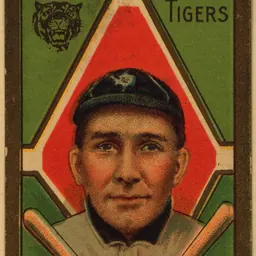



Related people
Same field, nearest in time

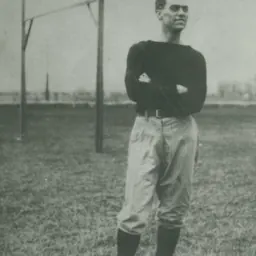
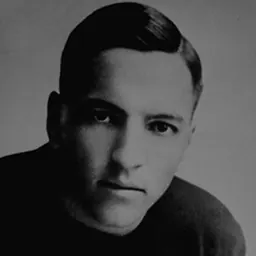
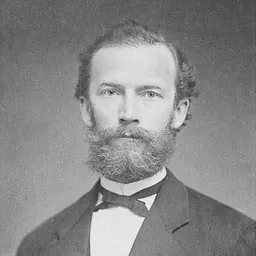
Contemporaries
People whose lives overlapped Boss Schmidt's




Frequently asked questions
Who was Boss Schmidt?
American baseball player
When was Boss Schmidt born?
Boss Schmidt was born on 12 September 1880 in London.
When did Boss Schmidt die?
Boss Schmidt died on 14 November 1932 in Altus, Arkansas, Arkansas.
What was Boss Schmidt's occupation?
Boss Schmidt was a baseball player.
What nationality was Boss Schmidt?
Boss Schmidt was American.
Sources & further reading
Cite this page
APA: Biography.guide. (2026). Boss Schmidt. https://biography.guide/boss-schmidt/
MLA: "Boss Schmidt." Biography.guide, https://biography.guide/boss-schmidt/.
Chicago: "Boss Schmidt." Biography.guide. https://biography.guide/boss-schmidt/.
Data last updated: 2026-09-20 · Spot an error? Report a correction.
Page generated 2026-09-27 05:17 UTC