
About Billie Burke
Lived 1884 – 1970 (aged 85). Billie Burke was an American film actor, stage actor, television actor, radio personality and actor.
Mary William Ethelbert Appleton "Billie" Burke (August 7, 1884 – May 14, 1970) was an American character actress who was famous on Broadway and radio, and in silent and sound films. She is perhaps best known to modern audiences as Glinda the Good Witch of the North in the Metro-Goldwyn-Mayer film musical The Wizard of Oz.
Burke was nominated for the Academy Award for Best Supporting Actress for her performance as Emily Kilbourne in Merrily We Live (1938). She had appearances in the Topper film series.
She was married to Broadway producer and impresario Florenz Ziegfeld Jr. from 1914 until his death in 1932.
Early life Burke was born in Washington, D.C., the daughter of Blanche (née Beatty) and her second husband, William "Billy" Ethelbert Burke. She toured the United States and Europe with her father, a singer and clown who worked for the Barnum & Bailey Circus. Her family settled in London where she attended plays in the West End. She began acting on stage in 1903, making her debut in London in The School Girl. Her other London shows included The Duchess of Dantzic (1903) and The Blue Moon (1904). She eventually returned to America to star in Broadway musical comedies.
Career
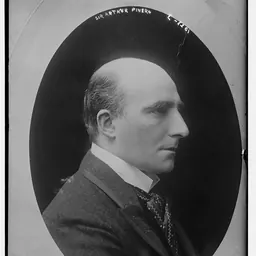
Burke went on to play leads on Broadway in Mrs. Dot, Suzanne, The Runaway, The "Mind the Paint" Girl, and The Land of Promise from 1910 to 1913, along with a supporting role in the revival of Sir Arthur Wing Pinero's The Amazons. There she met producer Florenz Ziegfeld Jr., marrying him in 1914. Two years later they had a daughter, author Patricia Ziegfeld Stephenson (1916–2008).
Burke was signed for the movies and made her cinematic debut in the title role of Peggy (1915). Her success was phenomenal, and she was soon earning what was reputedly the highest salary of any film actress up to that time. She followed her first feature with the 15-part serial Gloria's Romance (1916). By 1917, she was a favorite with silent-movie fans, rivaling Mary Pickford, Lillian Gish, Clara Kimball Young and Irene Castle. She starred primarily in provocative society dramas and comedies, similar in theme to The "Mind-the-Paint" Girl, her most successful American play. Her girlish charm rivaled her acting ability, and as she dressed to the hilt in fashionable gowns, furs and jewelry, her clothes sense also won her the devotion of female audiences. Among the films in which she appeared during this period were Arms and the Girl (1917), The Mysterious Miss Terry, Let's Get a Divorce (1918), Good Gracious, Annabelle (1919), Away Goes Prudence (1920) and The Frisky Mrs. Johnson (1920). As a nod to himself for his wife appearing for Zukor and Lasky, Ziegfeld insisted on promotions for each of the films to carry the tag "By Special Arrangement with Florenz Ziegfeld".
Burke's beauty and taste made her a major trendsetter throughout the 1910s and 20s. As early as 1907, following her Broadway debut performance in My Wife, department stores began carrying the "Billie Burke Dress" with a signature flat collar and lace trim. During this time, much of Burke's on- and off-screen wardrobe was provided by the leading European couturier Lucile (in private life, Lady Duff Gordon), whose New York branch was the fashion Mecca of socialites and entertainment celebrities. Burke reflected on her reputation as "a new kind of actress, carefree, and red-headed, and I had beautiful clothes."
In 1917, Burke endorsed Pond's Vanishing Cream.
Despite her success in film, Burke eventually returned to the stage, appearing in Caesar's Wife (1919), The Intimate Strangers (1921), The Marquise (1927) and The Happy Husband (1928).
When the family's investments were wiped out in the Wall Street Crash of 1929, Burke and her husband moved to the west coast so that Burke could resume screen acting to aid their debt. Another successful film series followed with Father of the Bride (1950) and Father's Little Dividend (1951), both directed by Vincente Minnelli and starring Spencer Tracy, Joan Bennett, and Elizabeth Taylor. Burke also portrayed Mrs. Ernest (Daisy) Stanley in the 1942 film The Man Who Came to Dinner.
Burke wrote two autobiographies, both with Cameron Shipp, With a Feather on My Nose (Appleton 1949) and With Powder on My Nose (Coward McCann, 1959).
Radio and television
On CBS Radio, The Billie Burke Show was heard on Saturday mornings from April 3, 1943, until September 21, 1946. Sponsored by Listerine, this situation comedy was initially titled Fashions in Rations during its first year. Portraying herself as a featherbrained Good Samaritan who lived "in the little white house on Sunnyview Lane," she always offered a helping hand to those in her neighborhood. She worked often in early television, appearing in the short-lived sitcom Doc Corkle (1952). She was a guest star on several TV and radio series, including Duffy's Tavern.
On television, Burke starred in her own talk show, At Home with Billie Burke, which ran on the DuMont Television Network from June 1951 through the spring of 1952. She was one of the first female talk show hosts, after the hostesses of the earlier DuMont series And Everything Nice (1949–50) and Fashions on Parade (1948–49) which both include talk show segments.
Billie Burke starred in an adaptation of Dr. Heidegger's Experiment on the TV version of Lights Out on November 20, 1950.
Return to stage and final film Burke attempted to make a comeback on the New York stage. She appeared in two short-lived productions: This Rock and Mrs. January and Mr. X. Although she received good reviews, the plays did not. She also acted in several plays in California, although by this time her memory was failing and she had difficulty remembering lines. In the late 1950s, her increasingly poor memory led to her retirement from acting, although her explanation at the time was, "Acting just wasn't any fun anymore."
Burke's final screen appearance was in Sergeant Rutledge (1960), a western, directed by John Ford.
Personal life
Among Burke's early suitors was the operatic tenor Enrico Caruso.
In April 1914, Burke married Florenz Ziegfeld Jr. In 1916, Burke had a daughter, Patricia Burke Ziegfeld.
In 1921, Burke retired to raise her daughter Patricia, but resumed work after the Wall Street Crash of 1929.
In 1932, Burke moved from New York to Beverly Hills, California, after the death of Ziegfeld.
Burke died in Los Angeles of natural causes on May 14, 1970, at the age of 85, and she was interred beside Ziegfeld at Kensico Cemetery, Valhalla, Westchester County, New York.
Legacy For many years, Burke's framed photo was displayed above the exit staircase at New York City's Ziegfeld Theatre, but it disappeared after renovations. An opening-night program bearing a picture of her from her 1912 triumph The Mind the Paint Girl (Sir Arthur Wing Pinero) is displayed in the lobby of the Lyceum Theatre in Manhattan.
For her contributions to the film industry, Burke was inducted into the Hollywood Walk of Fame in 1960 with a motion pictures star at 6617 Hollywood Boulevard.
The Academy Film Archive houses the Florenz Ziegfeld-Billie Burke Collection, which consists primarily of home movies.
On November 4, 2015, the crater Burke, near the north pole of the planet Mercury, was named after Billie Burke.
Burke is referenced in the horror film The Exorcist III (1990). The character Kinderman says, "I have hobbies. In the meantime, we have cancer and mongoloid babies and murderers, monsters prowling the planet, even prowling this neighborhood, Father... right now, while our children suffer... and our loved ones die, and your God goes waltzing blithely through the universe like some kind of cosmic Billie Burke."
Performance career
Radio
The Ziegfeld Follies of the Air – 1932 Doubting Thomas – 1935 Good News of 1939 – 1938 The Rudy Vallee Hour – 1939 The Gulf Screen Guild Theater – 1939 The Rudy Vallee Sealtest Show – 1940–41 The Pepsodent Show – 1941 The Billie Burke Show – 1943–1946 Duffy's Tavern – 1944 The Sealtest Village Store – 1944 Mail Call – 1944 The Charlie McCarthy Show – 1944–47 Tribute to Ethel Barrymore – 1945 The Rudy Vallee Show – 1945 Show Stoppers – 1946 The Danny Kaye Show – 1946 WOR 25th Anniversary – 1947 Your Movietown Radio Theatre – 1948 The Eddie Cantor Pabst Blue Ribbon Show – 1948 Family Theater – 1948–52 This Is Show Business – CBS-TV, 1949 The Martin and Lewis Show – 1949 The Bill Stern Colgate Sports Newsreel – 1949 Stagestruck – 1954 Biography in Sound – 1955–56
Broadway
My Wife – 1907 Love Watches – 1908 Mrs. Dot – 1910 Suzanne – 1910 The Philosopher in the Apple Orchard – 1911 The Runaway – 1911 The Amazons – 1913 The Land of Promise – 1913 Jerry – 1914 The Rescuing Angel – 1917 A Marriage of Convenience – 1918 Caesar's Wife – 1919 The Intimate Strangers – 1921 Rose Briar – 1922 Annie Dear – 1924 The Marquise – 1927 The Happy Husband – 1928 Family Affairs – 1929 The Truth Game – 1930 Ziegfeld Follies of 1934 – 1934 (producer) Ziegfeld Follies of 1936 – 1936 (producer) This Rock – 1943 Ziegfeld Follies of 1943 – 1943 (producer) Mrs. January and Mr. X – 1944
Filmography Silent Year Title Role Notes 1914 Our Mutual Girl Herself Lost film 1916 Peggy Peggy Cameron Gloria's Romance Gloria Stafford Lost film 1917 The Mysterious Miss Terry Mavis Terry Lost film Arms and the Girl Ruth Sherwood The Land of Promise Nora Marsh Lost film 1918 Eve's Daughter Irene Simpson-Bates Lost film Let's Get a Divorce Mme. Cyprienne Marcey Lost film In Pursuit of Polly Polly Marsden Lost filmThe Make-Believe Wife Phyllis Ashbrook Lost film 1919 Good Gracious, Annabelle Annabelle Leigh Lost film The Misleading Widow Betty Taradine Lost film Sadie Love Sadie Love Lost film Wanted: A Husband Amanda Darcy Cole Lost film 1920 Away Goes Prudence Prudence Thorne Lost film The Frisky Mrs. Johnson Belle Johnson Lost film 1921 The Education of Elizabeth Elizabeth Banks Lost film
Sound Year Title Role Notes 1929 Glorifying the American Girl Herself Uncredited 1932 A Bill of Divorcement Margaret 1933 Christopher Strong Lady Elaine Strong Dinner at Eight Millicent Jordan Only Yesterday Julia Warren 1934 Where Sinners Meet Eustasia Finishing School Mrs. Helen Crawford Radcliff We're Rich Again Linda Page Forsaking All Others Aunt Paula 1935 Society Doctor Mrs. Crane After Office Hours Mrs. Norwood Becky Sharp Lady Bareacres Doubting Thomas Paula Brown She Couldn't Take It Mrs. Daniel Van Dyke A Feather in Her Hat Julia Trent Anders Splendor Clarissa 1936 My American Wife Mrs. Robert Cantillon Piccadilly Jim Eugenia Willis, Nesta's Sister Craig's Wife Mrs. Frazier 1937 Parnell Clara Topper Mrs. Topper The Bride Wore Red Contessa di Meina Navy Blue and Gold Mrs. Alyce Gates 1938 Everybody Sing Diana Bellaire Merrily We Live Mrs. Kilbourne The Young in Heart Marmy Carleton Topper Takes a Trip Mrs. Topper 1939 Zenobia Mrs. Tibbett Bridal Suite Mrs. McGill The Wizard of Oz Glinda Eternally Yours Aunt Abby Remember? Louise Bronson 1940 The Ghost Comes Home Cora Adams And One Was Beautiful Mrs. Lattimer Irene Mrs. Vincent The Captain Is a Lady Blossy Stort Dulcy Eleanor Forbes Hullabaloo Penny Merriweather 1941 The Wild Man of Borneo Bernice Marshall Topper Returns Mrs. Clara Topper One Night in Lisbon Catherine Enfilden 1942 The Man Who Came to Dinner Mrs. Daisy Stanley What's Cookin'? Agatha Courtney In This Our Life Lavinia Timberlake They All Kissed the Bride Mrs. Drew Girl Trouble Mrs. Rowland 1943 Hi Diddle Diddle Liza Prescott So's Your Uncle Aunt Minerva You're a Lucky Fellow, Mr. Smith Aunt Harriet Crandall Gildersleeve on Broadway Mrs. Laura Chandler 1945 Swing Out, Sister Jessica Mariman The Cheaters Clara Pidgeon 1946 Breakfast in Hollywood Mrs. Frances Cartwright The Bachelor's Daughters Molly Burns 1948 Billie Gets Her Man Billie Baxter Short film 1949 The Barkleys of Broadway Mrs. Livingston Belney And Baby Makes Three Mrs. Marvin Fletcher 1950 The Boy from Indiana Zelda Bagley Father of the Bride Doris Dunstan Three Husbands Mrs. Jenny Bard Whittaker 1951 Father's Little Dividend Doris Dunstan 1953 Small Town Girl Mrs. Livingston 1959 The Young Philadelphians Mrs. J. Arthur Allen 1960 Sergeant Rutledge Mrs. Cordelia Fosgate Pepe Herself
Don’t just read it —
keep it.
Full-length biographies made to live with: read them, listen on the way to work, watch them tonight.
- E-book
- Audio
- Video
Instant download · yours to keep · every purchase keeps this site free
Important facts
People in Billie Burke's life
Named in this biography and alive at the same time



Related people
Same field, nearest in time



Contemporaries
People whose lives overlapped Billie Burke's

Frequently asked questions
Who was Billie Burke?
American stage and film actress (1884-1970)
When was Billie Burke born?
Billie Burke was born on 7 August 1884 in Washington, D.C..
When did Billie Burke die?
Billie Burke died on 14 May 1970 in Los Angeles.
What was Billie Burke's occupation?
Billie Burke was a film actor, stage actor, television actor, radio personality and actor.
What nationality was Billie Burke?
Billie Burke was American.
Sources & further reading
Cite this page
APA: Biography.guide. (2026). Billie Burke. https://biography.guide/billie-burke/
MLA: "Billie Burke." Biography.guide, https://biography.guide/billie-burke/.
Chicago: "Billie Burke." Biography.guide. https://biography.guide/billie-burke/.
Data last updated: 2026-09-20 · Spot an error? Report a correction.
Page generated 2026-09-27 05:31 UTC