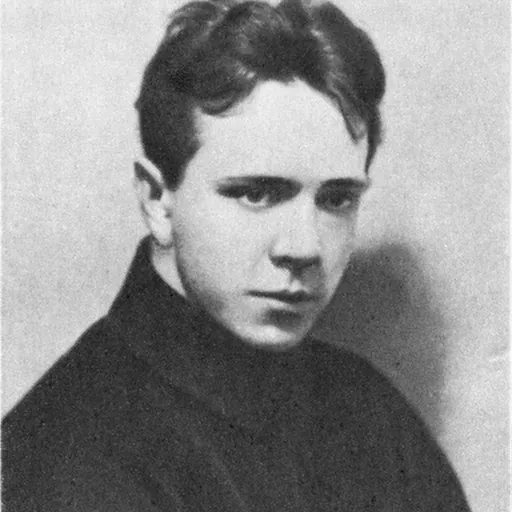
About Michael Chekhov
Lived 1891 – 1955 (aged 64). Michael Chekhov was a Russian film actor, stage actor, actor, drama teacher, film director and theatre director.
Mikhail Aleksandrovich Chekhov (; 16 August 1891 – 30 September 1955), better known as Michael Chekhov, was a Russian-American actor, director, author, and theatre practitioner. He was a nephew of the playwright Anton Chekhov and a student of Konstantin Stanislavski. Stanislavski referred to him as his most brilliant student.
Although mainly a stage actor, he made a few notable appearances on film, perhaps most memorably as the Freudian analyst in Alfred Hitchcock's Spellbound (1945), for which he received his only Academy Award nomination.
Life and career Early years
Mikhail Aleksandrovich Chekhov was born on 16 August 1891 in Saint Petersburg, the son of Alexander Chekhov (the elder brother of Anton Chekhov) and his wife Natalya Aleksandrovna Golden. It was his father's second marriage. His mother, a Russian Jew, had been the governess to the children from his father's first marriage. He was raised in a middle-class family; his father was in the Imperial Customs Service and was a moderately successful writer. In 1901, Michael began his secondary education, and from 1903, he began acting in amateur productions while staying at his family's cottage. He left school in 1910 to become a member of the Maly Theatre in Moscow.
Chekhov's first wife was actress Olga, whom he met at the First Studio of the Moscow Art Theatre. They secretly married on 3 September 1914. Olga Chekhova was a daughter of Konstantin Knipper and was the niece of Olga Knipper, Anton Chekhov's wife, after whom she was named. Their daughter, also baptized Olga, was born in 1916 and became a German actress under the name Ada Tschechowa. His second wife was Xenia Karlovna Ziller, of German origin; he married her on 3 June 1918.
In 1914, Chekhov visited his aunt Olga in Saint Petersburg and she recommended him to Konstantin Stanislavski. Under Stanislavski's First Studio, he acted, directed, and studied Stanislavski's 'system'. He was also influenced in his creative development as an actor by Yevgeny Vakhtangov and Leopold Sulerzhitsky. However, on 14 August 1915, Chekhov was called up for military duty. By May 1916, he was absolved of his military obligations. After suffering from depression, he returned to the First Studio in October 1918.
Stanislavski considered Chekhov to be one of his brightest students. When Chekhov experimented with affective memory and had a nervous breakdown, this aided Stanislavski in seeing the limitations of his early concepts of emotional memory.
After the October Revolution, Chekhov split with Stanislavski and toured with his own company. He thought that Stanislavski's techniques led too readily to a naturalistic style of performance. He demonstrated his own theories acting in parts such as Senator Ableukhov in the stage version of Andrei Bely's Petersburg. In 1922, after the death of Vakhtangov, Chekhov became director of the First Studio, which was subsequently renamed Moscow Art Theatre II. In the late 1920s, Chekhov emigrated to Germany and set up his own studio, teaching a physical and imagination-based system of actor training. He developed the use of the "Psychological Gesture", a concept derived from the Symbolist theories of Andrei Bely and influenced by the works of Rudolf Steiner. In this technique, the actor physicalizes a character's need or internal dynamic in the form of an external gesture. Subsequently, the outward gesture is suppressed and incorporated internally, allowing the physical memory to inform the performance on an unconscious level.
Chekhov worked in Riga from 1932 to 1934. During this time, he acted at the Riga Russian Theatre and founded an acting academy to teach his system to local Latvian and Lithuanian actors. Some of the notable roles he prepared there included Ivan the Terrible in "The Death of Ivan the Terrible" and Foma Opiskin in "Village of Stepanchikovo." In his honor, the theatre in Riga is now named the Mikhail Chekhov Riga Russian Theatre. Between 1930 and 1935, he also worked in Kaunas State Drama Theatre in Lithuania. Between 1936 and 1939, Chekhov established the Chekhov Theatre School at Dartington Hall, in Devon, England. Following developments in Germany that threatened the outbreak of war he moved to the US with the couple, and later writers, Anne Cumming and Henry Lyon Young to recreate a drama school.
Career The sculpture of Michael Chekhov in the Michael Chekhov Riga Russian Theatre. Following Stanislavski's approach, much of what Chekhov explored addressed the question of how to access the unconscious creative self through indirect non-analytical means. Chekhov taught a range of movement dynamics such as molding, floating, flying, and radiating that actors use to find the physical core of a character.
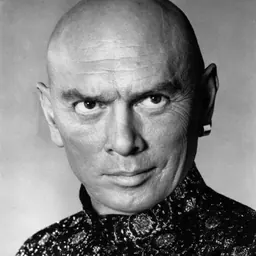
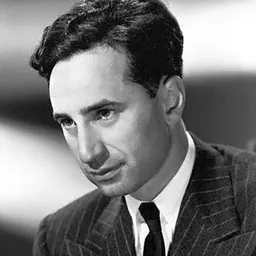
Despite his seemingly external approach, Chekhov's techniques were meant to lead the actor to a rich internal life. Interest in Chekhov's work has grown, however, with a new generation of teachers. Chekhov's own students included Marilyn Monroe, Anthony Quinn, Clint Eastwood, Dorothy Dandridge, Mala Powers, Yul Brynner, Patricia Neal, Sterling Hayden, Jack Palance, Elia Kazan, Robert Lewis, Paula Strasberg, Guy Gillette, and Lloyd and Dorothy Bridges. In the television programme Inside the Actors Studio, noted actors such as Johnny Depp and Anthony Hopkins have cited Chekhov's book as highly influential on their acting. Beatrice Straight also thanked Chekhov in her acceptance speech after winning her Oscar for her performance in Network (1976).
Chekhov's description of his acting technique, On the Technique of Acting, was written in 1942. When reissued in 1991 it had additional material by Chekhov estate executor Mala Powers; an abridged version appeared under the title To the Actor in 1953, with a preface by Yul Brynner, and reissued in 2002 with an additional foreword by Simon Callow and additional Russian material translated and commented on by Andrei Malaev-Babel, a notable Russian-born acting scholar and teacher. The English translation of his autobiography The Path of the Actor was edited by Andrei Kirillov and Bella Merlin and published by Routledge in 2005, marking the 50th anniversary of his death. Some of Chekhov's lectures are available on CD under the title On Theatre and the Art of Acting. The documentary From Russia to Hollywood: the 100 Year Odyssey of Chekhov and Shdanoff, profiles Chekhov and his fellow Russian associate George Shdanoff; released in 1998, it is narrated by Mala Powers and Gregory Peck, who starred in Alfred Hitchcock's Spellbound, for which Chekhov earned an Oscar nomination.
Performances and works Selected filmography
Year Title Role Notes 1914 Kogda zvuchat struny serdtsa 1915 Shkaf s syurprizom 1916 Liubvi syurprizy tshchetnye 1921 Erik XIV Erik XIV 1927 Einer gegen alle 1927 Man from the Restaurant Skorokhodov 1929 Der Narr seiner Liebe Didier Mireuil 1930 Phantoms of Happiness Jacques Bramard 1930 Troika Paschka, village idiot 1944 Song of Russia Ivan Stepanov 1944 In Our Time Uncle Leopold Baruta 1945 Spellbound Dr. Alexander Brulov 1946 Specter of the Rose Max Polikoff 1946 Cross My Heart Peter 1946 Abie's Irish Rose Solomon Levy 1948 Texas, Brooklyn & Heaven Mr. Gaboolian 1952 Invitation Dr. Fromm 1952 Holiday for Sinners Dr. Konndorff 1954 Rhapsody Professor Schuman (final film role)
Don’t just read it —
keep it.
Full-length biographies made to live with: read them, listen on the way to work, watch them tonight.
- E-book
- Audio
- Video
Instant download · yours to keep · every purchase keeps this site free
Important facts
Family & relationships
People in Michael Chekhov's life
Named in this biography and alive at the same time



Related people
Same field, nearest in time


Contemporaries
People whose lives overlapped Michael Chekhov's


Frequently asked questions
Who was Michael Chekhov?
Russian actor and director (1891-1955)
When was Michael Chekhov born?
Michael Chekhov was born on 17 August 1891 in Saint Petersburg.
When did Michael Chekhov die?
Michael Chekhov died on 30 September 1955 in Beverly Hills.
What was Michael Chekhov's occupation?
Michael Chekhov was a film actor, stage actor, actor, drama teacher, film director and theatre director.
What nationality was Michael Chekhov?
Michael Chekhov was Russian.
Sources & further reading
Cite this page
APA: Biography.guide. (2026). Michael Chekhov. https://biography.guide/michael-chekhov/
MLA: "Michael Chekhov." Biography.guide, https://biography.guide/michael-chekhov/.
Chicago: "Michael Chekhov." Biography.guide. https://biography.guide/michael-chekhov/.
Data last updated: 2026-09-20 · Spot an error? Report a correction.
Portrait: Wikimedia Commons · author & licence
Page generated 2026-09-27 05:20 UTC