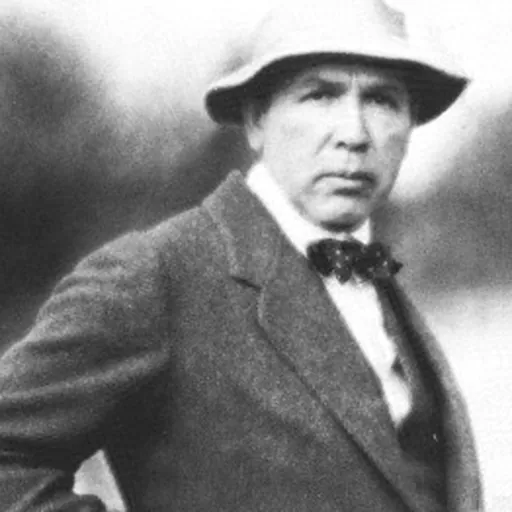
About Bernhard Hoetger
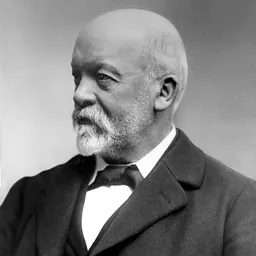
Lived 1874 – 1949 (aged 75). Bernhard Hoetger was a German painter, sculptor, architect, graphic artist, draftsperson and graphic designer.
Bernhard Hoetger (4 May 1874 – 18 July 1949) was a German sculptor, painter and handicrafts artist of the Expressionist movement.
Life Hoetger was born in Dortmund as the son of a blacksmith. He studied sculpture in Detmold from 1888 to 1892, before directing a workshop in Rheda-Wiedenbrück. After a spell at the Düsseldorf Arts Academy, he took a trip to Paris, where he was deeply influenced by Auguste Rodin, but also got to know Paula Modersohn-Becker. Later he was able to familiarise himself with Antoni Gaudí. In 1911, Hoetger was called up to the Darmstadt Artists' Colony, where he was to remain for some time.
Art Nouveau During the art nouveau movement Hoetger's sculptures were sold in Paris at La Maison Moderne (LMM). Second only to L'Art Nouveau Bing, LMM was one of the leading purveyors of home goods in the art nouveau style. LMM was run by Julius Meier-Graefe who, like Bing, was Jewish.
Böttcherstraße In 1914, inspired by Modersohn-Becker, he moved to Worpswede. It was here where he met the Bremen entrepreneur Ludwig Roselius, with whom he would go on to make his masterpiece, Bremen's Böttcherstraße, in an Expressionist style. In particular he was responsible for the Atlantis House, which reflected the race-theories of the Nazi ethnographer Herman Wirth.
HAG-TURM He also designed the HAG-TURM, a building sponsored by Roselius's firm Kaffee HAG at the 1928 Pressa International Press Exhibition. The HAG-Turm was a tower. This was built in 70 days.
Nazi party links Although Roselius was an ardent supporter of Nazism, Hitler denounced the art and architecture in the Boettcherstrasse. Roselius contemplated suicide, but his secretary Barbara Goette intervened with Hitler in Berlin and Café HAG, Roselius' corporation, invested heavily in Focke-Wulf consequently outmanoeuvering Hitler. Like his patron Ludwig Roselius, Hoetger sympathised with the Nazi ideals and became a member of the Nazi Party. He moved to Berlin in 1934 and tried, in vain, to instill himself through his art into the party, but in 1936 Hitler declared it to be degenerate art. Expelled from the party, in 1943 Hoetger fled to Switzerland. He died in 1949 in Interlaken.
Don’t just read it —
keep it.
Full-length biographies made to live with: read them, listen on the way to work, watch them tonight.
- E-book
- Audio
- Video
Instant download · yours to keep · every purchase keeps this site free
Important facts
People in Bernhard Hoetger's life
Named in this biography and alive at the same time


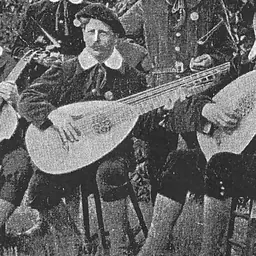
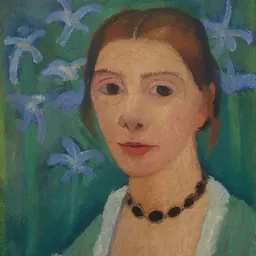

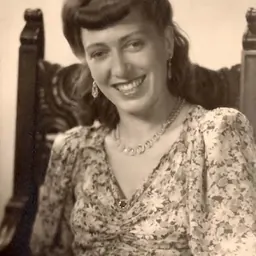
Related people
Same field, nearest in time

Contemporaries
People whose lives overlapped Bernhard Hoetger's

Frequently asked questions
Who was Bernhard Hoetger?
German sculptor (1874-1949)
When was Bernhard Hoetger born?
Bernhard Hoetger was born on 4 May 1874 in Hörde.
When did Bernhard Hoetger die?
Bernhard Hoetger died on 18 July 1949 in Interlaken.
What was Bernhard Hoetger's occupation?
Bernhard Hoetger was a painter, sculptor, architect, graphic artist, draftsperson and graphic designer.
What nationality was Bernhard Hoetger?
Bernhard Hoetger was German.
Sources & further reading
Cite this page
APA: Biography.guide. (2026). Bernhard Hoetger. https://biography.guide/bernhard-hoetger/
MLA: "Bernhard Hoetger." Biography.guide, https://biography.guide/bernhard-hoetger/.
Chicago: "Bernhard Hoetger." Biography.guide. https://biography.guide/bernhard-hoetger/.
Data last updated: 2026-09-20 · Spot an error? Report a correction.
Page generated 2026-09-27 05:10 UTC