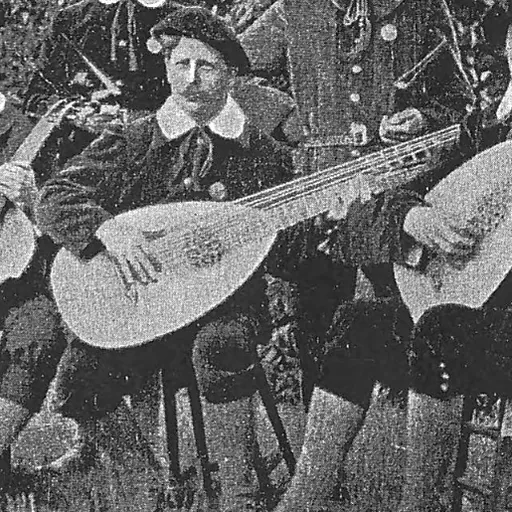
About Herman Wirth
Lived 1885 – 1981 (aged 95). Herman Wirth was a Dutch archaeologist, prehistorian, university teacher, nazi, philologist and independent scholar.
Hermann Felix Wirth (also known as Herman Wirth Roeper Bosch or Herman Felix Wirth; 6 May 1885 – 16 February 1981) was a Dutch-German historian and scholar who specialised in studying music, ancient religions, myths and symbols. He was involved in founding the SS-organization Ahnenerbe but was later pushed out by Heinrich Himmler.
Biography Early life and career (1885–1925) Born in Utrecht on 6 May 1885, Wirth studied Dutch philology, literature, history and musicology at Utrecht and Leipzig, receiving his doctorate in 1911 from the University of Basel with a dissertation on the demise of the Dutch folk song. He taught Dutch language at the University of Berlin from 1909 to 1914.
When World War I broke out in 1914, Wirth volunteered for military service in the Imperial German Army, where he was assigned to monitor the Flemish separatists in German-occupied Belgium. In 1916 he was decorated, dismissed from service, and subsequently appointed by Kaiser Wilhelm II as a senior lecturer (Titularprofessor). In October 1932, he attempted to set up a research institute —the Forschungsinstitut für Urgeschichte— in Bad Doberan, associated with a professorship at Rostock university, supported by the NSDAP state government of Mecklenburg-Schwerin. Headed by Wirth, the institute became extremely controversial in professional circles, as well as among noted Nazi intellectuals. Due to a lack of funds and Wirth's expensive way of life, the institute folded within a year. The Hermann-Wirth-Gesellschaft, founded in 1928, also suffered. Wirth was among those who tried to reinterpret Christianity in terms of an ethnic Nordic origin of original monotheism.
In 1934 Wirth advanced plans to set up an organization called Deutsches Ahnenerbe e.V., which was intended to host and exhibit his collection. Although he was supported by Roselius, the Verein was seemingly never established. However, von Leers had brought Wirth into contact with Heinrich Himmler and Richard Walther Darré, who showed interest in Wirth's ideas.
Wirth continued his research, repeatedly financed by Himmler, as both men kept in touch. Wirth remained an SS-officer, but —despite having Himmler's support— had a hard time in finding a new job at Marburg University.
Post-World War II (1945–1981) Captured in 1945 by the U.S. Army, Wirth was detained and interviewed for two years. Feeling unwelcome in the Netherlands, he then moved to Sweden, before returning to Marburg in 1954, where he worked as a private scholar.
Although he continued to defend Nazi principles, Wirth's teachings about "Urkulturen" (original cultures) found resonance in the evolving alternative scene, and in the 1970s gained support from North American native groups. In the late 1970s, politicians in Rhineland-Palatinate —including the state government and delegates from Kusel— supported a project to set up a museum to exhibit Wirth's ethnographic collection in the tithe barn of Lichtenberg Castle. When journals began to write about his Ahnenerbe past, the project was aborted.
The influential Chilean neo-Nazi Miguel Serrano interviewed Wirth in September 1979. According to Serrano, Wirth complained to him that his magnum opus Palestinabuch had recently been stolen. There are, indeed, indications that Wirth had worked between 1933 and 1969 on an anti-semitic text, which would serve as a counterpart to the Ura Linda Chronicle. Since then, due to the publications of Serrano and the Russian philosopher Aleksandr Dugin, the idea of a lost major manuscript has gained cult status in extreme right-wing circles.
On 16 February 1981, Wirth died in Kusel, Germany.
Philosophy
Wirth claimed that civilization is a curse that only a simpler way of life, as documented in archaeological findings and historical records, could lift. He has been criticized for romantic nationalism and Germanomania. He was also criticized by German scholars of his time, like Bolko von Richthofen, Gerhard Gloege, Arthur Hübner and , for "gullibly refusing to accept" the evidence that proved Ura Linda chronicle (a 6th–1st century BC chronicle of a Frisian family that he translated) a forgery.
Wirth placed the origins of European civilization on the mythological island of Atlantis, which he thought had been located in the North Atlantic, connecting North America and Europe. Its inhabitants supposedly were pure Aryans, influencing the cultures not just of Europeans but also of the natives of North America and the wider "Old World" beyond Europe. According to Wirth, these Atlanteans worshipped a single deity whose aspect changed with the seasons and its son, the Heilsbringer. In their religion, priestesses played a key role. Wirth thought that both the Jewish and the Christian faith were perversions of this original religion. He considered himself a symbologist and thought the Germanic people to be direct descendants of these inhabitants of Atlantis. Researching the Germanic culture thus was a way of reconstructing the original culture of the ancients. All of this research was considered explicitly political as well as religious.
Wirth's ideas inspired the design of Haus Atlantis in the Böttcherstraße in Bremen. This was referred to in a speech by Hitler at the 1936 Reichsparteitag, in which he denounced the "Böttcher-Straßen-Kultur". from Wirth’s work "The Chronicle of Oera Linda" ("Die Ura-Linda-Chronik", 1933). In 1996, Dobrovolsky declared a modified swastika, the eight-rayed "Kolovrat", supposedly a pagan sign of the Sun, as the symbol of the uncompromising "national liberation struggle" against the "Zhyd yoke". This swastika has become the main symbol of Russian neopagans.
Written works Der Aufgang der Menschheit (Accession of Mankind), 1928 Die Heilige Urschrift der Menschheit, 1931-1936 Die Ura Linda Chronik (Ura Linda chronicle), editor, 1933
Don’t just read it —
keep it.
Full-length biographies made to live with: read them, listen on the way to work, watch them tonight.
- E-book
- Audio
- Video
Instant download · yours to keep · every purchase keeps this site free
Important facts
People in Herman Wirth's life
Named in this biography and alive at the same time
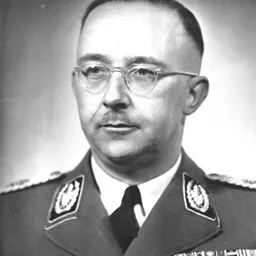

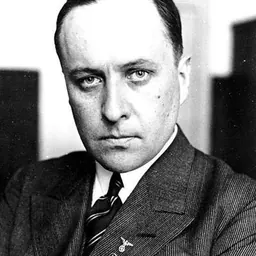

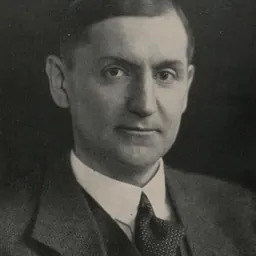


Related people
Same field, nearest in time

Contemporaries
People whose lives overlapped Herman Wirth's



Frequently asked questions
Who was Herman Wirth?
Dutch-German pseudohistian (1885-1981)
When was Herman Wirth born?
Herman Wirth was born on 6 May 1885 in Utrecht.
When did Herman Wirth die?
Herman Wirth died on 16 February 1981 in Kusel.
What was Herman Wirth's occupation?
Herman Wirth was an archaeologist, prehistorian, university teacher, nazi, philologist and independent scholar.
What nationality was Herman Wirth?
Herman Wirth was Dutch.
Sources & further reading
Cite this page
APA: Biography.guide. (2026). Herman Wirth. https://biography.guide/herman-wirth/
MLA: "Herman Wirth." Biography.guide, https://biography.guide/herman-wirth/.
Chicago: "Herman Wirth." Biography.guide. https://biography.guide/herman-wirth/.
Data last updated: 2026-09-22 · Spot an error? Report a correction.
Portrait: Wikimedia Commons · author & licence
Page generated 2026-09-27 05:03 UTC