
About Bekir Fikri
Lived 1882 – 1914 (aged 31–32). Bekir Fikri was a Turkish military personnel, binbashi and revolutionary.
Bekir Fikri (21 December 1914), was an Ottoman revolutionary that participated in the Young Turk Revolution and fought with distinction during the Balkan Wars (1912–1913).
Biography
Origin Bekir Fikri / Beqir Grebenea was of Albanian origin. Fikri ethnically belonged to the Vallahades community (Greek speaking Muslims of the Grebene region).
As Fikri lived in the southern area of the vilayet of Monastir the threat of Greece made him think that Turks and Albanians had to unite against the "Greek danger".
Young Turk revolution (1908) From 1907 to 1908, he was a member of the Young Turks (CUP). Shortly after his transfer to Alasonya (modern Elassona) in 1908, Fikri learned that Adjutant Major Ahmet Niyazi had deserted the Ottoman army and initiated the Young Turk Revolution. He followed his example by going to Grebene (modern Grevena) where he gave a short speech to local Muslims and within a few hours thereafter formed a large guerrilla band (çeta). On July 22, Fikri distributed rifles from the town military depot to his band of 360 men and volunteers while leaving a reserve force of 410 well armed locals to control Grebene. Facing a deteriorating situation in the Balkans on July 24 sultan Abdul Hamid II restored the constitution of 1876.
Balkan Wars (1912–1913) During the Balkan Wars the father, mother, uncle, and two sisters of Fikri were killed by the Greeks. During January 5–6, 1913 Fikri and 1000 men under his command fought to the north of lake Yanya in the Battle of Dristinik when they attacked a Greek force that included some marines. He defended the town of Grebene close to the Ottoman-Greek border.
The withdrawal of the Ottoman Muretteb VII Corps made Fikri wage a six-month guerrilla campaign against Greek army units and irregular gangs. In the area between Leskovik and Koniçe (modern Konitsa), his irregular forces devastated the Greek army. Due to the efforts of Muslims that fought with Fikri, sultan Mehmet V bestowed upon them the honorific of "vatansever" meaning a patriot that loves their homeland. Fikri received the epithet of "Grebene kahramanı" (Hero of Grebene) for his heroism and attained the military rank of captain (yüzbaşı). After the war, Fikri served in Istanbul and protected the palace and government ministries. In same letter Fikri outlined his views that he wanted Izzet Pasha as king of Albania, and to pursue that aim in the southern parts of the country he requested for a transporter, stunner, cannon and ammunition delivery to Durrës. He presented Kemal with a plan that envisaged joint Ottoman, Albanian and Bulgarian military action against Greece and Serbia. In a raid on the port of Vlorë they discovered during 7–8 January 1914 a total of 11 Ottoman officers and more than 200 soldiers. and he was later pardoned with life imprisonment, while Kemal and his cabinet resigned. Due to the efforts of the Ottoman government Fikri was released from imprisonment on 18 August 1914.
Literary works and themes
Balkanlarda tedhiş ve gerilla In the 1900s Fikri fought against Balkan separatist movements and he wrote a book on counter insurgency titled Balkanlarda tedhiş ve gerilla (Terror and Guerrillas in the Balkans). In same book which were also his memoirs, Fikri denounced the activity of Greek bands (çetas), as well as the inaction of the Ottoman administration toward them. He referred to the tyranny of "the so-called civilised, barbarous Greeks" in an introduction of his translation to what Fikri described was a diary belonging to a Greek sergeant that was included within his memoirs. Fikri stated that the diary was the sergeant's narration of sexual assaults of Muslim girls and women and their resistance to those events.
He was of the view that Muslims were in a much worse situation than Christians as the latter were developed due to trade, crafts, education, and support from the Patriarchate. In his book Fikri gave a Muslim point view about the Hellenisation efforts of St. Cosmas in spreading the Greek language and commented that Christian traders were told not to sell goods to Muslims if they did not use Greek to request for them. According to Fikri, the Vallahades are descendants of the first conqueror of Macedonia, Salur, a member of the Oghuz Turks who were placed within the region by the Ottoman administration to subdue the Christian inhabitants and convert them to Islam.
Ban Ordusunda Kuvva-i Seyyare yahut Grebene Fikri also wrote patriotic works in the Ottoman language. Shortly after the Balkan wars he wrote a book titled Ban Ordusunda Kuvva-i Seyyare yahut Grebene on his wartime experiences.
Don’t just read it —
keep it.
Full-length biographies made to live with: read them, listen on the way to work, watch them tonight.
- E-book
- Audio
- Video
Instant download · yours to keep · every purchase keeps this site free
Important facts
Related people
Same field, nearest in time


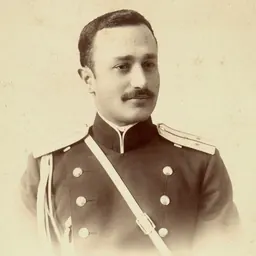



Contemporaries
People whose lives overlapped Bekir Fikri's

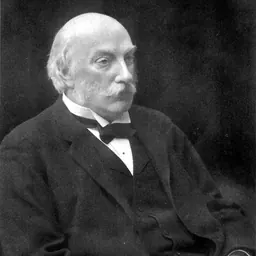




Frequently asked questions
Who was Bekir Fikri?
Albanian Ottoman revolutionary (1882–1914)
When was Bekir Fikri born?
Bekir Fikri was born in 1882 in Agios Georgios, Grevena.
When did Bekir Fikri die?
Bekir Fikri died on 21 December 1914 in Sarıkamış.
What was Bekir Fikri's occupation?
Bekir Fikri was a military personnel, binbashi and revolutionary.
What nationality was Bekir Fikri?
Bekir Fikri was Turkish.
Sources & further reading
Cite this page
APA: Biography.guide. (2026). Bekir Fikri. https://biography.guide/bekir-fikri/
MLA: "Bekir Fikri." Biography.guide, https://biography.guide/bekir-fikri/.
Chicago: "Bekir Fikri." Biography.guide. https://biography.guide/bekir-fikri/.
Data last updated: 2026-09-25 · Spot an error? Report a correction.
Page generated 2026-09-27 05:11 UTC