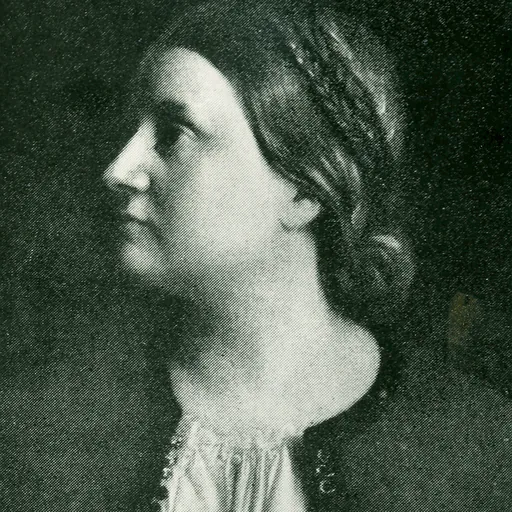
Barbara Bodichon
British educationalist, artist, feminist and activist for women's rights
About Barbara Bodichon
Lived 1827 – 1891 (aged 64). Barbara Bodichon was a British painter, salonnière, women's rights activist, journalist, economist and pedagogue, known for Girton College, Cambridge.
Barbara Bodichon (8 April 1827 – 11 June 1891), born Barbara Leigh Smith, was an English educationalist, artist, and philanthropist, a leading mid-19th-century feminist and women's rights activist.
In 1854, she published her influential A Brief Summary of the Laws of England Concerning Women, and in 1858 the English Woman's Journal.
With her friend Emily Davies, in 1869 Bodichon co-founded Girton College, Cambridge. Her greatest skill is said to have been as a facilitator. Her parents did not marry, as her father's radical views included the belief that marriage laws were harmful to the rights of women under the law. Barbara was the eldest of five children born to the couple; a brother was the Arctic explorer Benjamin Leigh Smith. The Nightingale family refused to acknowledge the five Smith children due to what they perceived as illegitimacy.
Benjamin Leigh Smith's home was in Marylebone, London, but from 1816 he inherited and bought property near Hastings: Brown's Farm near Robertsbridge, with an extant house built about 1700, and Crowham Manor, Westfield, which included . Although a member of the landed gentry, Smith held radical views. He was a Dissenter, a Unitarian, a supporter of free trade, and a benefactor to the poor. In 1826 he bore the cost of building a school for the inner city poor at Vincent Square, Westminster, and paid a penny a week towards the fees for each child, the same amount paid by their parents.
Smith met Anne Longden while on a visit to his sister in Derbyshire. She became pregnant by him and he took her to the south of England, housing her in a rented lodge at Whatlington, near Battle, East Sussex, as "Mrs Leigh", the surname of Ben Smith's relations on the Isle of Wight. Barbara's birth caused scandal, as the couple did not marry. Smith rode from Brown's Farm to visit them daily, and in eight weeks Anne was pregnant again. When their son Ben was born, the four went to America for two years, during which another child was conceived.
Smith, unusually for the time, sent all his children to the local school to learn alongside working-class children, rather than sending the older boys to a boarding or an elite day school. He later shared financial endowments equally with all the children, male and female, giving each an income of £300 per annum from the age of majority (21).
Adult life
Early in her life, Barbara showed a force of character and breadth of sympathies that would win her prominence among philanthropists and social workers. Independent income gave her a freedom not normally possessed by many women The next year she formed a Married Women's Property Committee (MWPC). This committee included other eminent and established professional women writers and friends of her own generation, such as Anna Mary Howitt, Bessie Rayner Parkes and Eliza Bridell Fox. Leigh Smith drafted a petition which was circulated nationally with a request for signatures to support a Married Women's Property Bill. Seventy petitions with over 26.000 signatures were gathered in only a few months. At the head of the petition some respectable married women were placed such as Mary Howitt, Elizabeth Barrett Browning and Elizabeth Gaskell. This petition which was presented in parliament in March 1856 would pave the way for the Married Women's Property Act 1870.
Bodichon's first romantic relationship was with John Chapman, editor of the Westminster Review, but she refused to marry him and lose her legal rights. Incidentally this was in the year that the Matrimonial Causes Act 1857, for which Bodichon had campaigned, allowed women access to divorce courts. When Bodichon passed in 1891, she left a legacy to Ayrton, which allowed Ayrton to financially support her ageing mother, hire a housekeeper to maintain her home and dedicate more time and energy to her scientific research.
Bodichon was a Unitarian, who wrote of Theodore Parker: "He prayed to the Creator, the infinite Mother of us all (always using Mother instead of Father in this prayer). It was the prayer of all I ever heard in my life which was the truest to my individual soul."
On 21 November 1865 Barbara Bodichon, helped by Jessie Boucherett and Helen Taylor, brought up the idea of a parliamentary reform aimed at achieving the right to vote for women.
Despite all her public interests, Bodichon found time for society and her favourite art of painting. Bodichon studied under William Holman Hunt. Her water colours, exhibited at the Salon, the Royal Academy and elsewhere, showed originality and talent, and were admired by Corot and Daubigny. Bodichon's London salon included many literary and artistic celebrities of her day. She was an early member of the Society of Female Artists (SFA) and showed 59 art works with them between 1858 and 1886. She was George Eliot's intimate friend and the first to recognise the authorship of Adam Bede. Her personal appearance is said to have inspired "the tall, red-haired heroine of Eliot's Romola with her 'expression of proud tenacity and latent impetuousness'".
Bodichon died at Robertsbridge, Sussex, on 11 June 1891.
Education and activism She was an English leader in the movements of education and political rights for women during the 1800s. Her marriage did not deter her from continuing her campaigns for women's rights to education.
Bodichon studied at the Ladies' College in Bedford Square founded in London, England in 1849. Here she was given instruction for work as a professional artist rather than an art instructor. Bodichon came from a liberal Unitarian family with a private income. Their independent wealth gave Bodichon more freedom to grow as an artist.
In 1852, after she had enrolled in Bedford College, she developed and opened Portman Hall School in Paddington, having researched practices at other primary schools, The historian Dr Judith Rowbotham at Nottingham Trent University issued an appeal for funds to restore the grave and its surroundings, which raised about £1,000. The railings were sand-blasted and repainted and the granite tomb was cleaned.
Commemoration On 30 June 2019, a Blue Plaque jointly commemorating the founders, Barbara Bodichon and Emily Davies, was unveiled at Girton College by Baroness Hale, President of the Supreme Court, as part of the college's 150th anniversary celebrations. The plaque is sited on the main tower at the entrance to Girton, off Huntingdon Road, Cambridge.
Don’t just read it —
keep it.
Full-length biographies made to live with: read them, listen on the way to work, watch them tonight.
- E-book
- Audio
- Video
Instant download · yours to keep · every purchase keeps this site free
Important facts
People in Barbara Bodichon's life
Named in this biography and alive at the same time




Related people
Same field, nearest in time


Contemporaries
People whose lives overlapped Barbara Bodichon's





Frequently asked questions
Who was Barbara Bodichon?
British educationalist, artist, feminist and activist for women's rights (1827-1891)
When was Barbara Bodichon born?
Barbara Bodichon was born on 8 April 1827 in Whatlington.
When did Barbara Bodichon die?
Barbara Bodichon died on 11 June 1891 in Robertsbridge.
What was Barbara Bodichon's occupation?
Barbara Bodichon was a painter, salonnière, women's rights activist, journalist, economist and pedagogue.
What was Barbara Bodichon known for?
Barbara Bodichon was known for Girton College, Cambridge.
What nationality was Barbara Bodichon?
Barbara Bodichon was British.
Sources & further reading
Cite this page
APA: Biography.guide. (2026). Barbara Bodichon. https://biography.guide/barbara-bodichon/
MLA: "Barbara Bodichon." Biography.guide, https://biography.guide/barbara-bodichon/.
Chicago: "Barbara Bodichon." Biography.guide. https://biography.guide/barbara-bodichon/.
Data last updated: 2026-09-23 · Spot an error? Report a correction.
Portrait: Wikimedia Commons · author & licence
Page generated 2026-09-27 05:05 UTC