
About Axel Törneman
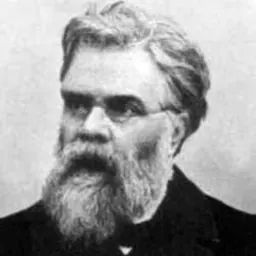
Lived 1880 – 1925 (aged 45). Axel Törneman was a Swedish painter, draftsperson and graphic artist.
Johan Axel Gustaf Törneman (28 October 1880 – 26 December 1925) was one of Sweden's earliest modernist painters. Born in Persberg, Värmland, in Sweden, he grew to work in several modernist styles, was one of the first Swedish expressionist artists, and became a part of the international avant-garde in art after embracing more abstract art styles in Germany and France that were evolving there during the early 1900s. He created his most famous paintings, Night Café I and II, and Trait, in France in 1905. These night café paintings, made from studies in the Place Pigalle, and in other nightclubs popular with artists such as Café du Rat Mort (Dead Rat Café), are seen as two of Swedish modernism's most important works, and are considered breakthrough work of Swedish modernism.
Törneman gained international stature in 1905 at the Salon d'Automne in Paris with Trait I, and with his Narragansett Café in 1906. He went on to paint murals and decorations in public buildings such as the Royal Institute of Technology (KTH) and Stockholm City Hall, and other Stockholm buildings such as Norra Latin, Ragnar Östberg's Östermalms läroverkl, and the second chamber in the Parliament House. Törneman's paintings were recognized with a gold medal at the U.S. Panama–Pacific International Exposition, in San Francisco in 1915. Törneman died in Stockholm at age 45 after only a further decade of creative work.
Education, travel, and early work Johan Axel Gustaf Törneman was born on 28 October 1880 in Persberg, Värmland Sweden, the son of John Algot Törneman, an engineer at an explosives factory; his grandmother was the cookbook author Gustafva Bjorklund.
Törneman studied at Värmland School of Art in Gothenburg in 1899 under Carl Wilhelmson, then toured the Nordic lands for a short while before traveling to study on the European continent in the years 1900–1905. In Europe, he first studied at the Kunstakademie München (now the Akademie der Bildenden Künste München), then went to Dachau to study under Adolf Hölzel. In Munich he was influenced by the Art Nouveau movement and symbolism, Arnold Böcklin, Franz Stuck, and others.
Career in France and Sweden After leaving Germany, Törneman was active in Paris for four years, and also in the Breton village of Coudeville, Brittany.
Törneman had a small studio in Paris at 7 rue de Bagneux. His night café paintings, based on studies in Place Pigalle, and a Paris nightclub popular with artists, Café du Rat Mort (Dead Rat Café), are two of Swedish modernism's most important works, though Törneman was less influenced by the French modernists than by the Germans.
Törneman was recognized with a gold medal at the U.S. Panama–Pacific International Exposition, in San Francisco in 1915. Törneman traveled intermittently in relation to his art (e.g., in 1912, to Venice), and toward the end of his life, he largely abandoned his early dark palette, and instead worked almost entirely in the brighter colors from his Paris days. Törneman began the ceiling mural De elektriska strömmarna (The electric currents), in 1918 in a lecture hall of the KTH. This very ambitions painting project was a subject of much discussion, and when completed was unanimously praised by critics, but disappeared from view until its rediscovery.
In 1965 the Moderna Museet, in Stockholm ("Modern Museum", a museum of modern art) held a major retrospective exhibition of his work, 40 years after his death.
Don’t just read it —
keep it.
Full-length biographies made to live with: read them, listen on the way to work, watch them tonight.
- E-book
- Audio
- Video
Instant download · yours to keep · every purchase keeps this site free
Important facts
People in Axel Törneman's life
Named in this biography and alive at the same time

Related people
Same field, nearest in time



Contemporaries
People whose lives overlapped Axel Törneman's




Frequently asked questions
Who was Axel Törneman?
painter (1880-1925)
When was Axel Törneman born?
Axel Törneman was born on 28 October 1880 in Persberg.
When did Axel Törneman die?
Axel Törneman died on 26 December 1925 in Stockholm.
What was Axel Törneman's occupation?
Axel Törneman was a painter, draftsperson and graphic artist.
What nationality was Axel Törneman?
Axel Törneman was Swedish.
Sources & further reading
Cite this page
APA: Biography.guide. (2026). Axel Törneman. https://biography.guide/axel-torneman/
MLA: "Axel Törneman." Biography.guide, https://biography.guide/axel-torneman/.
Chicago: "Axel Törneman." Biography.guide. https://biography.guide/axel-torneman/.
Data last updated: 2026-09-20 · Spot an error? Report a correction.
Page generated 2026-09-27 05:31 UTC